
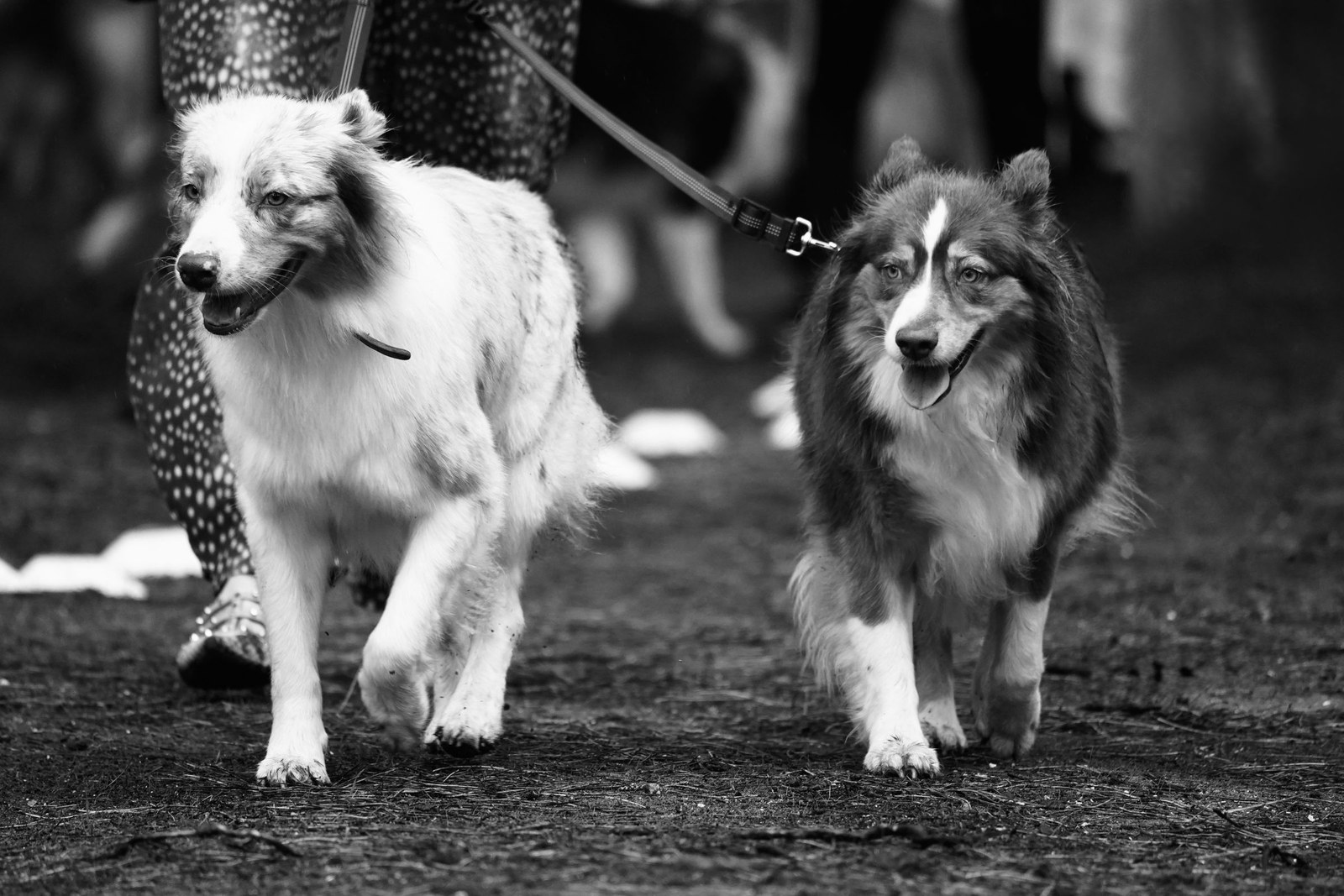
Two dogs meeting for the first time should meet on neutral ground — a quiet street or park neither dog considers theirs — each on a leash with a separate handler, starting with a parallel walk rather than a face-to-face greeting.
Why Neutral Ground and a Walk Come First
Your home and garden are your resident dog's territory, and a strange dog walking straight in can trigger guarding that would never appear outdoors. Neutral ground removes that pressure. Walking in the same direction, with distance between the dogs, lets them see, hear, and smell each other while doing something normal and calming. Movement burns off tension; standing face to face builds it.
Start wide apart — across a quiet street or a good stretch of grass — and walk parallel. If both dogs stay loose, glance over with soft bodies, and can still respond to their handlers and take treats, gradually narrow the distance over several minutes. Let them drift into a brief sniff of a few seconds, ideally side-on rather than head-on, then cheerfully call them apart and keep walking. Short and boring is success.
You may need more than one walk before any indoor meeting, especially with a rescue dog whose history is unknown. Shelter and rescue staff do this professionally — follow their process if they require a meet at their site, and ask what they observed.
Reading Body Language Without Wishful Thinking
Relaxed looks like wiggly bodies, soft open mouths, play bows, and easy disengagement. Worry looks like hard staring, a closed mouth with a stiff, high tail, raised hackles that do not settle, growling, or one dog persistently trying to get away while the other pursues. A wagging tail alone does not mean friendly — speed, height, and the rest of the body matter.
If tension appears, increase distance calmly and end on a walk, not a confrontation. Do not let leashes tangle during a sniff — tangled leashes trap dogs together and turn a small disagreement into a fight — and never force a nervous dog closer "to get used to it." A postponed match is better than a bad first memory, and some pairings are simply not right; a good rescue would rather hear that from you than take a dog back after a fight.
Then: The Home Arrival
If the walks go well, let the new dog explore the home and garden first while the resident dog is out of the way, then bring the resident into the garden with high-value items — toys, chews, food bowls — already picked up. Keep leashes dragging indoors for the first sessions so you can separate the dogs without grabbing collars, and supervise everything until a relaxed pattern is proven over days, not minutes.
Coordinating the Plan With KinsLe Messenger
A good first meet is a small team event: two handlers, agreed signals, a chosen route, and a plan B. KinsLe Messenger is the per-pet communications hub, so you can coordinate that meet plan with everyone involved — family handlers and, where relevant, the rescue or the other dog's owner — in a thread tied to the dog's profile, and share updates and photos as introductions progress from first walk to first evening at home. Everyone works from the same plan instead of three versions of it. KinsLe Messenger holds that agreed route, the handler pairings, and the backup meeting spot in the new dog's own thread, so notes from the first parallel walk through the first evening at home stay attached to the right pet.