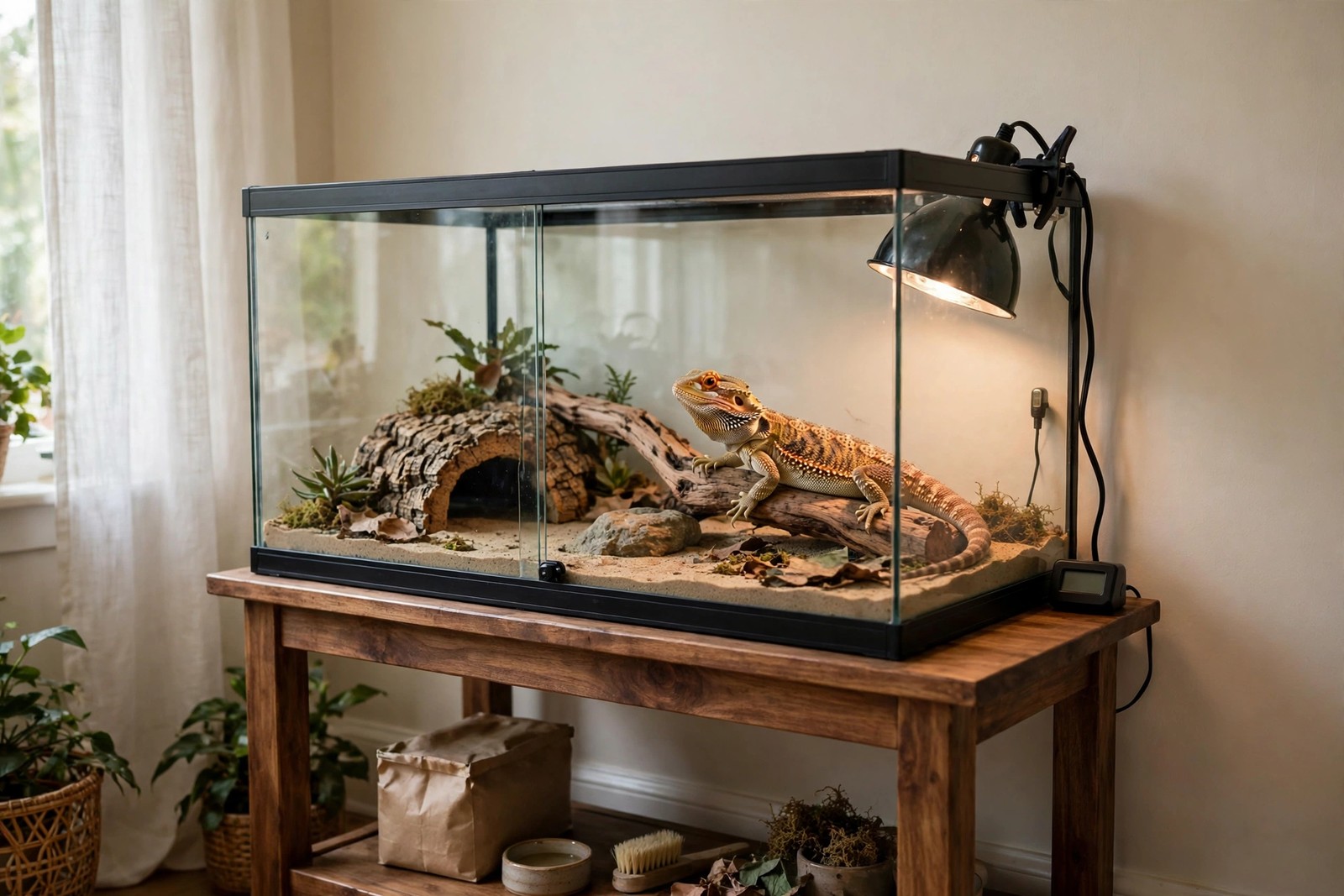
A reptile cannot move house when a room turns out to be wrong, so placement does work that no heater upgrade can undo later. Your reptile depends on a temperature gradient inside the enclosure, warmer at one end and cooler at the other, and the room around the glass decides how stable that gradient stays. The right spot is quiet, shaded, level, and easy for you to check every day.
Keep It Out of Direct Sun and Away From Drafts and Heat
Never place an enclosure where direct sunlight falls on it, including a sunny patch that reaches the glass for only part of the day. Glass traps heat, an enclosure in sun can overheat far beyond the warm end your reptile chose, and a basking animal has nowhere cooler to retreat to if the whole box warms at once. Pull the enclosure back from windows altogether, because window glass also brings cold drafts at night and on winter days.
Keep it away from radiators, portable heaters, and frequently opened outside doors for the same reason: each one pushes the gradient around. A bearded dragon, leopard gecko, or corn snake all thermoregulate by moving between warm and cool zones, and a room that swings between chilly drafts and blasts of radiator heat forces the equipment to fight the house all day. A spot on an internal wall, in the stillest part of the room, gives your heaters and thermostats a fair chance.
Choose a Low-Traffic Room and a Stand That Can Carry It
Pick a low-traffic room rather than a hallway, a busy living room, or a child's play space. Foot traffic, slamming doors, and vibration from speakers or a washing machine are chronic low-level stress for an animal that lives behind glass, and an enclosure knocked by passing bags or boisterous dogs is a breakage risk. Low-traffic does not mean forgotten: a spare room you never enter is a poor choice, because daily feeding, water changes, spot-cleaning, and health checks happen reliably only where you actually pass. A calm corner of a room you use quietly every day is usually the sweet spot.
Set the enclosure on a level, sturdy stand built for its filled weight, not on a wobbly bookcase or a piece of furniture that rocks. Substrate, water bowls, rocks, and soil add far more weight than the empty enclosure suggests, and an unlevel surface stresses glass seams and skews water depth in any water feature. Keep it off the floor, where drafts run coldest, cleaning chemicals are used, and the enclosure sits at dog and toddler height.
Power, Practical Access, and a Three-Day Test
Plan the electrics before you position anything. Heaters, basking lamps, UV lighting, and thermostats need sockets close enough that no cable trails across a walkway, and the setup should be reachable without moving the enclosure, because you will adjust, clean, and replace equipment throughout your reptile's life. Keep the enclosure out of the kitchen, where cooking fumes, cleaning sprays, and sharp temperature swings work against it, and never spray air fresheners or aerosols beside it.
Run the finished setup for three days before the animal moves in, checking warm-end and cool-end temperatures morning and evening, and again after the room's heating comes on. A spot that holds its gradient through those three days will usually hold it for the season; a spot that fails the test costs you a move now instead of an emergency move later. With KinsLe Family Sharing, you can record the enclosure's agreed location, its three-day test readings, and its equipment list in the shared profile, so everyone in the house knows why it sits where it sits and leaves it there.