
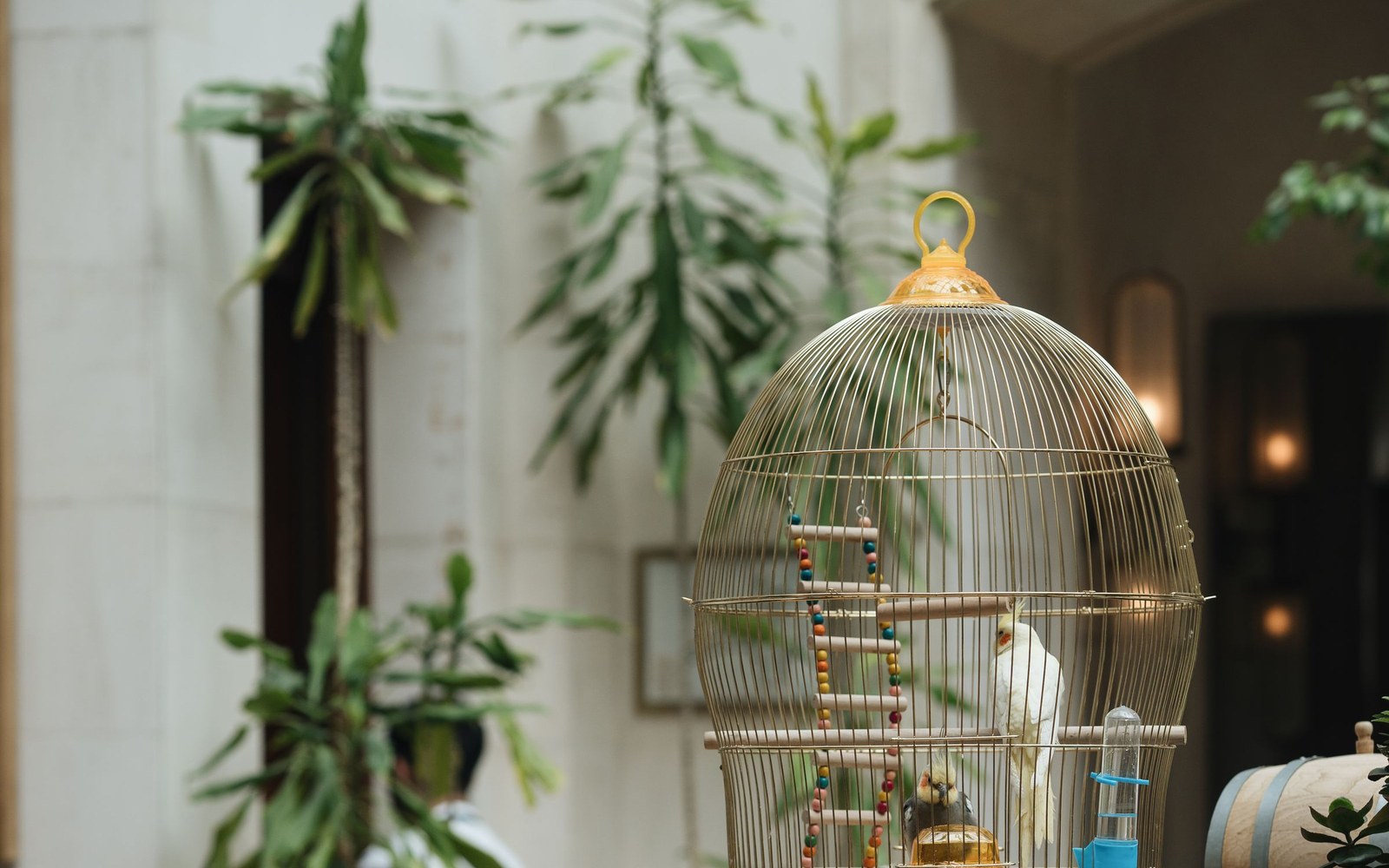
Put your bird's cage in a bright, social room where the family actually spends time — typically a living room corner — with one side of the cage against or near a wall, away from kitchen fumes, direct drafts, and all-day direct sun. Birds are flock animals that read the household as their flock; the right spot lets your bird observe family life and feel included without living in the middle of constant chaos.
Why against a wall matters
A cage floating in the centre of a room leaves a prey animal exposed on every side, and many birds stay quietly stressed by it. One solid side — a wall, a bookcase, a corner — gives your bird a retreat direction and a place to tuck itself when the vacuum cleaner, visiting toddlers, or a thunderclap make the world briefly alarming. You will often notice a bird choosing to sit on the wall-side perch when resting, and moving to the open side when it wants to socialise. That choice is the whole point.
Room by room
- Living or family room: usually ideal — social traffic, voices, and routine, with evenings that wind down
- Kitchen: avoid. Cooking fumes, heat spikes, and cleaning sprays make it the riskiest room in the house for a respiratory system as sensitive as a bird's
- Bedroom: workable for quiet households, and some owners keep a sleep cage here while the day cage lives socially — just be honest about dawn chorusing if you value lie-ins
- Home office: a good middle option for people who work from home, provided calls and keyboard clatter are part of the bird's normal, accepted world
- Hallways and by exterior doors: poor — every passing person, cold blast, and slammed door arrives without warning
Light, drafts, and temperature
Bright indirect light is the target: near a window is lovely, but no cage should bake in direct sun with no shaded retreat, and part of the cage should always offer shade. Keep the cage out of the direct path of air-conditioning vents, radiators, and frequently opened windows — birds handle stable, ordinary room temperatures well and drafts poorly. Height helps too: cage stands that put the bird roughly at seated eye level tend to produce calmer birds than floor-level cages in a world of looming feet.
Safety sweep before you commit
Check what the cage is near, not just which room it is in. Move the cage away from dangling blind cords, ceiling fans in use, scented candles and plug-in fragrance diffusers, and any spot where a cat can sit and stare at eye level all day. If the household smokes or vapes, the bird's room must be one where that never happens.
How KinsLe helps
Placement ideas are the kind of lived experience bird people trade constantly — and on KinsLe, free Pet Lover accounts join the Circle of Love community alongside owners, where bird lovers share the cage-placement ideas that worked in real homes like yours. Circle of Love adds the lived-in side of that choice on KinsLe, where fellow bird owners describe which rooms kept their birds calm, social, and undisturbed at night.