
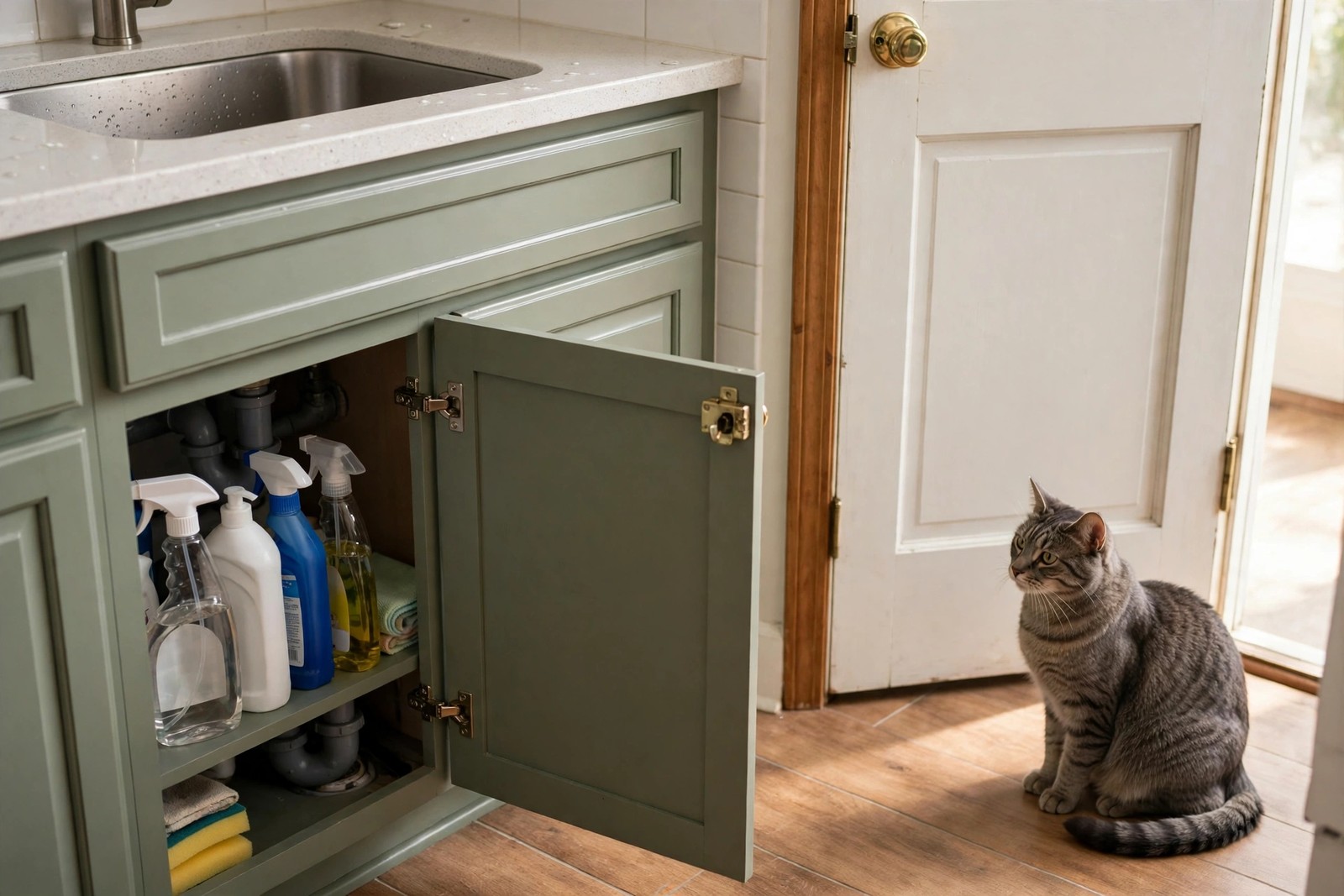
Store the bottles behind latched cabinet doors — ideally in a closed utility area your cat cannot enter — and give mopped floors, tubs and counters a plain-water rinse, letting each surface dry completely before your cat pads across it. Laundry pods, bleach, disinfectants, and drain cleaners are the highest-risk items, and no bucket, spray bottle, or pod container should ever be left open and unattended around a cat.
Why Cleaners and Cats Are a Risky Mix
Cats groom constantly, so anything that gets on their paws or coat often ends up in their mouth. A cat that pads across a freshly mopped floor, steps into a spill, or walks through residue in a tub can ingest chemicals while washing itself afterward. Concentrated products are the biggest concern: laundry and dishwasher pods burst easily under a playful bite, bleach and ammonia-based cleaners can burn the mouth and stomach, and phenol-based disinfectants are particularly problematic for cats because their bodies clear those compounds poorly.
Scent is not a safety guide. A product that smells fresh to you can still leave a residue that matters to a six-kilogram animal licking its feet, and mixing products — especially bleach with ammonia or acids — creates gases that are dangerous to everyone in the room, including your cat.
Storage and Daily Habits That Work
Fit childproof latches to under-sink cabinets, because many cats learn to hook a paw around a cabinet edge and pull. Move the most hazardous items — drain openers, oven cleaners, concentrated disinfectants, and pods — to a high shelf in a closed laundry or utility room if you have one. Keep products in their original labeled containers so ingredients are always identifiable, and never decant cleaner into a drink bottle or food container.
While cleaning, close the door to keep your cat out of the room in progress. Never leave a bucket of solution standing, pour leftovers away and rinse the bucket, and keep spray bottles capped and put back rather than left on the counter. Let floors dry fully and, for tubs and showers, rinse surfaces with plain water after cleaning and let them dry before your cat hops in for its favorite nap spot. Wash your own hands before handling your cat after using strong products.
If Your Cat Walks Through or Licks a Chemical
Stop your cat from grooming — gently wrap it in a towel or put on a recovery cone if you have one — and keep it from walking the chemical further through the house. If the product is on the coat, your veterinarian may advise rinsing the area with lukewarm water; call for guidance first, especially if your cat is drooling, pawing at the mouth, vomiting, squinting, or breathing differently.
Call your veterinarian or an emergency clinic and name the exact product, reading the label if you can. Do not induce vomiting unless instructed, since some chemicals burn on the way back up. Bring the container to the clinic if you are sent in. Quick, specific information gets your cat the right help fastest.
Briefing a Sitter With Care Pass
Holiday and work-trip sitters need to know your chemical rules just as much as feeding times: which cabinets are latched and must stay latched, which rooms stay closed, and that floors must be dry before your cat returns. KinsLe's Care Pass makes that briefing simple — it is a temporary, scoped link to your cat's care information, and the recipient needs no account or app to view it. You can share feeding, litter, and safety notes for a set period, so a sitter sees exactly what matters, including which products are locked away, without getting access to everything else.
Latched doors and a rinse-and-dry routine will handle most cleaning risks in a cat home. Care Pass on KinsLe lets the sitter covering your three-night work trip see only which cabinets stay latched, which utility rooms stay closed, and that floors must dry fully before your cat walks on them again.