
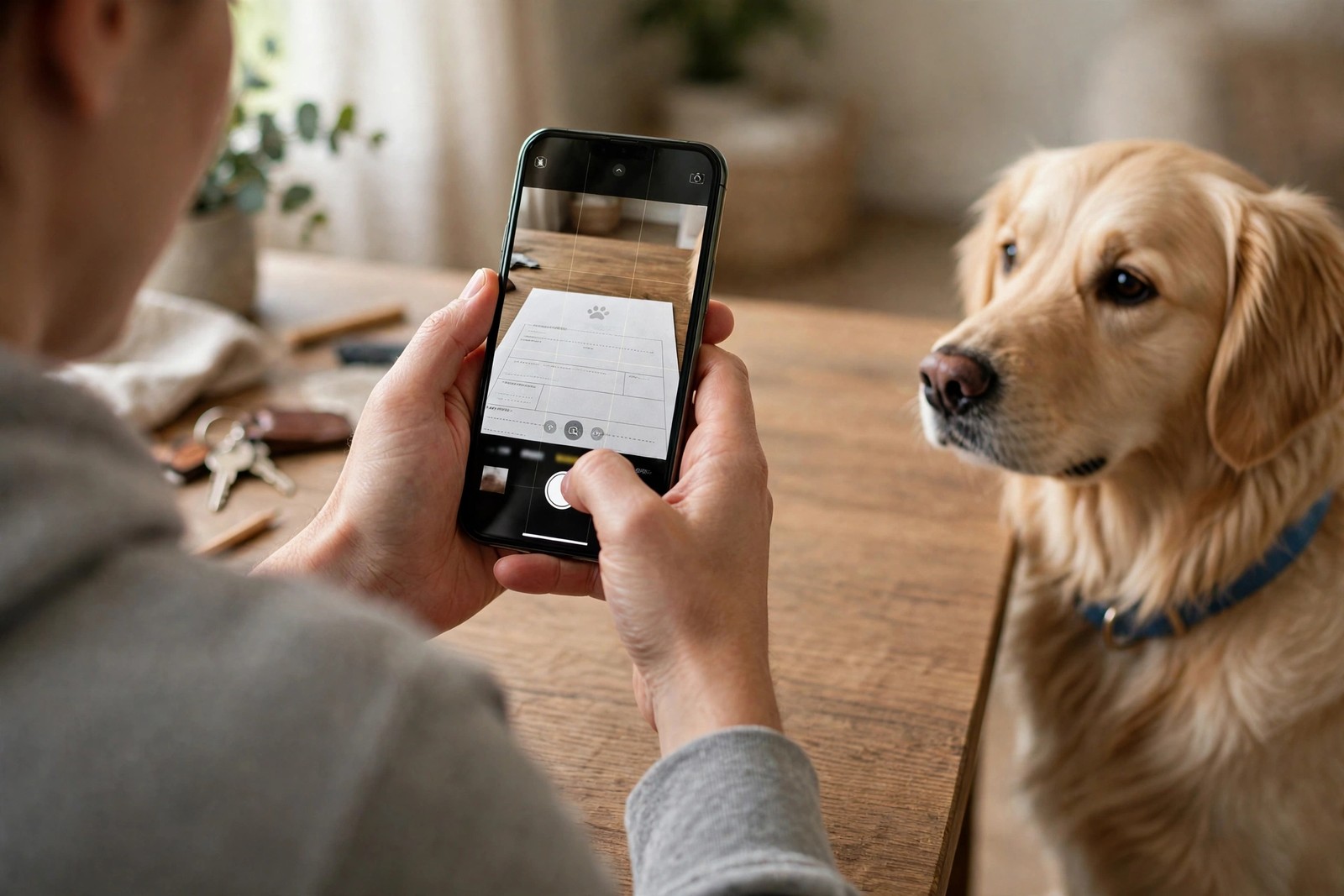
Store your dog's important documents as digital copies in one secure, reachable place as your main set — because paper gets lost, damaged, or left behind exactly when you need it while traveling or at an emergency vet. Keep the paper originals somewhere safe at home, but let the digital set be the one you can actually pull up anywhere.
The Documents Worth Saving First
If you digitize nothing else, save these essentials:
- Vaccine certificates, especially rabies proof
- Adoption or purchase papers and any ownership or transfer documents
- Microchip registration details, including the chip number and registry contact
- Insurance policy information, if your dog is insured
- Vet visit summaries for major illness, surgery, or ongoing conditions
- A current medication and allergy list
- Clear recent photos of your dog, including any distinctive markings
That last item surprises people, but a sharp, current photo is a document too — it is what you will use on a lost-dog notice, what a finder or shelter will compare against, and what proves that shaggy winter coat and clipped summer coat belong to the same Poodle.
How to Store Them So You Can Find Them Fast
Scan or photograph each document in good light, straight-on and fully legible, then check the image before you file it — a blurry certificate helps no one at midnight. Name files by date and type so they sort and search well. Keep them in one folder or record, not spread across a camera roll, an email thread, and a downloads folder. Back that folder up, and tell at least one trusted person how to reach it if you are unavailable.
Review the set when something changes: a new vaccine, a moved house, a new phone number on the microchip registry, a medication started or stopped. Documents are only useful if they are current — an old address on an emergency contact sheet can cost real time.
What Not to Do With Important Documents
Do not rely on a single paper folder in a drawer as your only copy; floods, fires, house moves, and simple misfiling happen. Do not rely solely on a vet clinic holding everything either — clinics close, systems change, and an out-of-hours emergency service will not have your daytime vet's file open. Avoid storing sensitive documents in unsecured shared links you cannot revoke, and never alter an official certificate. If information on a record is wrong, ask the issuing vet or registry to correct it at the source.
Keep your dog's collar ID current as well. Paperwork at home does not help a finder on the street — your dog's tag and microchip details are the documents they carry with them.
Pet Passport Keeps Documents With the Profile
With KinsLe, the Pet Passport stores those documents with your dog's profile, so vaccine certificates, microchip details, insurance info, and other records are reachable from anywhere rather than trapped in a drawer. The Pet Passport is the records packet — vaccines, medications, allergies, and documents — and it can be shared with vets and sitters when they need it. That means the emergency vet, the boarding facility, or a new clinic across town gets the real paperwork in minutes, not after a trip home. Pet Passport keeps those vaccine certificates, dated visit summaries, medication and allergy notes, and microchip details together in one packet a new clinic can read in minutes on KinsLe.