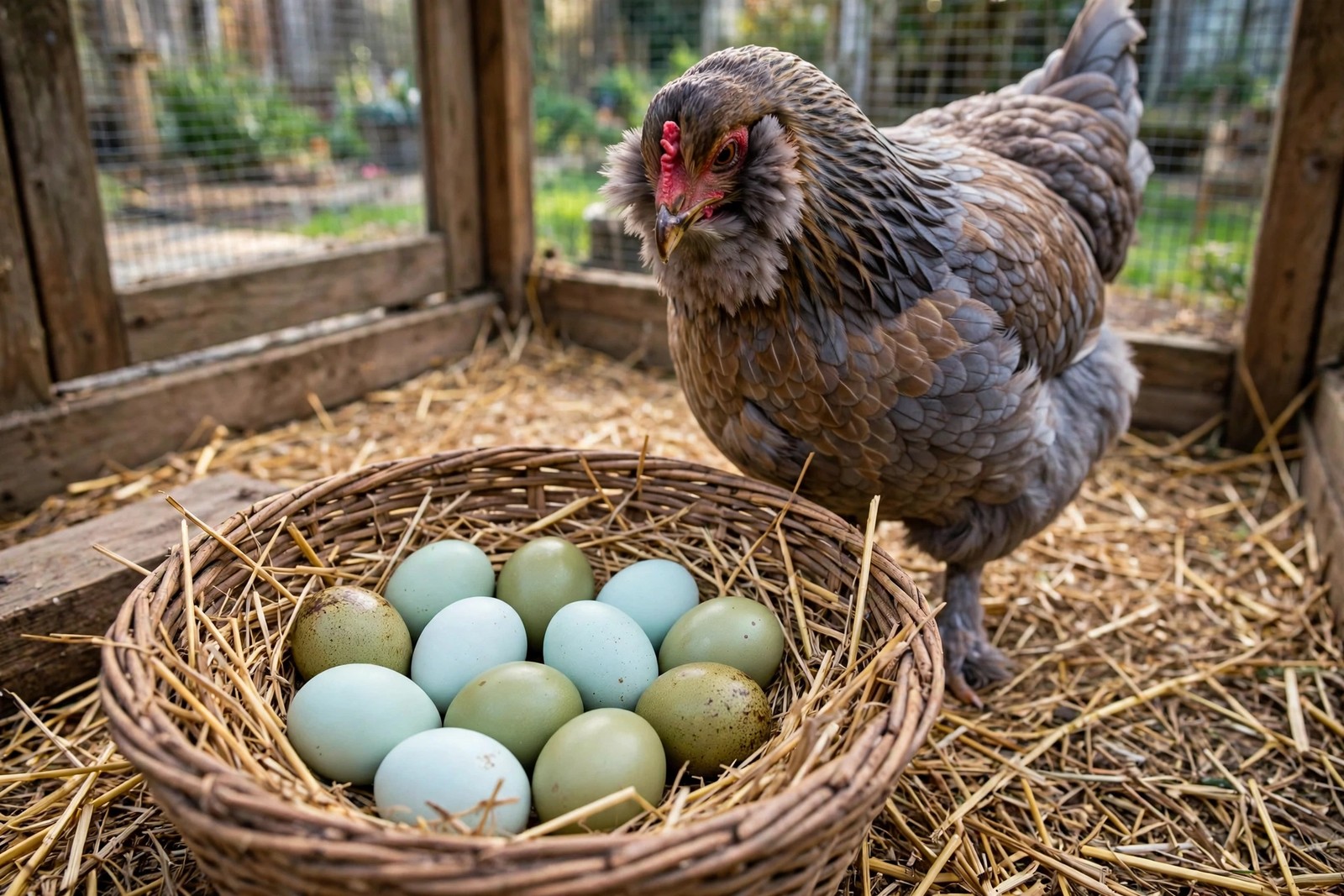
Only a handful of breeds and crosses lay blue or green eggs, and the colour is fixed by genetics, not by feed, housing, or the colour of the hen's feathers or earlobes. A hen carries either the blue-shell gene or she does not, and once she starts laying, the shade she produces is hers for life.
The True Blue Layers
Ameraucanas are the dependable blue layer most backyard keepers meet first: a purebred American breed with a beard, muffs, and a pea comb, laying a clear sky-blue egg. Araucanas, the breed the blue gene originally came from, lay blue too, though the breed's tufted, rumpless form recognised in the United States differs from the tailed version kept in other countries, which causes endless confusion at purchase. Cream Legbars are the third true blue option and bring a practical bonus: their chicks can be sexed by down colour at hatching, so a keeper wanting guaranteed pullets can tell them apart on day one. All three lay a blue shell that is blue all the way through, so a cracked egg shows the same colour inside the shell.
Green Comes From Blue Plus Brown
Green eggs need two layers of colour. The blue pigment is built into the shell itself, while brown pigment is painted onto the outside of the shell late in laying. Put brown over blue and the eye reads green. Easter Eggers are the familiar green layers: they are not a purebred breed but mixed hens carrying the blue gene crossed with brown-laying stock, so individual Easter Eggers can lay green, blue, olive, or occasionally pinkish-brown eggs, and sisters from the same batch may not match. Olive Eggers are a deliberate version of that cross, pairing a blue layer with a dark brown layer such as a Marans or Welsummer line, which pushes the result toward deep olive and khaki shades. A first cross gives the strongest olive; breeding Olive Eggers together makes later generations less predictable.
Buying Hens That Actually Lay Coloured Eggs
Coloured eggs are where mislabelling bites hardest. A chick sold loosely as an Araucana or Americana, spelled to echo the purebred name, is almost always an Easter Egger, which may still lay a lovely green egg but is not the purebred blue layer the price implied. Ask the breeder what shade the mother lays, buy sexed pullets where colour matters, and remember that no coloured layer starts until she reaches laying age, typically around five to six months. Expect blue and green layers to produce a moderate rather than record-breaking number of eggs each year, and expect the shade to look strongest early in the season and paler after months of laying, as each egg draws on the same pigment supply.
Enjoying a Coloured Basket
Shell colour changes nothing about flavour or nutrition; a blue egg from a well-fed hen tastes like a brown egg from an equally well-fed hen, and yolk colour follows diet rather than shell. What coloured layers change is the basket: mixing a blue layer, an Olive Egger, and a dark brown layer gives four visibly different eggs from hens living side by side. Keepers who record each hen's breed, shade, and laying pattern in KinsLe's Transferrable Profiles pass that knowledge on intact if a hen is ever rehomed, so the next keeper knows which bird fills the blue slot in the egg basket.