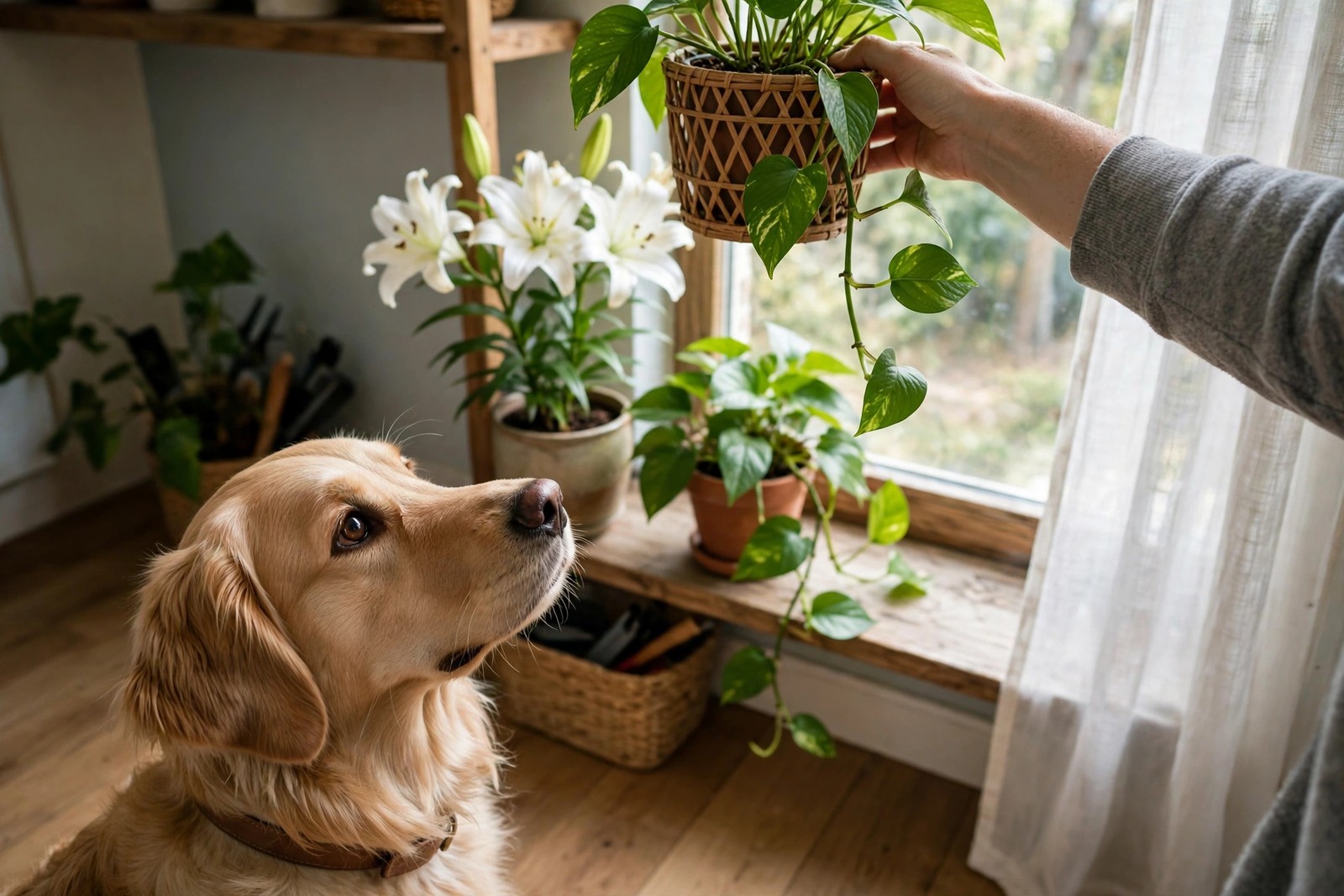
Start with the plants vets treat as emergencies. Sago palm stands at the top of the list — every part is toxic and the seeds are the worst — followed by oleander, yew, foxglove, azalea and rhododendron, and kalanchoe. A second group attacks the mouth first: dieffenbachia, philodendron and pothos carry mouth-burning crystals — drooling and a sore mouth are the usual result, while lilies, ZZ plant, and daffodil and tulip bulbs round out the names that come up again and again. Also on the caution list: aloe vera, jade plant, and asparagus fern. This is not an exhaustive list — it is the greatest-hits list vets actually see.
Making Your Home Plant-Safe in Practice
You do not need a bare house; you need placement and identification. Keep risky plants genuinely out of reach — high shelves a determined dog cannot access, rooms kept closed — rather than on low stands, and clear fallen leaves and berries, which are the parts dogs actually eat. When buying new plants, check their safety for dogs before they come home, and photograph or label what you already own so that if your dog chews something, you can tell the vet or poison service exactly what it was — 'a green houseplant' is much harder to act on than a name. Puppies and bored dogs chew most, so puppy-proofing and plant-proofing overlap heavily.
Working With Your Vet
If your dog eats a plant on the dangerous list, or any unidentified plant followed by drooling, vomiting, diarrhoea, or lethargy, call your vet or an animal poison service promptly with the plant's name and roughly how much was eaten. Do not wait for symptoms with sago palm, yew, oleander, or lily ingestion. Note the time she ate it and what she has done since — retching, pawing at her mouth, refusing food — and take a photograph of the plant and any chewed remains, because that detail helps the vet judge urgency far better than a worried description from memory.
Keep a simple plant inventory beside her health records: each houseplant's name, where it stands, and whether it is on the danger list. Update it when a plant arrives as a gift or moves rooms, since a palm that was safely behind a closed door last month may be at nose height beside her bed today.
When you call, her records travel with the story: weight, existing conditions, and recent treatment all shape the advice you are given. In KinsLe, Pet Passport keeps that information gathered as one packet you can open during the call — no hunting through drawers while a vet waits on the line.