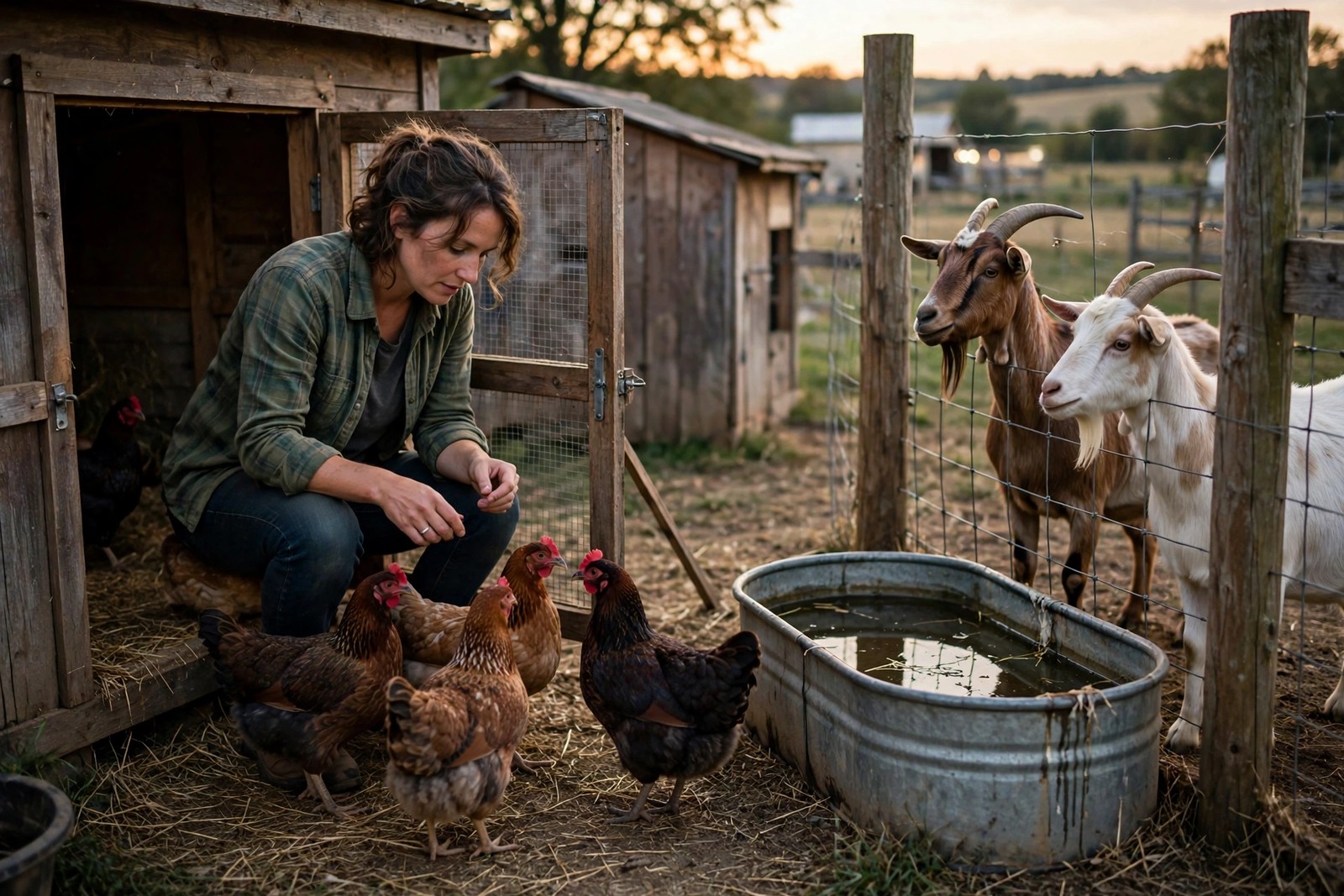
Chickens and goats cannot be covered by a single midday pop-in. Hens need letting out in the morning and locking away safely at night, goats need eyes on their fencing and water every day, and both need someone who recognizes what is normal for these species. The right carer is therefore defined less by willingness than by livestock experience and by showing up at the two ends of the day, every day you are away.
Who Actually Fits the Job
Three kinds of carer work well. An experienced neighbor who keeps poultry or goats already is often the strongest choice, because the dawn-and-dusk rhythm is already that person's habit and your animals are a short walk away. A professional farm sitter brings broader livestock experience and is used to fencing faults, frozen or fouled water, and animals who are off their feed. A house-sitter who lives in for the holiday works if that person has genuine smallholding experience, because living on site makes the dawn and dusk visits natural rather than a commute.
Who does not fit matters just as much. A general pet sitter whose experience is cats and dogs may be excellent and still never have counted hens into a coop, spotted a goat testing a fence line, or noticed a hen sitting apart from the flock. A child or teenager visiting alone is not enough cover, however keen, because the job includes predator-proof lock-up, handling a goat who does not want to cooperate, and judgment calls at dusk. If your preferred person is inexperienced, the honest fix is a thorough trial run before you go, not hope.
What the Dawn and Dusk Visits Must Cover
The dawn visit lets the hens out, feeds them, refreshes drinking water for hens and goats alike, collects any eggs laid overnight, and includes a walk of the goat fencing and gate latches, because goats test boundaries daily and an escape found in the morning is a nuisance while one found after a day out can be a loss. The dusk visit is the security visit: feed as your routine sets out, top up water, collect eggs again so none sit out overnight attracting attention, count every hen into the coop, and lock it securely against predators before dark, then check the goats are settled with shelter access.
Give your carer exact numbers to work to, meaning how many hens should be counted in, how many goats, where feed is stored, and how much each group gets. 'Feed the chickens' is an instruction that fails on day three; a count, a measure, and a locked feed store are instructions that hold.
Trial Run, Backup, and the Emergency Picture
Walk the whole routine with your carer before you travel, at dawn or dusk rather than at a convenient midday hour, and let that person do the locks, latches, and feed measures while you watch. Leave a named backup person who also knows the routine, in case your carer falls ill mid-holiday, and leave your vet's number, your own contact details, and clear authority for the backup or carer to call the vet if an animal is injured or seriously unwell. Tell your carer the species-specific traps: goats must be kept out of the chicken feed store, because gorging on grain is dangerous for them, and any hen found injured or a goat found trapped in fencing should be reported to you the same day, not saved up for your return.
Animals who are let out, fed, counted in, and locked up on their usual rhythm barely register a holiday. Through KinsLe Care Pass, you can give your chosen carer temporary access to exactly that dawn-and-dusk routine, the animal counts, feed measures, and vet contacts, for the holiday dates only.