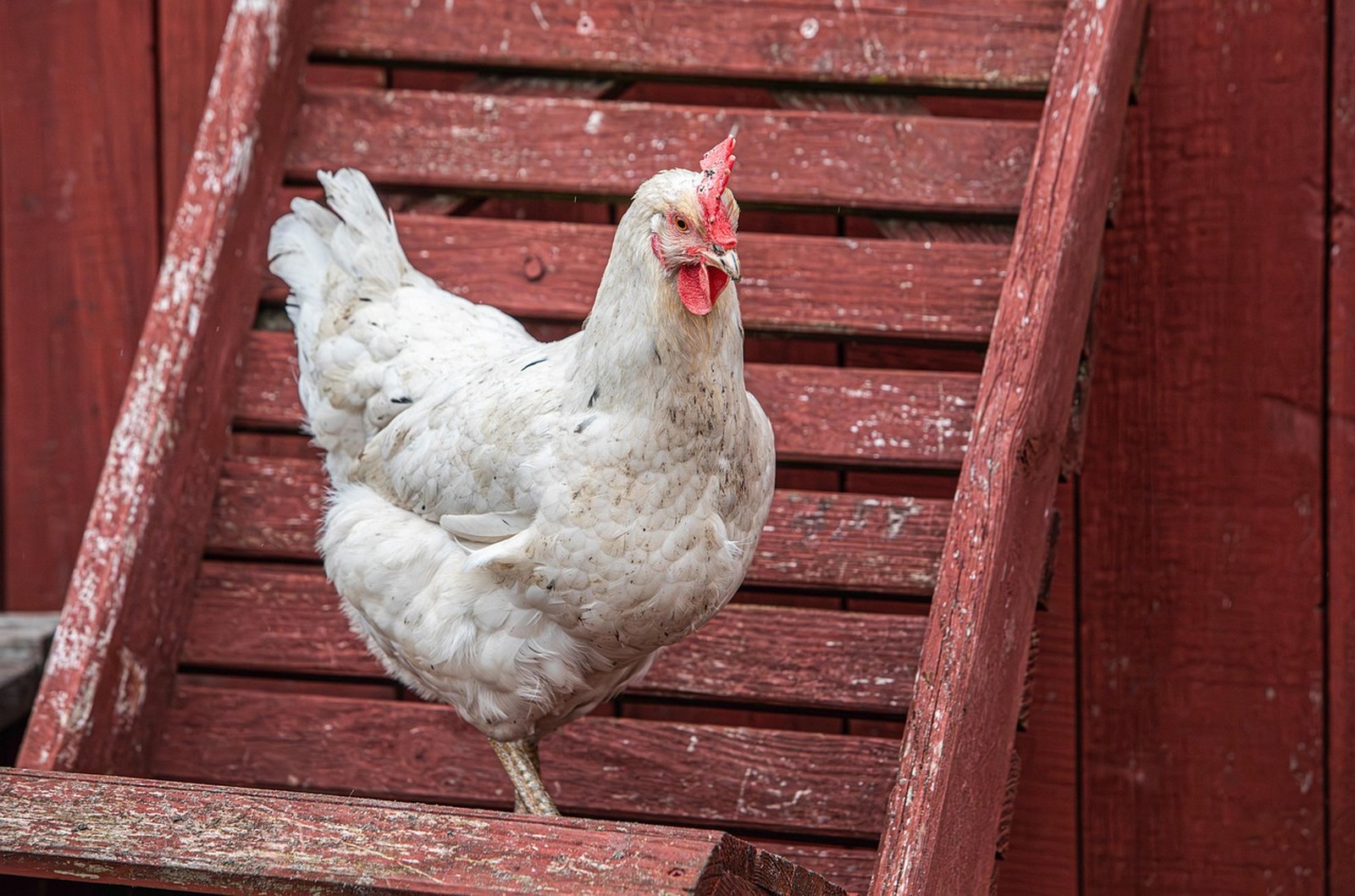
The annual molt has a recognisable shape: it usually starts at the head and neck, moves down the body over several weeks, and the hen often pauses laying while she regrows. Feather loss that ignores that pattern — the wrong season, the wrong places, or feathers that come out broken and ragged rather than shed whole — has a different cause, and the location of the loss is your best first clue. This is general information to help you investigate; a hen that is unwell alongside the feather loss needs a poultry vet.
Bald Backs and Broken Feathers at the Vent
A hen with a bare, reddened back and worn feathers at the base of the tail is often being trodden by a rooster, whose feet and spurs strip feathers during mating; a flock with too many roosters, or one tireless favourite hen, shows it first. Broken, stubbly feather shafts around the vent and under the wings suggest something else entirely: lice that chew feathers and lay their egg clusters at the feather bases, or depluming and feather mites that damage the quills so feathers snap and fall. Check at night with a torch, when red mites leave their cracks in the coop and climb onto roosting birds — look under the ends of perches and around the vent, and part the feathers to inspect the skin. Parasites are a coop problem as much as a bird problem, and any treatment approach is best agreed with a poultry vet who knows your flock and local rules.
When the Flock Is Doing It to Itself
Feather pecking is the other major culprit: hens pull and eat each other's feathers, starting at the tail and vent, and one bird's habit can teach the whole flock. Crowding, boredom, bright light for too many hours, and too little to forage in all feed it, and once skin is broken it can escalate dangerously fast. A diet short on protein makes it worse, because feathers are protein and hens in lay are already spending heavily — a flock switched to a low-protein feed, or filled up on scratch grains and kitchen scraps, may literally start harvesting protein from each other. Restoring a proper layers' ration as the main diet, adding range or scattered forage to occupy the day, and giving a targeted bird space to recover are the first moves.
The Bald Breast and Other Innocent Causes
A broody hen plucks her own breast feathers to line the nest and put warm skin against the eggs, leaving a neat bald patch that regrows once she gives up or hatches. Simple wear matters too: feathers rubbing on a feeder edge, a low pop-hole or rough perches fray and break in a pattern that matches the furniture. And check the calendar before worrying — a young bird's partial juvenile molts and an older hen starting her annual molt early can both look like mysterious loss while being perfectly normal.
Working Through It in Order
Stand back and map the loss on each bird, check the coop and the birds at night for mites, review protein and how much of the diet is treats, count roosters against hens, and watch the flock for a pecking culprit. Change one thing at a time and photograph the worst birds weekly; regrowth pins appear as waxy sheaths within a few weeks when the cause is fixed. That methodical hunt is easier to keep up when it is shared out, and KinsLe's Care Teams lets you assign the night mite check, the coop clean and the weekly feather photos as named duties for the flock, each timestamped, so nothing in the investigation quietly gets skipped.