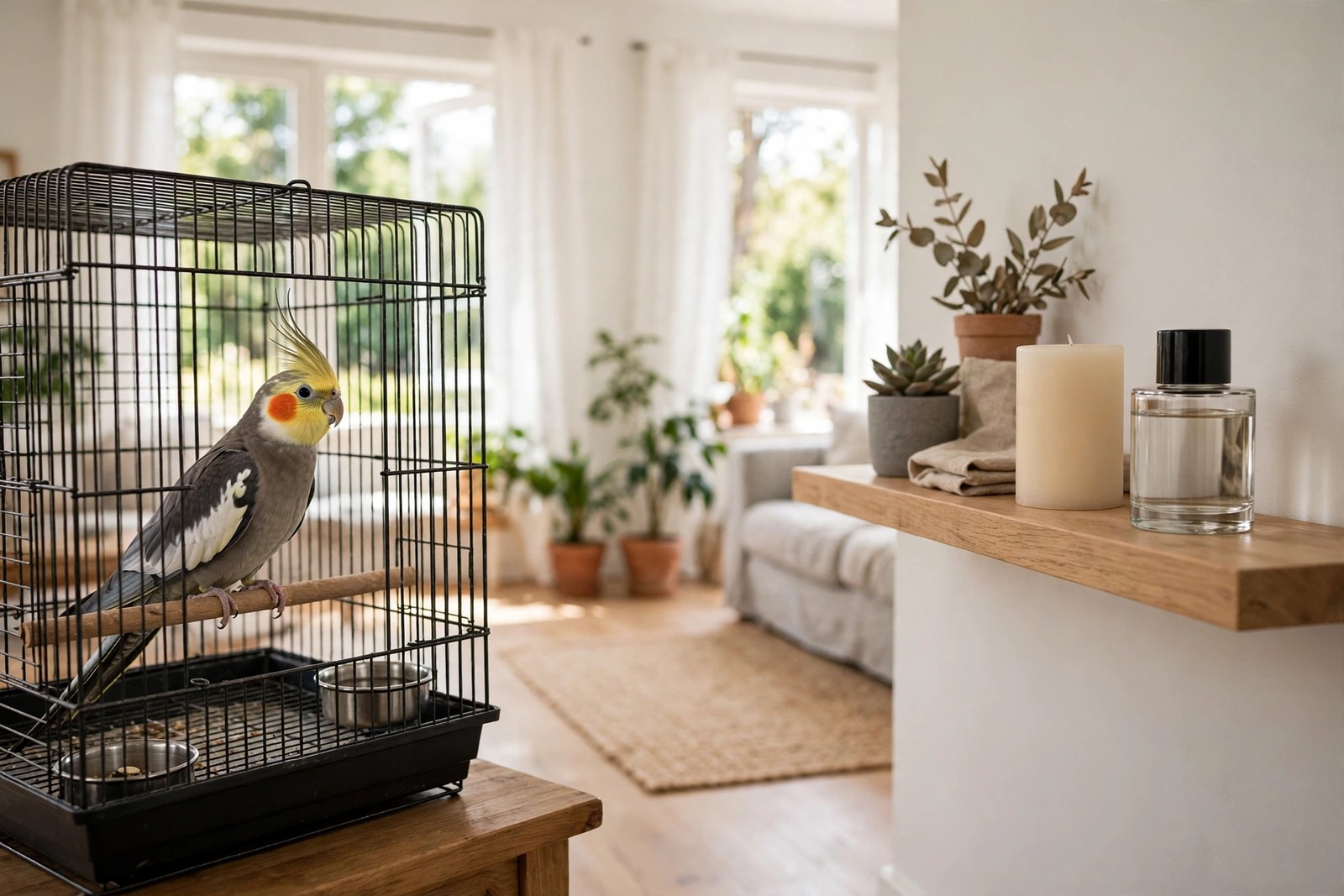
Scented candles and air fresheners are risky around birds because of how a bird breathes. A bird does not simply inhale and exhale through one set of lungs the way a mammal does. Air moves through the lungs and into thin-walled air sacs spread through the body, in a highly efficient system built to supply oxygen for flight. That efficiency has a cost indoors: airborne particles and gases are drawn in deeply, held in contact with delicate tissue, and cleared slowly, so a dose of soot or fragrance vapour that a person would barely notice can irritate or poison a bird sharing the same room.
What is actually in the smoke and spray
A burning candle releases soot and fine particles along with the fragrance oils that give it its scent, and those particles stay suspended in room air long after the flame is out. Plug-in fresheners, aerosol sprays, wax melts, incense, and essential-oil diffusers put fragrance chemicals and oil droplets into the air continuously, which is why a product that produces no visible smoke can still be a problem. Birds are small, their air sacs offer a large surface for absorption, and they breathe faster than we do, so exposure adds up quickly in a closed room, in winter especially, when windows stay shut.
Why ventilation and distance are not enough
Opening a window or lighting a candle in the next room reduces exposure, but it does not remove it: air currents carry fine particles through doorways, and a bird sits in that air for every hour of the day, not just while a person is enjoying the scent. A cage cover offers no protection, because a bird must breathe the air that passes through it. For that reason the practical rule in a bird's home is simple: do not burn scented candles, use plug-ins or sprays, or run an oil diffuser in the house at all. Unscented cleaning, a lidded bin emptied often, and fresh air on a mild day handle most household smells without putting anything into the air your bird breathes.
If scent gets used anyway
If a visitor lights a candle or sprays a room before you can stop them, move your bird calmly to a separate room with the door shut and clean air, put the product out or off, and ventilate the original room thoroughly before the bird returns. Then watch the bird, not the clock: tail-bobbing with each breath, open-beak breathing, wheezing sounds, or a bird sitting fluffed and quiet on the cage floor are signs to contact a veterinarian promptly rather than waiting to see. Adding the no-scented-products rule, and who to call if a bird's breathing changes, to the details you share through KinsLe's Family Sharing means a partner, a teenager, or a pet sitter is not relying on memory for a rule that protects your bird's lungs.