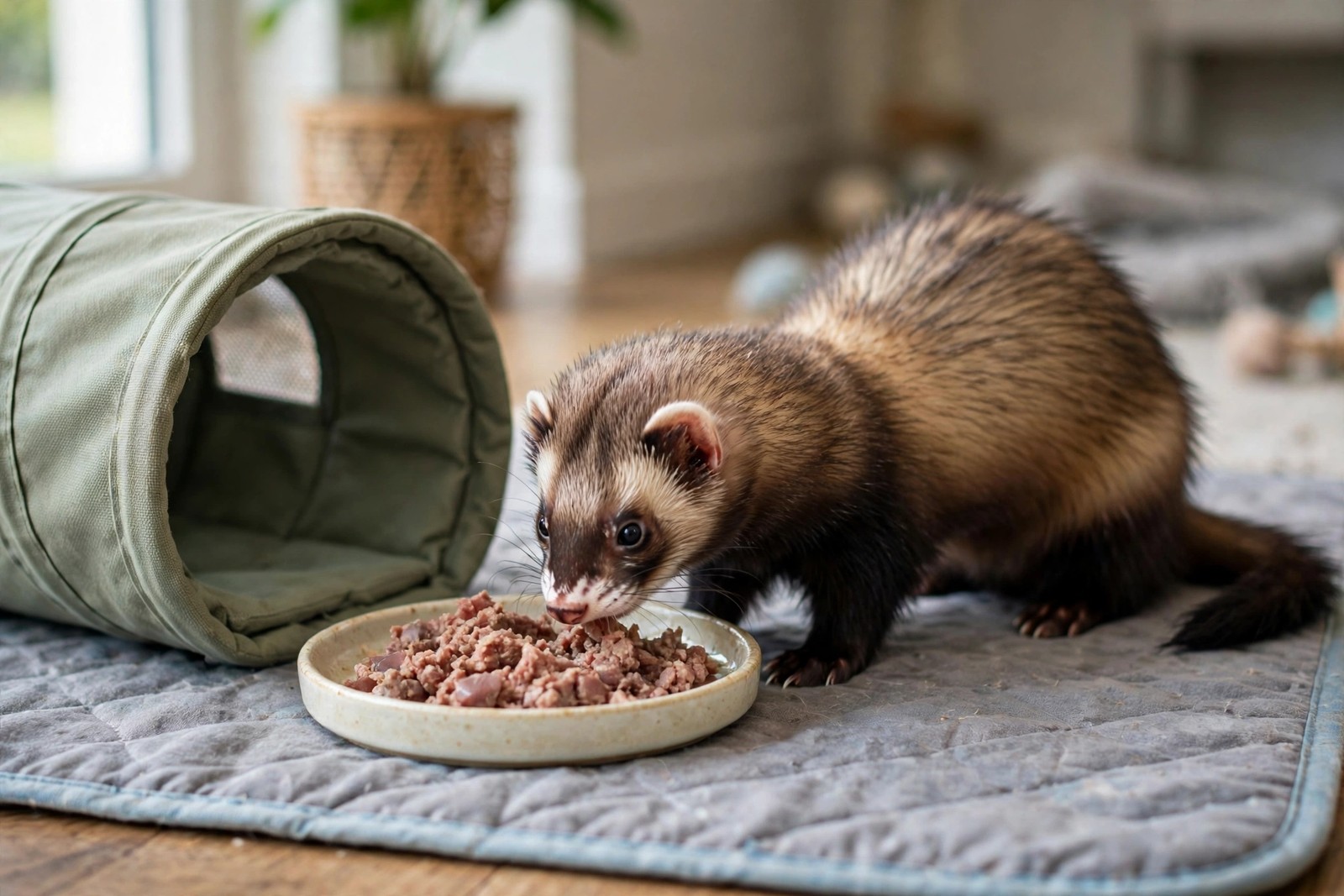
Your ferret's digestive system is a short, fast meat-processing line, and fruit and vegetables fail in it for structural reasons, not because he is fussy. Ferrets are obligate carnivores: every part of the setup, from teeth designed for shearing rather than grinding, to a stomach and intestine arranged for protein and fat, assumes the meal was once an animal. Put plant matter into that system and there is simply no machinery waiting to deal with it.
A Short Gut With No Fermentation Chamber
Plant-eating animals digest fibre with time and help. They keep food for many hours in a large fermentation space, where bacteria break down cell walls the animal's own enzymes cannot touch. A ferret has no such chamber and keeps food only briefly; a meal moves through in a matter of a few hours. Tough plant material such as pea skins, sweetcorn husks, carrot, and celery strings arrives at the far end much as it went in, because neither the ferret's enzymes nor its sparse gut bacteria can dismantle cellulose in that short window. The calories and vitamins locked inside those cell walls stay locked, so a belly full of vegetables can still be an underfed ferret.
Sugar and Starch Are a Different Problem
Fruit fails another way. Its sugars absorb readily, but a ferret's body regulates blood sugar around a high-protein, low-carbohydrate diet, and sweet foods are widely regarded by ferret vets as a strain the species handles poorly, especially fed often as treats. Sugary and starchy extras can also loosen stools and crowd out the protein and fat a ferret genuinely needs, since his stomach is small and every mouthful of filler displaces a mouthful of food he can actually use. A ferret who fills up on banana or raisins at treat time is not being supplemented; he is being short-changed.
What Plant Food Can Do on the Way Through
Undigested fibrous pieces are not always harmless passengers. Firm chunks of raw vegetable can be swallowed in pieces a ferret's narrow gut struggles to pass, and blockages in ferrets are a genuine emergency typically involving vomiting, straining, lethargy, and loss of appetite that needs a vet urgently, not a wait-and-see evening. Softer plant foods more often cause loose droppings and a gassy, uncomfortable animal. Either way, the digestive upset owners sometimes blame on a new meat diet often traces back to well-meant fruit and vegetable treats handed out alongside it.
Feeding the Animal You Actually Have
A ferret's everyday food should be built on animal protein and animal fat, with plant ingredients kept minimal, and treats work best as tiny pieces of meat-based food rather than anything from the fruit bowl. Read treat labels with this anatomy in mind: peas, potato, and fruit sugars appear in many small-pet treats marketed across species that digest very differently. If your ferret does swallow a chunk of raw vegetable or a whole grape-sized piece of fruit and then vomits, strains, goes quiet, or stops eating, treat that as a same-day vet call rather than a home experiment, because a small gut leaves little margin. For everyday clarity, KinsLe's Pet Passport keeps your ferret's meat-based diet, foods to avoid, and vet history in a single records packet, so a sitter, a family member, or a new vet sees the same feeding rules you follow.