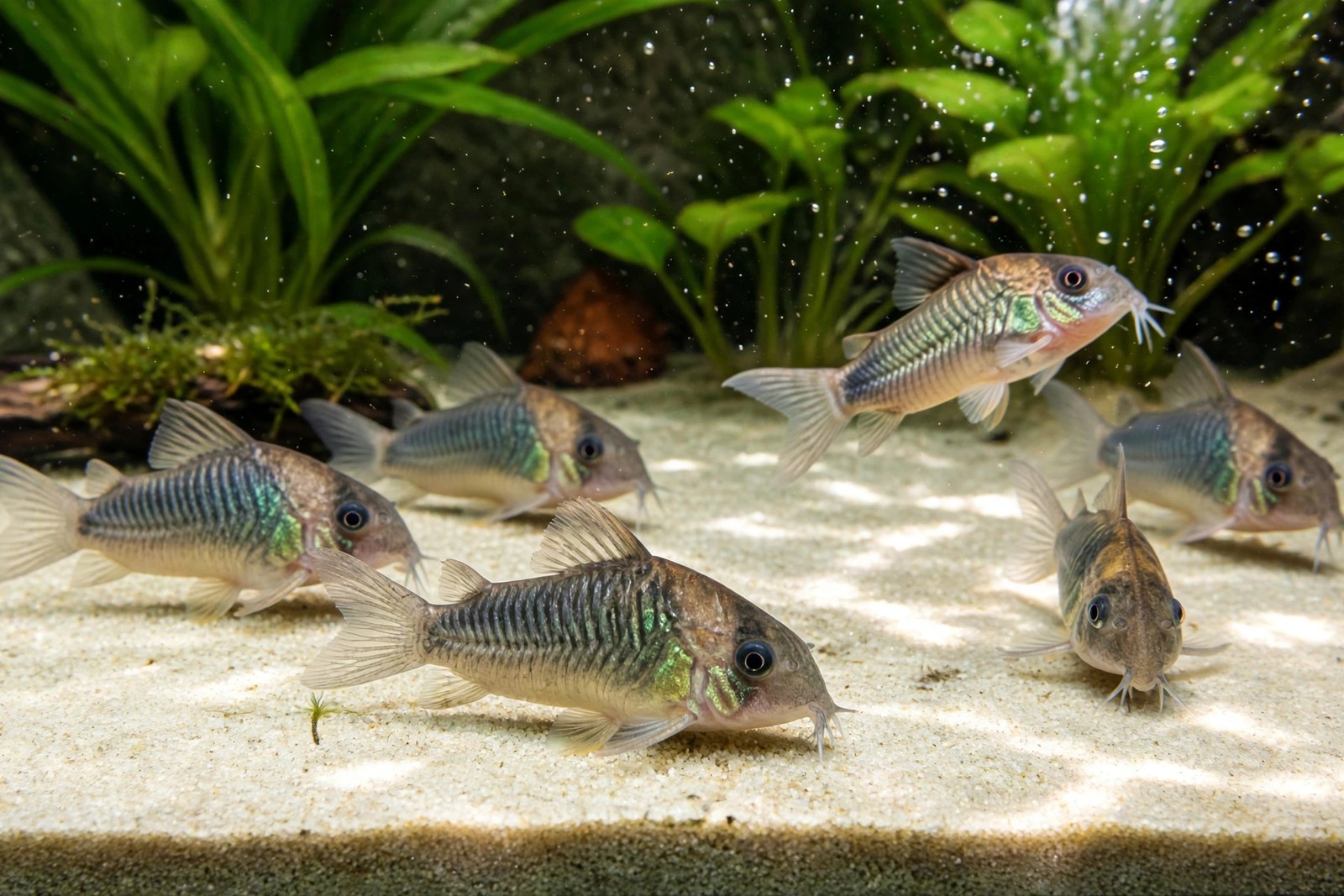
Minutes after a partial water change, a tank that was quiet can look electric: corydoras pour out from under plants and decor, race up the glass, loop over the substrate, and settle into busy grazing. That surge usually has a simple, layered explanation, and most of the time it is a welcome one. Knowing the layers helps a keeper tell excitement from trouble, because the same fish can look active for a worrying reason when something about the change went wrong.
Why Fresh Water Feels Like Rain
The leading explanation is rain. In the wild, corydoras live in rivers and flooded ground where fresh rain changes the water quickly, cools it slightly, and carries new food into the shallows. Rainy season is also when these fish feed most actively and when spawning tends to begin, so fresh incoming water appears to act as a seasonal signal rather than a disturbance. A partial change at home recreates a small version of that moment, with new water entering and the current stirring. The response that follows, exploring, feeding, and gathering, matches what the school would do when the rains arrive.
Cooler, Oxygen-Rich, and Stirred Up
Replacement water is often a touch cooler than tank water, and cooler water holds oxygen well, while pouring and refilling stir the whole tank. For bottom-dwelling fish that spend the day sifting in low, still corners, that freshened, moving water can feel like a new hunting ground.
The change also disturbs the substrate. Tiny food particles and the scents trapped among grains of sand or gravel lift as water moves across the bottom, and corydoras are built to find exactly that, whiskers first, nose down. Much of the post-change circuit is searching: the school works the glass where flow lands, checks plants and decor, then returns to sift where buried food smells strongest.
A School Answers Together
Corydoras are social fish, and the school answers as a group. One fish rising to investigate encourages the next, and soon the whole school is moving, feeding, and exploring in loose formation. Healthy excitement tends to spread evenly, with the fish still pausing to graze and gradually easing back toward normal routines once the novelty fades. A lively spell that softens into ordinary foraging is the pattern keepers learn to expect after a well-matched change.
When the Activity Is a Warning Instead
Context separates a good sign from a warning. The burst reads as positive when the replacement water was matched in temperature and treated with water conditioner before it went in, and when the fish settle rather than escalate. A keeper who skipped treatment, guessed at temperature, or changed far more water than usual has more reason to watch closely and think about what differed this time.
Frantic activity that does not settle is a different picture. The picture also includes gasping at the surface, clamped fins, flashing against objects, or a school that stays pressed at the top instead of returning to the bottom. Those signs call for testing the water promptly, including ammonia and nitrite, and for rechecking how the new water was prepared, whether equipment is running, and whether anything else was added that day. If fish look distressed or tests point to a problem, an aquarium-savvy vet or an experienced local fish specialist can help interpret what to do next.
Keeping Every Change the Same
Consistency makes the next response readable. KinsLe's Care Teams holds the named person responsible for the weekly change, the matched-water routine written beside that duty, and a brief note on how the school reacted once the work is marked done. When a different person handles the following week, the routine stays identical instead of depending on memory, and the notes give the household a baseline for judging whether tonight's burst means something new.
Care Teams on KinsLe gives that weekly routine a shared home, so a calmer or wilder reaction gets compared against last time rather than guessed at.