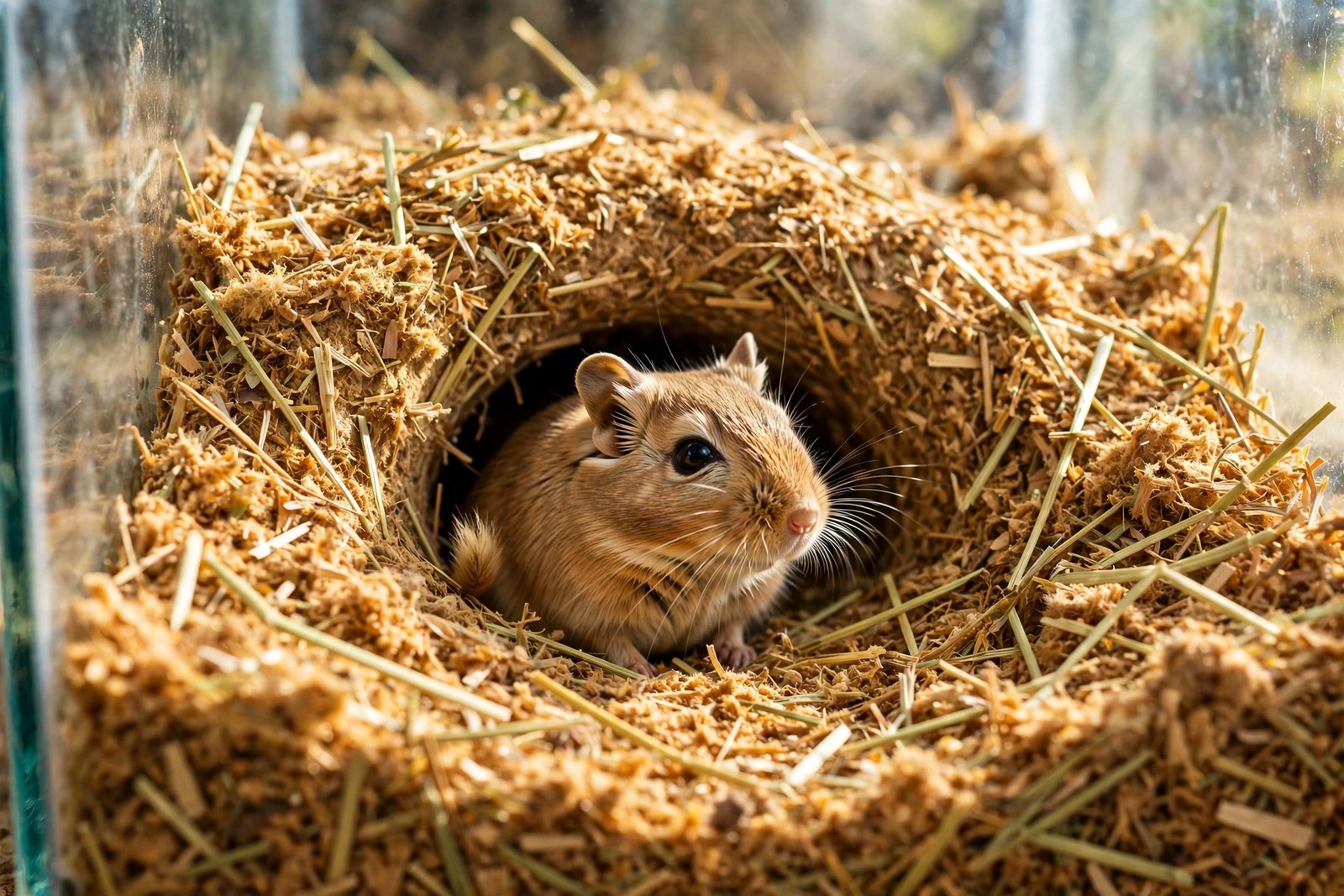
A gerbil digging in the corner of its tank at midnight is not bored, broken, or trying to escape. It is doing the single most important job its species knows. Mongolian gerbils come from dry grasslands and semi-desert where a family's burrow system, with tunnels running between a nest chamber, food stores, and several entrances, is the difference between life and death: underground, gerbils are hidden from predators, sheltered from scorching days and freezing nights, and able to raise pups in safety. Your pet's ancestors survived by digging, and the instinct arrives fully installed in every pup.
What All That Digging Is Building
In deep bedding, gerbils do not dig randomly. They excavate tunnels that hold their shape, connect them to a sleeping chamber packed with shredded material, and often set aside a corner as a food store, ferrying seeds there cheek-pouch by cheek-pouch. Digging is also their main exercise, burning the energy a desert animal evolved to spend crossing ground between burrow and feeding sites. A pair of gerbils will dig, collapse, re-route, and remodel for hours, and the finished network is used constantly: routes to the nest, escape runs, and sheltered places to groom and nap. Blocking that behaviour with a thin sprinkle of bedding does not remove the urge; it produces a frustrated animal digging at glass and gnawing bars instead.
Give Them Depth, Not Just Bedding
The practical answer is a deep, packable substrate in a tank-style home where it can be piled properly. Offer a layer in the region of eight to twelve inches deep across most of the floor, more in one raised digging area if the home allows, using plain paper-based bedding mixed with hay or shredded cardboard so tunnels hold their walls instead of caving in. Gerbils will do the landscaping themselves, usually pushing a mountain against one end and excavating beneath it. Bury tubes, cork pieces, and a nest box at different depths to reward the digging, keep the water bottle's spout checked daily because enthusiastic excavation buries it, and expect food bowls to be tipped and buried within the hour, which is why many keepers scatter-feed into the bedding instead.
Normal Digging Versus a Warning Sign
Relaxed, purposeful digging that produces tunnels and gets interrupted by eating, grooming, and sleeping is healthy behaviour. Digging that deserves a second look is frantic and repetitive: a gerbil scratching in the same bare corner for long stretches, digging at the glass without bedding moving, or gnawing the bars between bouts. That pattern usually means the bedding is too shallow to reward the effort, the home is too small, or the gerbil is stressed or under-stimulated, and adding depth fixes it more often than any toy does. A gerbil that suddenly stops digging, stays above ground, and goes quiet is showing a change worth a vet's attention, since digging is so central that losing interest in it is a real signal.
Living With a Building Site
Expect the home to look different every morning, hides unearthed, wheels buried, and tunnels re-routed, and spot-clean the toilet corner rather than stripping the whole system out, so the network survives between deeper cleans. Households that note the deep-bedding depth and the scatter-feeding routine in KinsLe's Family Sharing keep every helper on the same page, so a well-meaning clean-out never flattens a week's tunnelling or leaves the gerbils back at bare glass.