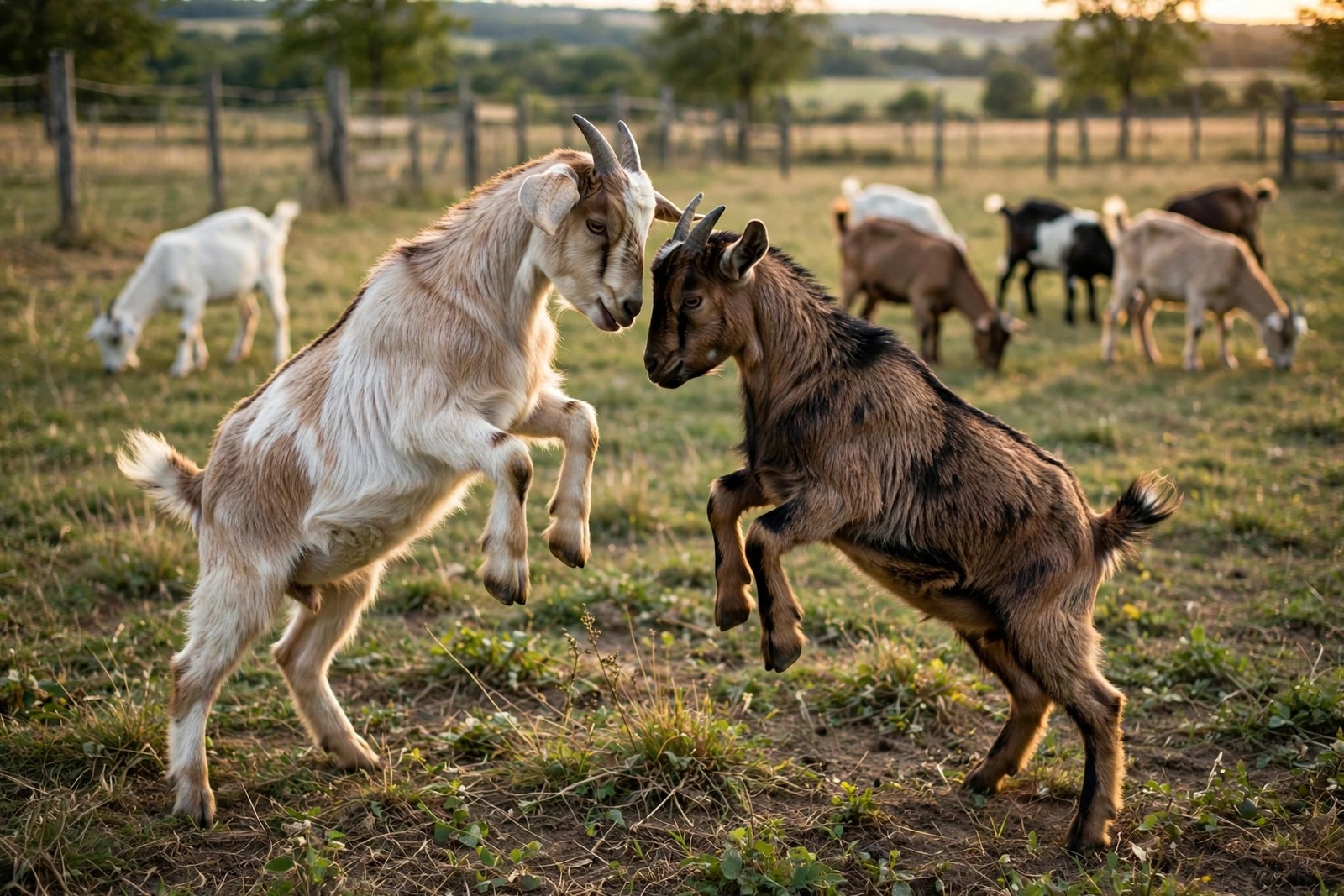
Headbutting is to goats what barking is to dogs: a core way of communicating, used in play, in argument, and in warning, and most of it is no cause for concern. A goat's skull and neck are built for impact, herd-mates understand the rules, and a herd where no one ever clashes heads would be a herd working against its own nature. The keeper's skill is reading which kind of butt just happened.
Play, Practice, and Rank
Kids start it early, rearing onto their hind legs, pausing theatrically, and dropping forward to meet a sibling's head with a clack, then bouncing away to do it again. That theatrical pause is a useful tell: play and sparring carry the wind-up, loose bodies, and easy breaks, and both goats come back for more. Among adults, headbutting settles and re-settles herd rank. Two goats circle, posture side-on to look larger, clash, push, and separate, and the matter is usually closed once the lower-ranking goat yields space, food, or the sheltered lying spot. Contests flare again when a new goat joins, when herd-mates are separated and reunited, and most intensely among bucks in breeding season, when clashes are harder, more frequent, and backed by a great deal of noise and scent-marking behaviour.
When a Butt Is a Warning
A goat warning another goat, or you, usually shows a sequence first: it goes still, stares, turns side-on, may paw the ground, snort, or stamp, and only then charges. Read in context, that sequence is fair communication, often a dam protecting kids, a goat guarding feed, or an animal that feels cornered at the gate or in the milking stand. The butt itself ranges from a deliberate shove with the head or horns to a full rearing charge, and horned goats add a hooking, twisting motion that makes their butts more dangerous to catch than a polled goat's. A goat that has learned its warnings are ignored will shorten the sequence over time, which is how keepers get surprised by an animal that actually stopped warning months earlier.
Where the Line Into Problem Sits
Headbutting becomes a problem along three lines. The first is target: a goat that starts butting people, especially one that lowers its head into hands, pushes against legs, or charges across the pen at a familiar keeper, has begun treating humans as herd rivals, and bottle-raised bucks are the classic case because they grow up with no fear of people and every reason to test them. The second is harm: repeated injuries to herd-mates, a goat that cannot be kept off another at feeding, broken fencing, or a goat that knocks children down has crossed from communication into risk. The third is change: sudden aggression from a settled goat can signal pain or illness and deserves a vet check before it is managed as behaviour.
Managing Without Making It Worse
Never push back on a goat's forehead or play head-games with kids, however charming it looks with a small goat; pushing is the goat's own invitation to spar, and you are teaching a future sixty-kilo lesson. Instead, reward goats for standing calmly, feed through a barrier where butting erupts over rations, give the herd space and more than one feeding point so rank can be settled by distance rather than contact, and handle a people-testing goat firmly and boringly, turning away and removing attention rather than wrestling. Persistent offenders may need separating at feeding or rehoming to an experienced herd. Keepers who log butting incidents, targets, and triggers through KinsLe's Care Teams share one clear herd record, so a slow drift from play toward targeting people shows up in the notes long before anyone gets hurt.