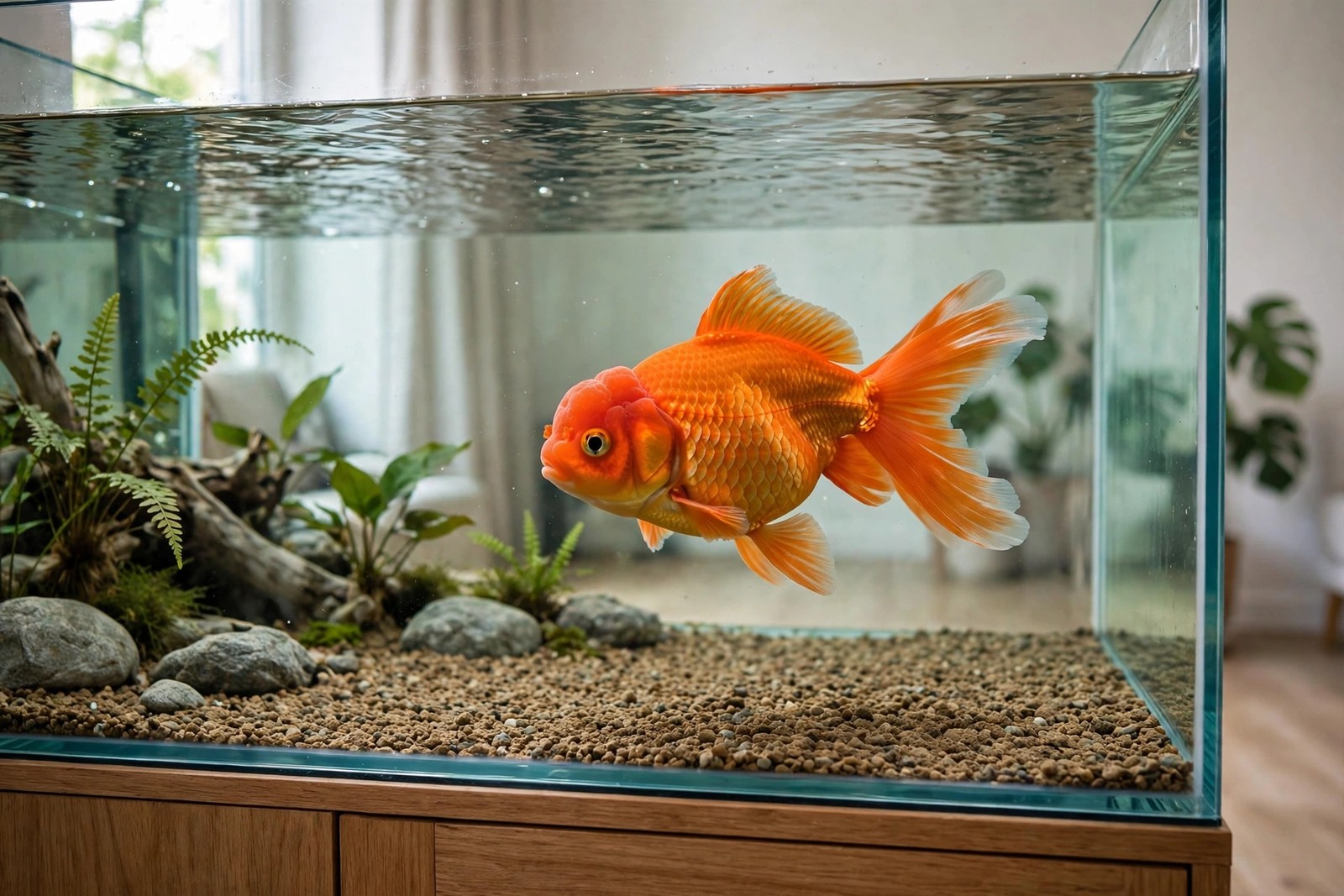
That finger-length goldfish in the shop bag is a juvenile of a genuinely large fish. Fancy varieties with rounded bodies commonly grow to six or eight inches, while single-tailed commons and comets can exceed a foot and belong in a pond once fully grown. A tank that looks generous for a two-inch youngster becomes cramped within a year or two, and a fish raised in too little water often grows unevenly and lives a far shorter life than its potential. Size alone is the first reason the aquarium has to be planned for the adult, not the baby.
The Waste Load Is the Bigger Problem
Goldfish eat a lot, digest inefficiently, and produce far more waste than a similar-sized tropical fish. That waste becomes ammonia, which burns gills and skin and suppresses the immune system even before it reaches levels a casual glance can detect. In a small bowl or tiny tank, ammonia can climb within a day of a feed; in a large, filtered volume, the same waste is diluted and the filter's beneficial bacteria have a stable environment in which to convert it through nitrite to the safer nitrate. More water is not luxury here — it is a buffer that forgives a missed day and slows every mistake.
Air, Surface, and Room to Swim
Goldfish are active, oxygen-hungry swimmers. Oxygen enters at the surface, so a broad tank exchanges far more gas than a narrow vessel of the same volume, and a long footprint lets the fish cruise, turn, and forage along the bottom the way it would in open water. Crowded fish in still, low-oxygen water hang at the surface gasping, clamp their fins, and stop feeding — signs the volume and filtration are failing them, not signs of a lazy fish.
Choosing and Running the Tank
Many experienced keepers start a single fancy goldfish in roughly twenty gallons and add volume for each additional fish, with single-tailed varieties steered toward much larger tanks or ponds. Prioritise length over height, fit a filter rated generously for messy fish, and test ammonia and nitrite regularly while the tank matures. Partial water changes on a steady weekly rhythm, gravel vacuuming to lift trapped waste, and feeding only what the fish finish in a couple of minutes keep the large volume working as intended.
A big tank also fails if nobody owns those jobs, so divide testing, changing, and filter rinsing between the people in the house and record who did what. KinsLe's Care Teams lets you assign those exact goldfish duties to family members, and each completed task is timestamped, so a water change is never assumed rather than done.