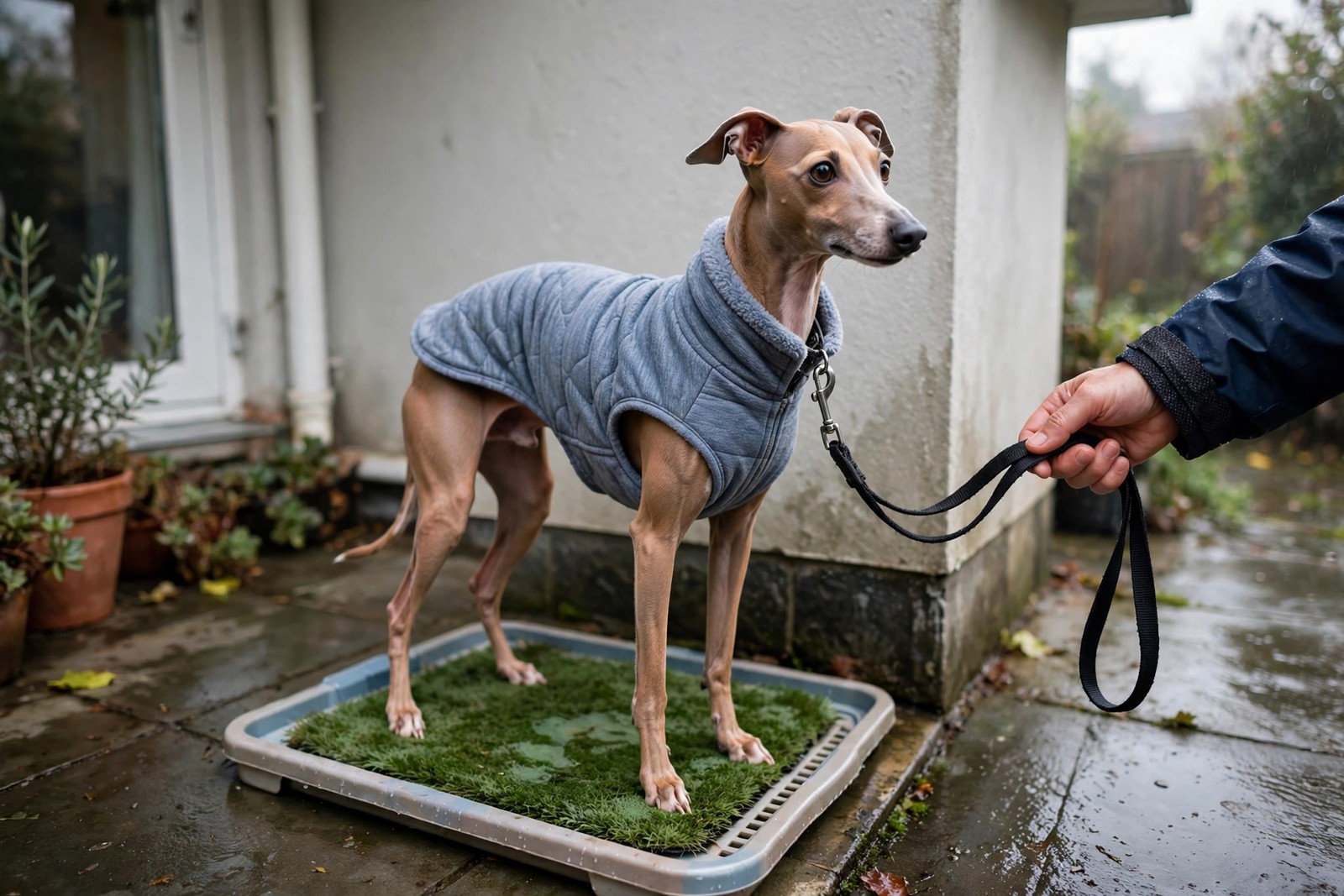
The warnings come from experience with a particular combination. Italian Greyhounds tend to feel the cold sharply, and wet grass on a cold morning can be enough to make a dog balk at the door, cross its legs through a short garden visit, and then relieve itself indoors where the floor is warm. A small bladder adds urgency to that reluctance, because a young dog especially cannot wait long between chances. Owners describe slow progress not because the breed cannot learn where to toilet, but because the weather keeps arguing against the lesson, and every indoor accident rehearsed in comfort makes the outdoor habit slower to build.
Why Weather Wins So Often
This breed carries little insulation, so wind and rain register quickly, and shivering at the toilet spot shortens every attempt. Puppies feel this more, and they also need to empty a small bladder far more often than a larger puppy of the same age. The second problem is reinforcement. A dog who toilets on a rug has solved an urgent need in a warm place, and that relief teaches something, even though nobody intended a lesson. Scolding after the fact does not repair it, because the dog links your anger with your arrival, not with the earlier accident. The workable response is to make the outdoor option happen so often, and feel so rewarding, that holding on indoors stops being the easier choice.
The Outdoor Routine That Gives Progress
Take your dog out on a lead to the same spot on waking, after every meal, after play, after naps, and last thing before bed, with added trips every hour or two during the day while a young dog is learning. Stand quietly, give the dog a few unhurried minutes, and reward outdoors the moment the dog finishes, with warm praise and a small treat carried in your pocket for exactly that purpose. Rewarding back inside teaches the wrong sequence, because the treat then belongs to coming through the door. Indoors, supervise closely or use a pen or a crate the dog already rests in happily, so accidents cannot happen unnoticed in another room. Clean any indoor accident thoroughly, and take the dog out again sooner rather than treating the accident as the schedule resetting itself.
Making Cold and Wet Days Workable
Preparation happens before the door opens. Fit a well-fitting coat indoors, clip the lead on, and head for a sheltered toilet spot, under a canopy, beside a wall, or on a cleared patch of ground the dog already knows. Keep the visit short and purposeful, reward success generously, and come back in without turning a refusal into a long, cold standoff. On days when the weather is severe, or in a flat with no quick route outside, an indoor pad or litter tray in one fixed place is a legitimate part of this breed's plan. Treat it as a second taught toilet place with its own praise, not as a lapse, and keep offering the outdoor spot first whenever conditions allow.
Timelines, Setbacks, and the Vet Mention
Expect progress over months rather than days, measured in longer dry spells and fewer favourite indoor corners, and expect a wet spell in winter to undo part of it for a while. That pattern is common enough in this breed that experienced owners plan for it instead of treating each setback as a fresh failure. Keep the rota steady through a setback, return to closer supervision for a week or two, and let consistency do the work again. One change does deserve a different response. A dog who was reliable and starts toileting indoors often, strains, passes small amounts frequently, or seems uncomfortable should see a vet, because those signs need checking rather than more training.
A rota only helps when each outing is recorded, and KinsLe's Care Teams timestamps completed trips so gaps show up before they become accidents indoors.