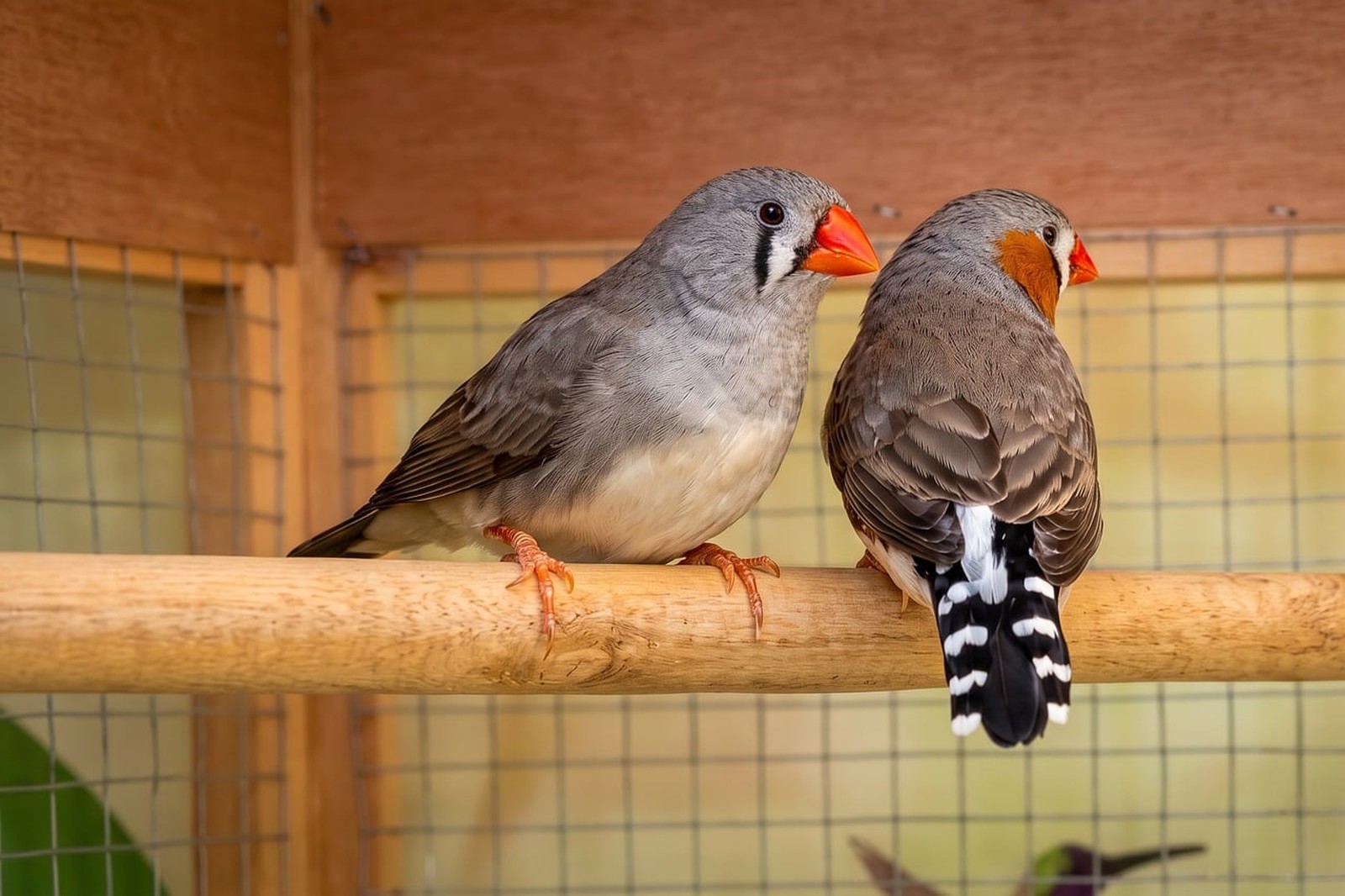
Zebra and society finches are famously ready breeders, and a pair that keeps producing chicks is not misbehaving — it is responding precisely to the conditions in its cage. Breeding in finches is not a fixed season indoors; it is a switch, and four things hold that switch on.
The Four Triggers in Your Cage
First, a mixed-sex pair: two birds sold as companions may well be a male and a female. Second, a nest — a woven basket, a covered nest box, or even a food dish deep enough to sit in tells the hen this is a place to lay, and loose fibres, feathers, or shredded paper give the pair material to line it. Third, light: long, bright days of twelve hours or more read as spring, the natural breeding season. Fourth, abundance: rich extras such as egg food, plentiful seed, and constant treats signal that chicks can be fed. With all four present, a hen lays, the pair raise the chicks, and the next clutch often starts before the youngsters have fully left the nest.
Why Endless Clutches Are a Problem
Back-to-back laying drains a small hen quickly. Each egg costs calcium and protein, and hens pushed through clutch after clutch can become thin, weak, and vulnerable to egg binding, where an egg cannot be passed — a straining, fluffed hen sitting on the cage floor is an emergency for a veterinarian the same day. Continuous breeding also leaves you with chicks needing good homes, and overcrowded cages full of related birds create stress and further unwanted pairings.
Switching Breeding Off, Step by Step
Remove nests, baskets, and anything nest-shaped, and take out loose nesting material, while keeping ordinary perches and a plain sleeping spot. If the hen lays on the cage floor, swapping real eggs for dummy eggs and letting her sit out the cycle, then removing them, discourages immediate replacement laying better than taking eggs away outright, which can prompt her to lay again at once. Shorten the bright part of the day by covering the cage for a full night's darkness, ease back the rich extras to a plain, steady diet, and, if clutches continue, house males and females separately. Rehome youngsters responsibly to people prepared for them, and never release pet finches outdoors.
A no-breeding plan fails when one person quietly returns the basket because the birds look sweet in it. KinsLe's Family Sharing shares your finches' care details with everyone helping at home, so the whole household works from the same plan and the triggers stay off.