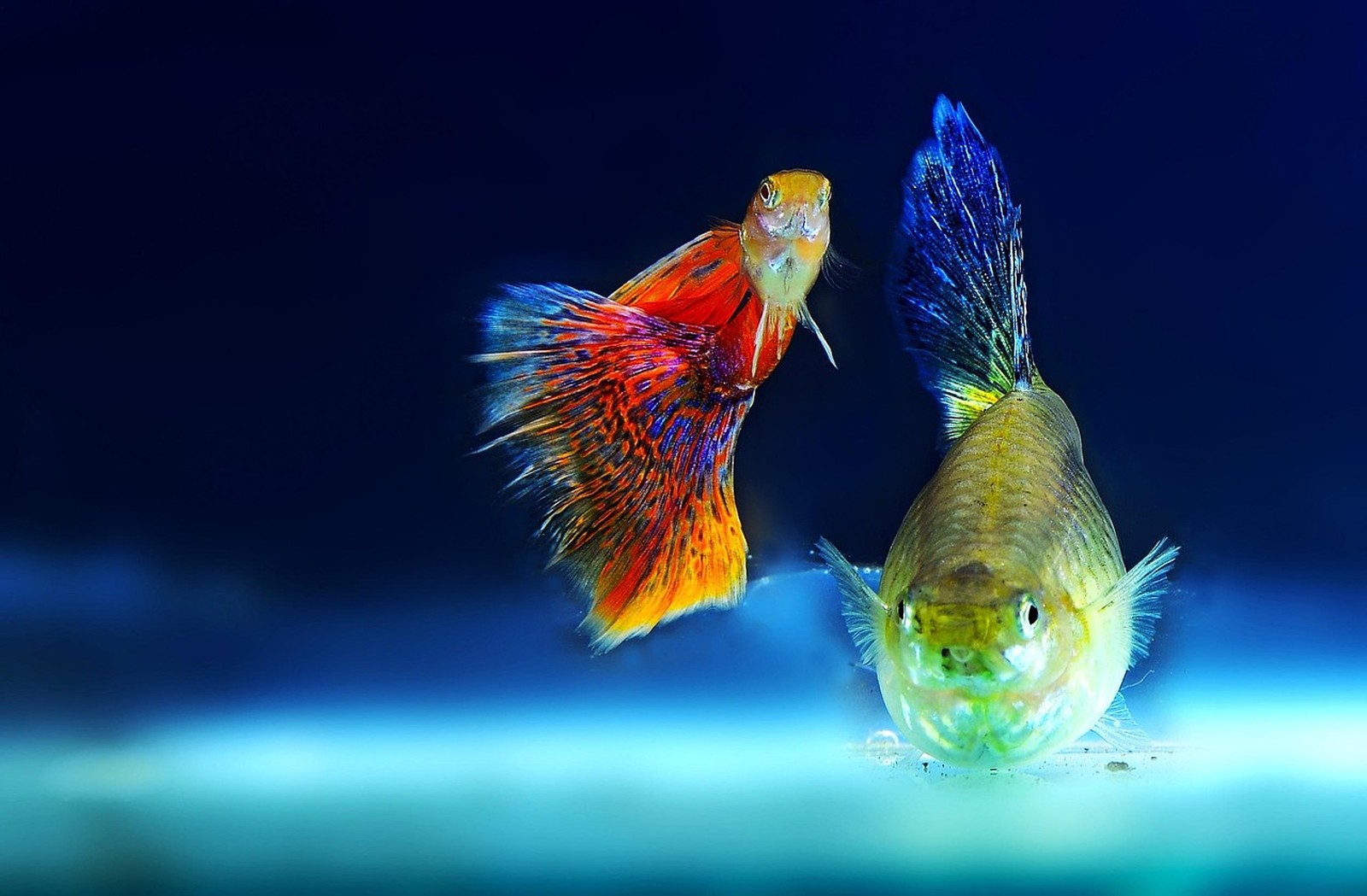
Guppies chase each other all day mainly because males are near-constant suitors. A male guppy courts by shadowing a female, displaying his colours and fins, and attempting to mate, and a healthy male will do this for much of his waking time. That pursuit is normal in itself; it becomes a problem when the tank's numbers concentrate it on too few females, or when crowding and rivalry turn the whole tank restless. Reading the pattern, who chases whom, at what times, and who is hiding, tells you which of those causes you are actually dealing with.
Male-to-female chasing: a ratio problem
In a mixed group, one male with a single female will exhaust her. Females that are chased without pause cannot feed calmly, spend the day hiding among plants or behind the filter, and may show clamped fins, rapid breathing or a reluctance to come out at feeding time, all signs of genuine stress rather than courtship colour. The widely used fix is a ratio of at least two or three females for every male, which spreads the attention across the group so each female gets long rest periods between approaches. Adding females only works if the tank has room for them, so check your stocking honestly before solving harassment with more fish. A heavily pregnant female close to giving birth is often singled out by males, and giving her a planted corner or a separate quiet tank for those days removes the worst of the pressure.
Male-to-male chasing and hierarchy
Males also chase each other. Rival males display side by side, flare fins and dart at one another to settle standing in the group, and in a roomy, well-planted tank these contests are brief and mostly theatrical. They turn harmful when space is tight or there are only two males of similar size locked in an endless contest, when one fish is chased away from food at every feed, or when fins start appearing torn. Adding females changes male behaviour too, since rivals with real courtship opportunities spend less of the day sparring, but an all-male tank can also work when numbers are high enough to spread rivalry and the tank offers broken sightlines. A single relentlessly bullied male is better moved than left to fade, because the chased fish usually stops eating first and declines quietly.
Crowding, cover and the layout of the tank
Chasing intensifies in bare water. Guppies evolved among plants and structure, and a tank with tall planting, floating cover and objects that break the line of sight gives a pursued fish somewhere to vanish, which ends a chase within seconds. In an empty tank every pursuit crosses the full length of the glass with nowhere to break off, so the same behaviour looks, and is, far more relentless. Overcrowding raises the temperature of everything: too many fish meet too often, food competition sharpens, and water quality slips, adding its own stress. If chasing began suddenly in an established group, test the water and check the temperature before blaming temperament, because fish irritated by ammonia or by water that has become too warm are restless in a way that mimics social trouble. Note, too, that other species can be the chasers; a nippy tankmate harassing guppies is a stocking mismatch, not guppy behaviour.
When chasing needs intervention
Act when you see a fish hiding all day, torn or clamped fins, weight loss, or a female that no longer recovers her calm between pursuits. The order of fixes is ratio first, then cover, then space: correct the sex balance, plant or add structure, and only then consider a larger tank or rehoming surplus males. Keep a short note of the group's numbers after every purchase or birth, because guppy colonies change fast and a ratio that was right in spring can be male-heavy by autumn. KinsLe's Family Sharing keeps those stocking numbers and the target ratio on the tank's shared profile, so anyone in the household can check before adding fish rather than after.