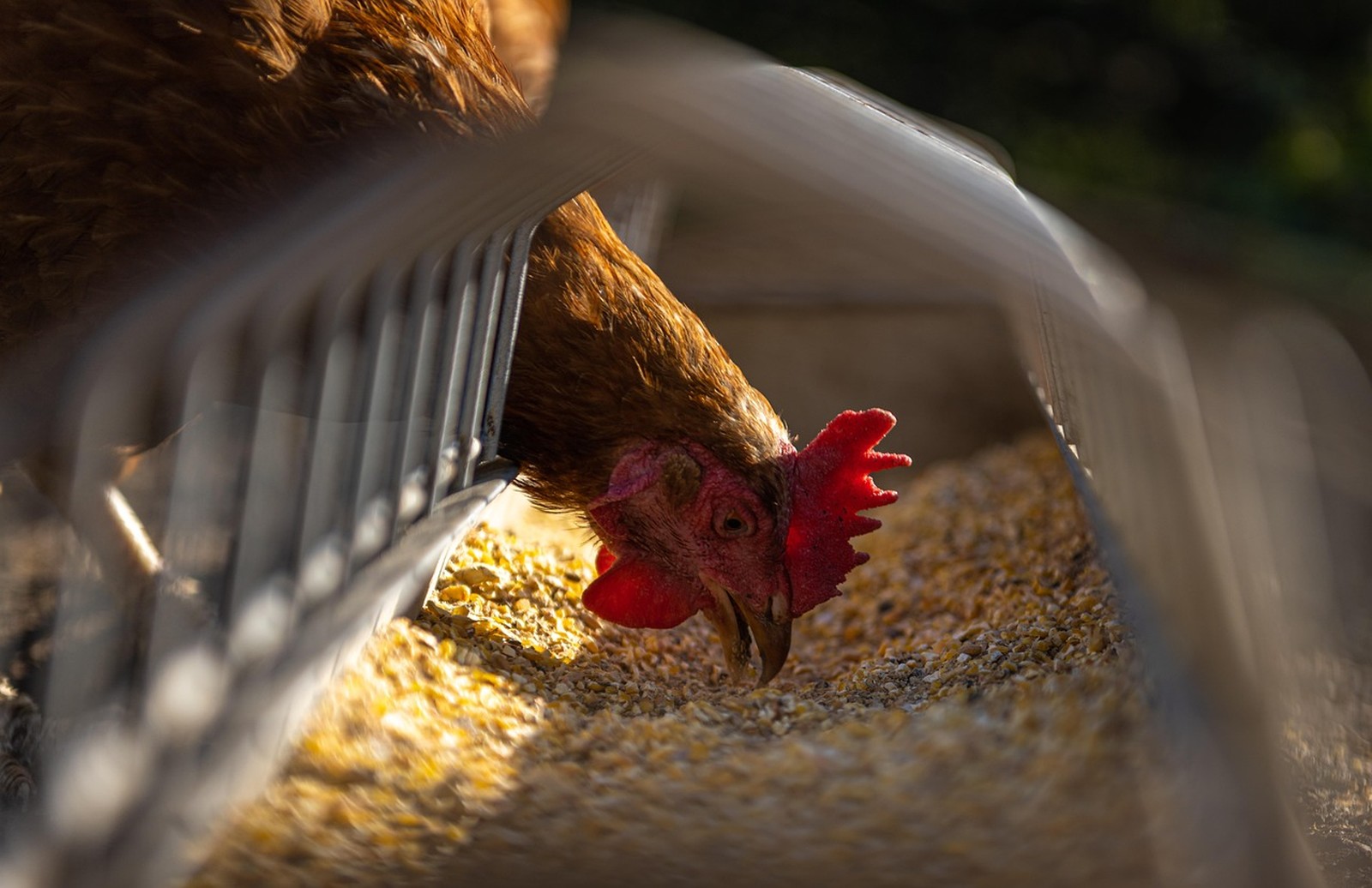
Every flock has a pecking order, and it is maintained exactly as the name suggests. A quick peck, a raised head, and a lower-ranking hen stepping aside is ordinary communication, over in a second and leaving no mark. The pecking that matters looks different: persistent chasing, feathers pulled and sometimes eaten, bare patches on backs and vents, and wounds that get worse by the day.
The Drivers Behind Harmful Pecking
Crowding tops the list — too many birds in a coop or a bare run leaves low-ranking hens nowhere to retreat and nothing to do. Boredom follows closely: hens are built to scratch and forage for much of the day, and an empty run turns that energy onto each other's feathers. Bright light for long hours raises activity and makes feathers and skin more visible targets, while a diet short on protein can drive genuine feather eating, since feathers themselves are protein. Irritation from mites or lice makes birds restless and sore, new arrivals trigger a round of ranking fights, and heat or a shortage of feeder and drinker space adds friction at exactly the spots where pecking starts.
Why One Wound Escalates Fast
Chickens are strongly drawn to the colour red and to anything contrasting on a flockmate. A small break in the skin therefore attracts curious pecks, each peck enlarges the wound and draws more blood, and a bird that was merely low-ranking in the morning can be seriously injured by evening. That is why a bleeding hen should be moved to a safe separate pen straight away and kept apart until the skin has fully healed and feathers cover the area again — returning her early simply restarts the cycle.
Fixes That Actually Reduce It
Give the flock more usable space and more reasons to use it: scatter feed in litter so hens forage, add perches, dust-bathing areas, and objects to investigate, and provide enough feeders and drinkers that no hen must fight to eat. Check the diet is a complete layer feed rather than mostly scraps and scratch grains, inspect birds and coop crevices for mites and lice, dim overly bright coop lighting, and introduce new birds gradually from behind mesh so ranking is settled with less contact. A hen with a deep wound, a prolapse, or signs of shock needs a veterinarian promptly, and a single persistent bully may need a spell apart from the flock herself.
Because harmful pecking usually builds over several quiet days, a daily look at backs, vents, and behaviour is what catches it early. KinsLe's Care Teams lets you assign that flock check to whoever does the morning round, with completion timestamped, so feather loss is logged rather than noticed too late.