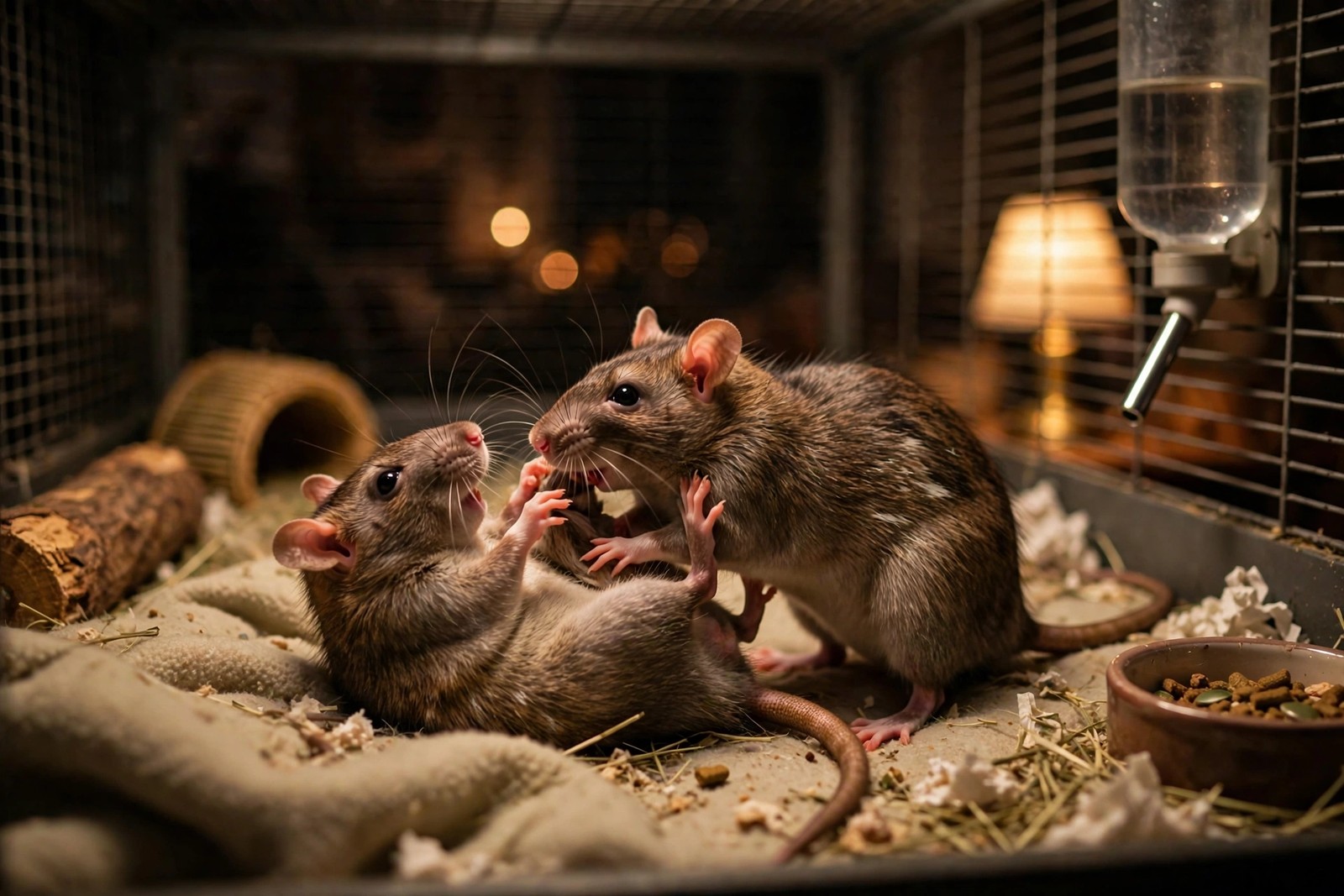
If your rats sound as if they are staging a championship bout at two in the morning, they are probably having a perfectly normal night. Rats are nocturnal animals, most active from dusk through the dark hours, so their busiest social life unfolds while the household sleeps. Wrestling and squeaking sit at the center of that social life: the wrestling is play and dominance sorting, the squeaks are communication, and the combination, however theatrical it sounds from the next room, usually ends with both rats grooming each other and curling up together. Learning to tell that healthy noise from the rare real fight is the whole skill this question calls for.
Nocturnal by Design
A rat's day runs opposite to yours. Long daytime naps, often piled together in a hammock or hide, give way to evening energy: exploring, foraging, climbing, and interacting with cage mates through the night. That schedule is built into the animal, not a habit your rats picked up from a noisy home, and it means the cage will always be liveliest when the house is quietest. Expect peaks of activity rather than constant noise, with quiet stretches of eating and grooming between rounds, and expect young rats to be rowdier than settled adults, since play wrestling is a young rat's favorite occupation.
Wrestling Is Play and Dominance Sorting
Most nighttime wrestling is social, not hostile. Rats play-fight by tumbling, pinning, and chasing, and they also sort dominance the same way, with one rat flipping the other onto its back and holding the pin briefly while both work out who stands where in the group. A rat who is pinned and then released, who returns for another round, or who grooms the winner afterward is participating, not suffering. Dominance bouts look similar and serve order in the group: brief, repeated, and finished without injury, after which daily life, including shared sleeping and shared food, continues as before. The squeaks that ride along with all this are communication, short protests and announcements pitched loudly enough for human ears during close contact, and a squeak by itself, without injury or fear afterward, is not a distress call.
The Working Rule: No Blood, No Foul
Rat keepers rely on a plain working rule: no blood, no foul. While nobody is bitten and nobody is bleeding, noisy wrestling stays in the play column, and you let the rats finish their sorting without intervening, since separating cage mates mid-bout can create more tension than it solves. Judge a bout by its ending rather than its volume. Play and ordinary dominance end in grooming, eating side by side, or sleeping in a pile, and both rats move normally the next day. Check bodies during regular handling rather than after every squeak: smooth coats, no bite marks around the neck, shoulders, and rear, and no limping tell you the night's wrestling stayed within the rule.
The Signs That Do Deserve Worry
Real trouble has a different signature, and it deserves a veterinarian rather than a wait-and-see approach. Actual wounds, especially repeated bites that break skin, move the situation out of play entirely. So does a rat who starts hiding from cage mates, sleeping alone in a corner, or going off food, because withdrawal in a social animal signals stress, pain, or illness worth examining. One rat being relentlessly targeted, chased every time it moves, blocked from food and water, or squealing in genuine fear bouts night after night is also a warning pattern, as is any rat losing weight or showing puffed fur and low energy by day. Note what you observe, with the night and the rats involved, and share those notes at the appointment, since a pattern across nights guides a veterinarian far better than one alarming episode described from memory.
Passed around the home in KinsLe, Family Sharing keeps the no-blood rule, the worry signs, and each person's watch duties in front of the whole household.