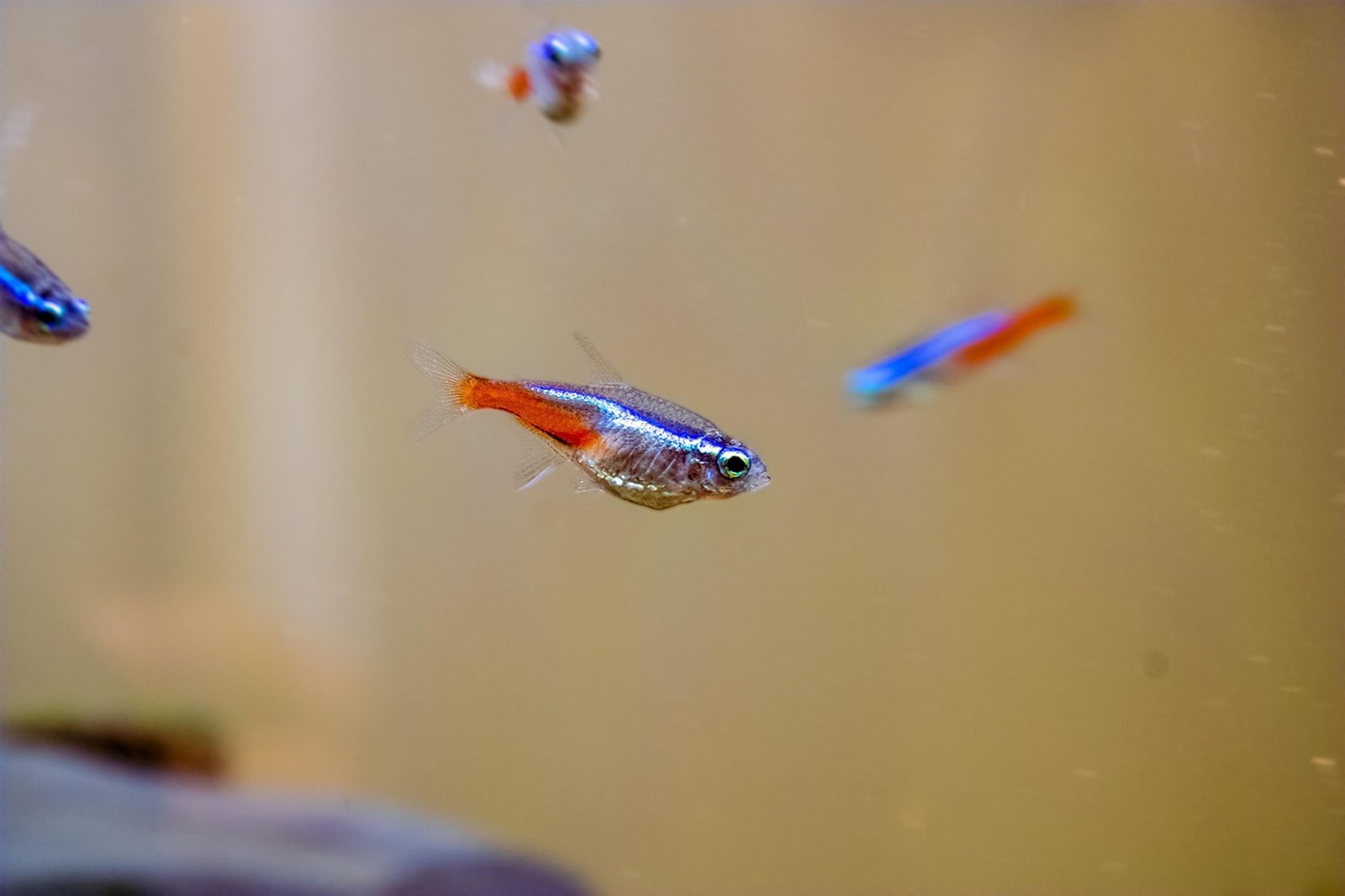
Tetras are group fish with two distinct ways of spending time together, and the switch between them is one of the clearest mood signals in a community tank. In a tight school the fish line up, face the same way and move as one body, turning together in quick, coordinated bursts. In a loose shoal they drift apart, face different directions, pick at plants and substrate, and pay little attention to each other's movements. Neither pattern is wrong: the first is a defence, and the second is what relaxation looks like.
Tight Schooling Is a Threat Response
In the wild, a tight school confuses a hunting fish and makes any single tetra harder to pick out and catch. Your tetras use the same instinct in a glass box. They bunch when something in their world reads as danger: a person walking quickly past the tank, a hand or net coming from above, a shadow crossing the surface, the tank lights snapping on in a dark room, or vibration from the stand being knocked. The school usually loosens again within minutes once the scare passes and nothing follows it. Schooling that lasts for hours, or returns many times a day without an obvious scare, deserves a closer look at the tank itself rather than the room.
Scattering Means the Group Feels Secure
A tetra that wanders away from the group to investigate a plant or chase a morsel is a tetra that judges the tank safe at that moment. Loose shoaling around feeding time, gentle sparring between males, and individuals resting in separate plant cover at night are all ordinary parts of the day. Owners sometimes worry that scattered fish have forgotten how to school, but a group that can still pull together instantly when the net appears is behaving exactly as it should. The pattern to value is flexibility: tight when startled, loose when calm, with plenty of the loose time across the day.
Triggers Inside the Tank to Rule Out
If tight schooling has become the default, work through the tank before blaming temperament. A new, larger or boisterous tankmate can keep tetras bunched for days, especially a fish that chases or nips. Numbers matter too: tetras kept in a small group of two or three often stay tense and hidden, while a larger group of their own species spreads confidence and loosens behaviour. Water problems tighten schools as well, so test ammonia, nitrite and temperature when the bunching is new, and note whether it follows water changes, filter work or a change in the light timer. Bare tanks with no plant cover leave tetras exposed, and adding tall plants or other broken sight lines gives the group somewhere to feel covered without hiding all day.
Helping the Tank Feel Safer
Small changes to routine remove many daily scares. Turn room lights on before the tank lights, or use a gradual light timer, so mornings are not a sudden blaze. Approach the tank calmly and avoid tapping the glass, and keep nets and siphons moving slowly and predictably during maintenance. Feed at regular times so the group learns the hand above the tank often means food rather than capture. If one tankmate is the clear cause, give the tetras more cover first, and be ready to rehome a persistent chaser rather than leaving the school stressed indefinitely.
When Bunching Points to Illness
A school that stays tight while individual fish also show clamped fins, faded colour, rapid breathing, flicking against decor or loss of appetite is showing more than nerves, and those added signs call for water testing the same day and prompt advice from an aquatic veterinarian if they continue. A single tetra that leaves the group and hides alone is also worth watching closely, because sick tetras often separate themselves. Recording when the bunching happens and what changed in the tank, in KinsLe's Care Teams, gives you a dated pattern to act on instead of a vague feeling that the fish seem tense lately.