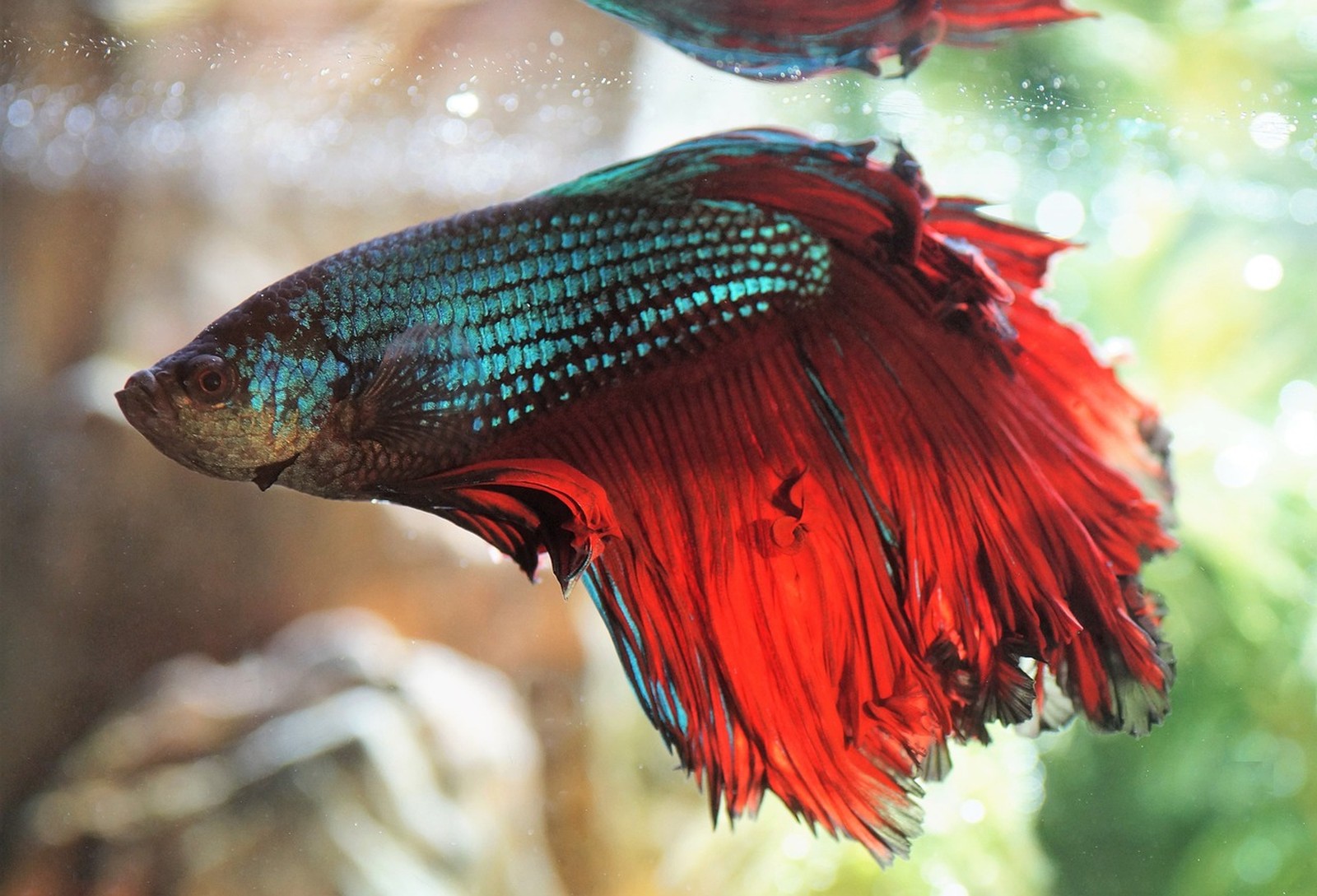
A raft of bubbles at the surface, carefully tended by a male betta who seems absorbed in it, is one of the distinctive sights in fishkeeping. Bubble nesting is breeding behaviour: in the wild, a male builds the nest, courts a female beneath it, and then gathers the eggs into the bubbles and guards them until the fry swim free. A pet betta with no female anywhere nearby will still build, because the instinct is driven by maturity, warmth and calm surface water rather than by the presence of a mate.
What Nest Building Actually Tells You
A nest tells you that your betta is male, sexually mature, and settled enough in his water to follow the instinct. Males often build under a broad leaf, a piece of floating plant or a still corner where the filter flow does not break the bubbles apart. It does not mean he is lonely, and it is not a reason to add a female: bettas are territorial, males and females are kept apart outside carefully managed breeding, and an unplanned pairing usually ends in injury. Treat the nest as a normal behaviour to enjoy and leave alone, because breaking it up simply prompts a rebuild.
Why He Seems to Ignore Everything Else
A nest-tending male works to a pattern. He blows fresh bubbles, nudges stray ones back into the raft, flares at movement near the nest and makes short patrols around it, and between bouts he may rest just beneath it. During an intense building spell he can seem uninterested in the plants, decor and far corners he usually explores, because his attention is genuinely occupied. This focused phase is usually brief, measured in hours or a day or two, and a healthy betta still comes to the surface at feeding time, eats with his usual enthusiasm and swims with fins open and relaxed between trips to the nest.
The Checks That Separate Focus From Trouble
Ignoring food is the line that matters. Offer a normal meal and watch the response: a betta who leaves the nest, eats well and returns to work is focused, not ill. Check the basics the same day if he refuses, starting with temperature, because bettas kept in cool water become sluggish and lose appetite; his water should be warm and stable, and an unheated tank in a cool room is a frequent cause of a quiet betta. Test ammonia and nitrite too, look at his fins for clamping, fraying or pale edges, and watch his breathing and resting posture. A betta lying on his side, resting on the bottom for long spells, or struggling to reach the surface needs prompt advice from an aquatic veterinarian.
Supporting a Nesting Betta Without Interfering
Keep the surface calm by baffling a strong filter outflow, and leave floating cover in place while he uses it. Do water changes gently and pour returned water in away from the nest corner where you can, accepting that some nests will be damaged by normal maintenance and rebuilt afterwards. Feed as usual, removing uneaten food so it does not foul the water near the nest, and resist adding new tankmates during a building spell, because a territorial male is especially defensive then. If the tank has a lid gap or heavy surface disturbance, small adjustments there help more than any interference with the nest itself.
Keeping the Two Behaviours Straight Over Time
Because nesting is healthy and appetite loss is not, the useful habit is recording both rather than judging either from memory. A simple daily note of whether he nested, whether he ate, and how active he was shows within a week whether the quiet spell was a building phase that passed or a decline that is continuing. Sharing that record through KinsLe's Care Teams, where feeding and water-check duties are marked complete with a timestamp, means anyone caring for the betta works from the same facts and spots a missed meal the day it happens.