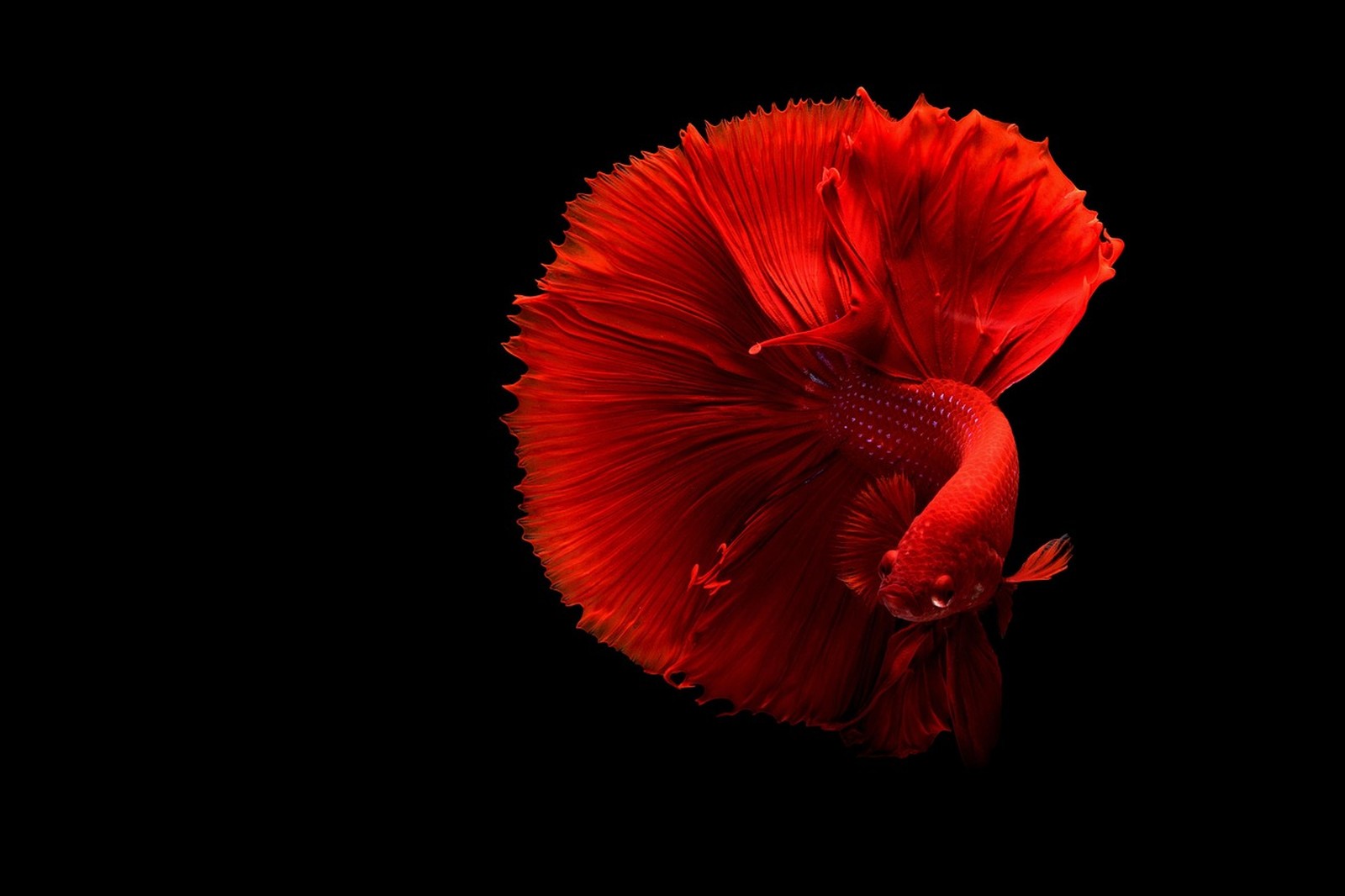
Stand in front of the tank and watch the sequence: your betta spots something, stiffens, spreads every fin to full sail, and pushes the dark flap beneath his gills outward until his head looks twice its size. That is not vanity or play. In his reading of the scene, another male betta has entered his territory, matched him gesture for gesture, and refuses to back down, because the rival in the glass copies him perfectly and never retreats the way a real, outmatched fish eventually would.
A Display Shaped by Breeding and Territory
Wild bettas hold small territories and settle disputes with displays before anyone gets hurt; the fish who looks biggest usually wins without a fight. Domestic bettas were selected for generations for stronger territorial responses and flowing fins, so the display you see is an amplified version: fins fanned to increase apparent size, gill covers flared to frame the beard-like flap, colours intensifying, and short charges at the glass. A male who has built a bubble nest is often more reactive still, since in his terms he is now defending eggs as well as ground. Females can flare too, usually more briefly, but the day-long standoffs owners report are almost always males facing their own image.
When a Harmless Display Becomes a Welfare Problem
A few minutes of flaring is normal behaviour and even good exercise; some keepers deliberately offer a mirror for a very short session and then remove it. The problem is an unremovable rival. A betta who flares for hours can stay in a state of constant alert, eat less eagerly, wear himself out, and tear his long fins either on decorations during charges or through the general wear of relentless display. Torn fins then open the door to fin problems that a calm fish in clean water would likely have avoided. If flaring is paired with clamped fins, hiding, faded colour, or skipped meals once the reflection is covered, that combination deserves a closer look at water quality and health rather than being written off as temperament.
Reducing Reflections in Practice
Reflections are strongest when the room is bright and the tank is dim, or when a dark background turns the glass into a mirror. Practical fixes, in the order most keepers find useful: put a matte background on the outside of the back and side panes so there is less glass acting as mirror; adjust room and tank lighting so the tank is not the darker side of the glass; arrange tall plants or decor so sight lines across the panes are broken up and he has shaded retreat areas; and check whether a particular pane, often the one facing a window or a lamp, is the stage for most episodes. Move the light or cover that side rather than rearranging the whole aquascape at once, then watch for a day or two. He may still flare at you, at a finger, or at a brightly coloured object near the glass; short displays aimed at passing novelties are normal betta theatre.
Handing the Setup to Someone Else
Most reflection problems return when a substitute feeder changes something small: a room light left on, a background sheet knocked loose, a tank light timer ignored. Written instructions that name those details prevent the relapse better than a general note to feed the fish. That is the job KinsLe's Care Pass was made for: it gives a sitter a temporary, scoped link to your betta's feeding and lighting routine, so the background stays on, the timer stays set, and the invisible rival stays out of his day while you are away.