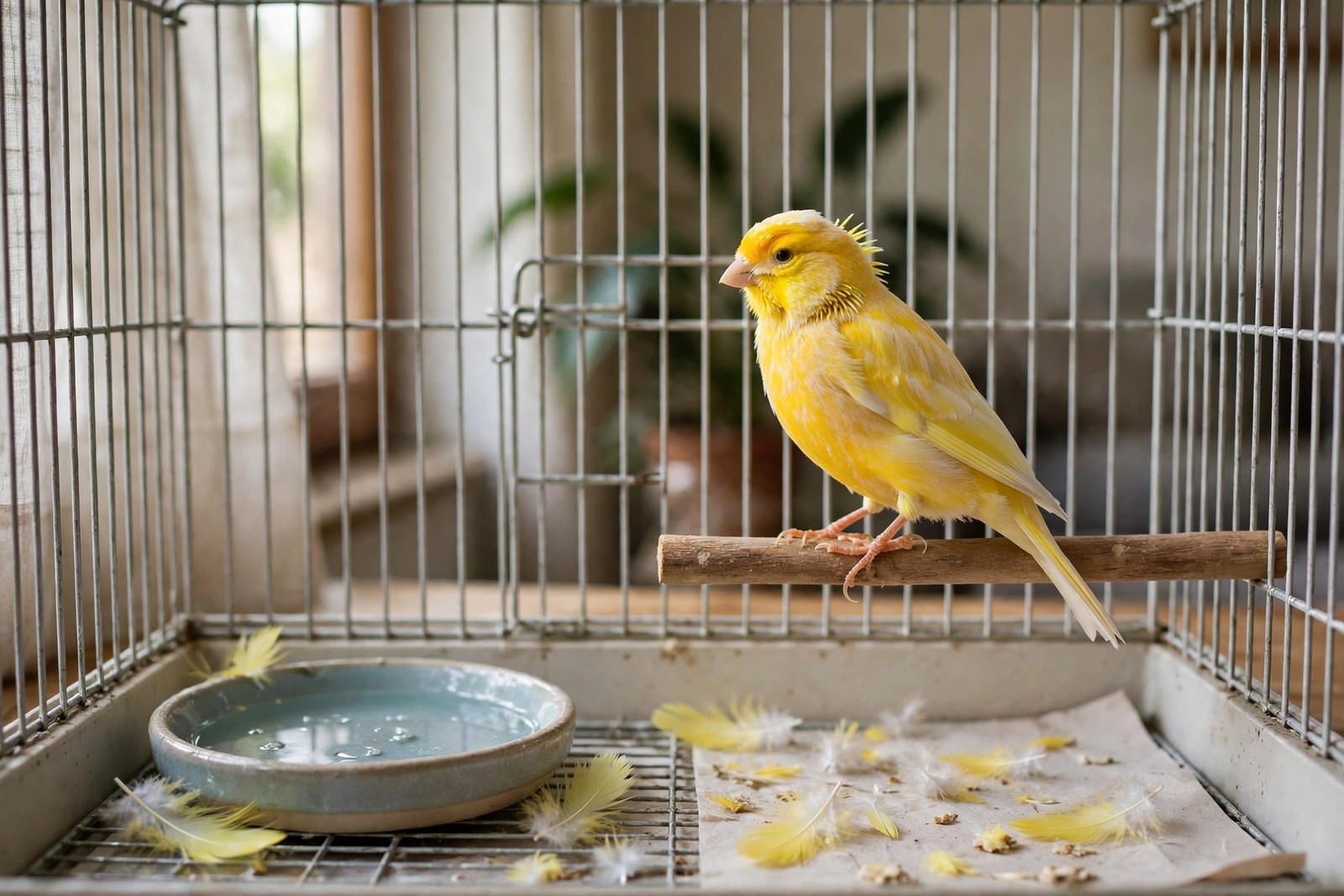
A healthy canary replaces every feather it owns once a year. The process looks alarming the first time you see it, with loose feathers on the cage floor and a bird that looks thinner and scruffier by the week, but molting is maintenance, not illness. Feathers are dead tissue once grown; they fray, fade, and lose their waterproofing and flight efficiency, and the only repair available to a bird is to shed each one and grow a fresh replacement.
How Long the Molt Takes and What Changes
A typical canary molt runs about six to eight weeks from the first dropped feathers to the last new ones opening fully. It is switched on by changing daylight: as days shorten, hormonal shifts tell the body to begin, which is why indoor birds kept under erratic artificial light can molt at odd times or drift into a drawn-out, patchy molt. Feathers come out in a balanced order, a few at a time from each side, so the bird is never left flightless. New feathers arrive as pin feathers, stiff little spikes sheathed in keratin that are tender while blood still feeds them. Expect a quieter bird during these weeks. Male canaries usually stop singing through the molt, because song is breeding-season behaviour and the body's budget is being spent on feathers instead. Appetite often rises even as activity falls.
Feeding a Bird That Is Building Feathers
Feathers are almost entirely protein, and growing a full set while keeping warm is the most nutritionally demanding work a canary does all year. Alongside the usual seed or pellet base, offer a protein-rich egg food or a little hard-boiled egg several times a week, plus small amounts of protein-carrying extras such as cooked quinoa or sprouted seed. Calcium matters at the same time, because the body draws on mineral reserves while feathers form, so keep a cuttlebone or mineral source in the cage and replace it when it is ignored and soiled rather than fresh. Fresh greens such as broccoli florets, grated carrot, and dandelion leaves round out the vitamins new plumage needs. Keep fresh water in front of the bird at all times, because a molting canary drinks more than usual.
Rest, Warmth, and Baths
Molting birds are itchy, slightly vulnerable, and easily tired. Give yours long, undisturbed nights in a covered, draft-free spot, and keep handling to what is necessary, because pin feathers are sore when they are bent or grabbed. A shallow bath offered daily helps soften the keratin sheaths so new feathers open cleanly, and many canaries bathe eagerly during the molt even if they are lukewarm about water the rest of the year. Keep the cage in its familiar place, away from kitchen fumes and sudden temperature swings, and resist the urge to help by pulling at sheaths or loose feathers: a feather that is ready falls out on its own, and one that is not ready is still connected to living, blood-fed tissue.
When a Molt Is Not a Molt
Contact an avian veterinarian if feathers fall but no pins replace them, if bare patches appear on the head or body, if the molt drags on well past eight weeks, or if your canary fluffs up, stops eating, or sits on the cage floor, because those signs point to mites, infection, thyroid or lighting problems, or another illness wearing a molt's clothing. A normal molt is symmetrical, seasonal, and finite, and the bird stays bright and hungry throughout. KinsLe's Care Teams keeps molt support from depending on one person's memory, since the extra egg food, daily bath water, and earlier cage cover can each be assigned to whoever is home and marked complete with a timestamp.