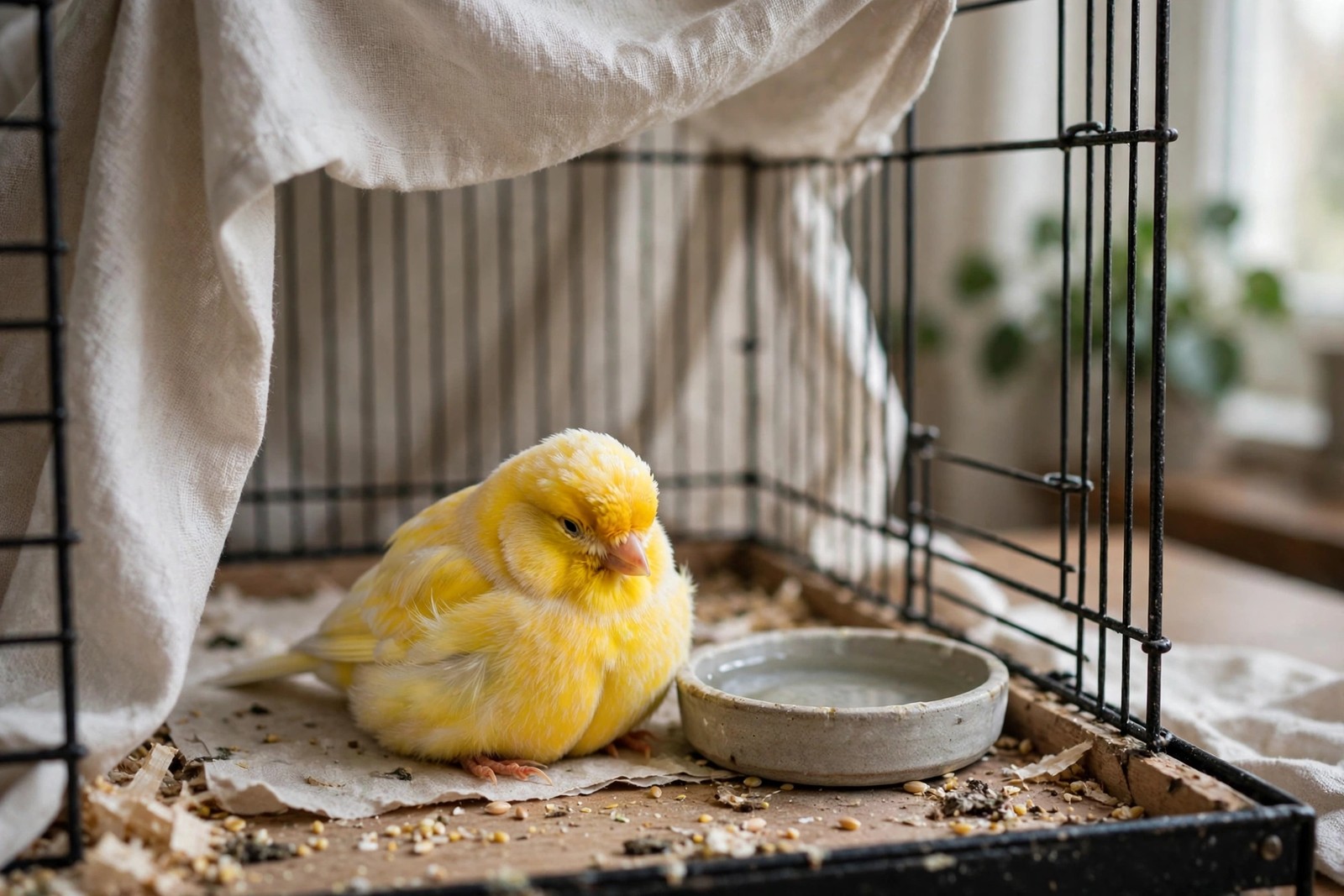
Of all the sights a canary owner can walk in on, a puffed-up bird sitting on the cage floor is the one that should move you fastest. Unlike a molt or a quiet afternoon, this posture is a classic, well-recognised sign of illness in small birds, and in a canary it almost always means the bird is seriously unwell and needs an avian veterinarian the same day, not a period of watching and waiting.
Why This Posture Means Sickness
Each part of the picture tells part of the story. A healthy canary holds its feathers sleek; a cold or feverish one fluffs them out to trap a layer of warm air against the skin because it can no longer regulate its temperature well. Perching takes strength and balance, so a bird that settles on the floor, especially in a corner, is often too weak to grip a perch safely. Tail-bobbing with each breath, closed or half-closed eyes, silence from a normally singing male, and untouched seed deepen the picture. Canaries are prey animals that mask weakness instinctively, because a visibly sick bird draws predators, so by the time a canary looks this ill it has usually been ill for a while. That hidden head start is exactly why speed matters more than home remedies.
What to Do in the First Hour
Warmth, quiet, and a vet call come first, in that order. Move the cage, or a small hospital box lined with a soft cloth, into a warm, draft-free room, and keep one side of the cage gently warmed so the bird can move toward or away from the heat. Put seed and water in low dishes on the floor within a step or two of where the bird sits, so eating and drinking cost it almost no energy. Cover part of the cage to dim the light and reduce stress, handle the bird as little as possible, and do not offer leftover medicines, human remedies, or forced food or water, any of which can harm a bird this fragile. Then phone an avian veterinarian, describe the posture and how long it has lasted, and follow the timing they give you; if your usual vet cannot see the bird promptly, ask them who can.
Causes a Veterinarian Will Explore
Only an examination can say what is wrong, and the list a vet works through is wide. Respiratory and other infections are common in small birds and can move quickly. Egg binding is a real possibility in a hen, where a stuck egg leaves her straining, weak, and floor-bound. Exposure to fumes is another, because a canary's airways are extremely sensitive to overheated non-stick cookware fumes, scented sprays, and smoke, and a bird can collapse after an exposure its owners barely noticed. Parasites, liver or kidney trouble, injury from a fall or a night fright, and simple exhaustion after egg-laying also belong on the list. Knowing what changed in the bird's room, diet, and routine in the last few days gives the vet genuine clues, so note it before you travel.
Travelling and the Days After
Transport your canary in its own cage if it fits safely in the car, or in a small, dark, ventilated box, kept warm and level, with no perch to fall from. Take a sample of the droppings from the cage floor on clean paper if you can, because their colour and consistency carry information. After the visit, expect a period of convalescent care at home: a warm, quiet cage, food and water kept low and close, and careful watching of appetite and droppings while any vet-directed care runs its course. A bird that returns to its perch, sleekens its feathers, and starts eating eagerly is telling you it is winning. KinsLe's Pet Passport supports that whole arc, because the vet can see your canary's records in one packet and you can add the visit notes and follow-up dates to the same place afterwards.