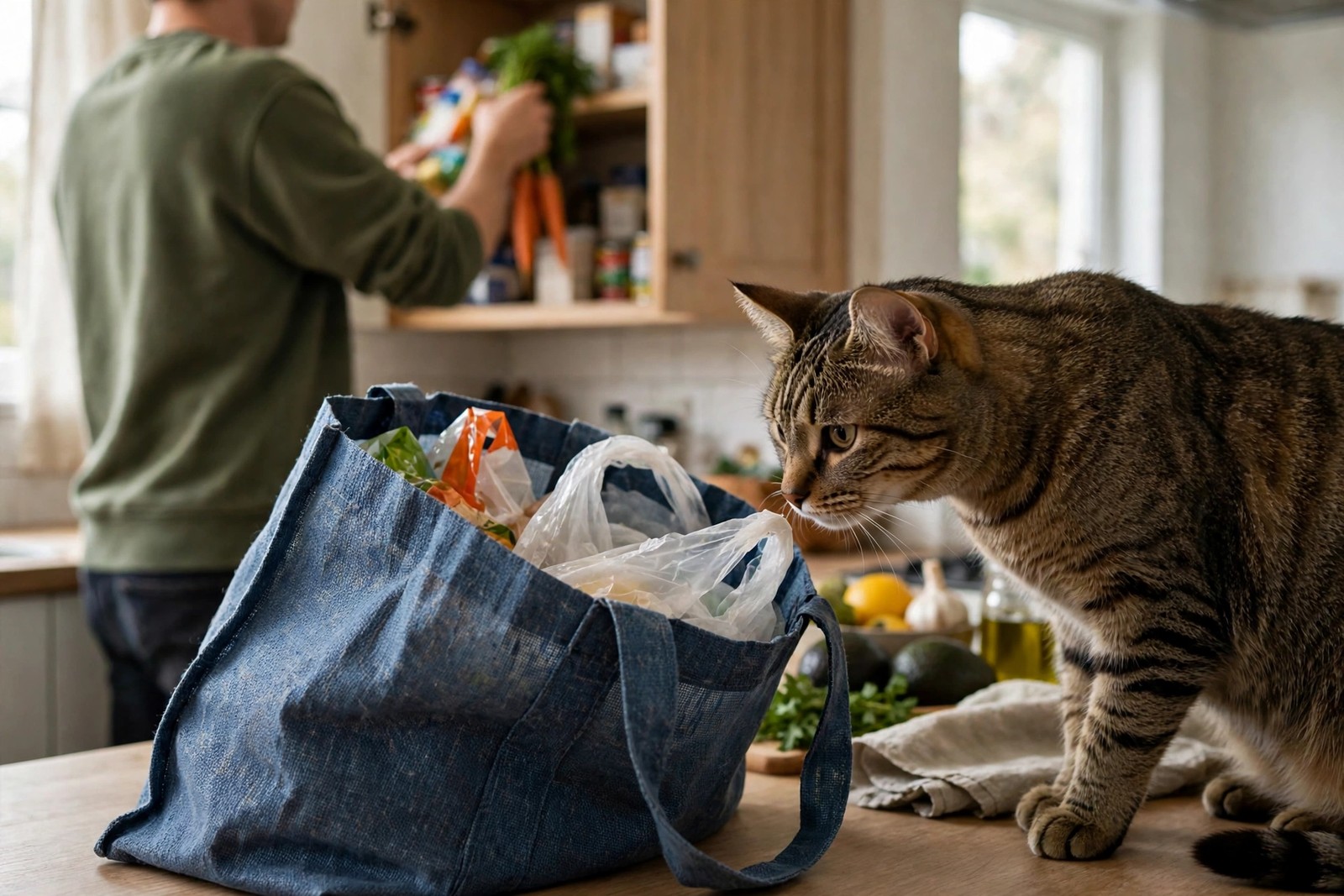
A cat licking a shopping bag with total concentration looks comical, but this is the one chewing habit to take seriously from the first time you see it. The attraction is real, layered, and understandable — and plastic, unlike a cardboard box, can genuinely hurt the cat it fascinates.
What Draws a Cat to Plastic
Several draws stack together. Some plastic films are manufactured using fatty compounds, including animal-fat-derived ingredients in the material or its coatings, and a cat's nose is fine enough to find that faint, food-adjacent scent interesting. Bags that carried groceries hold the smell of meat, bread, and produce besides. Then there is the sensory side: plastic crinkles loudly, feels cool and slick against the tongue, and gives under the teeth in a way cats seek out, and licking or biting it can become a self-soothing routine for a bored or anxious cat, repeated until it is simply what she does whenever a bag appears.
When It Looks Like Pica
A cat that occasionally licks a bag is exploring. A cat that hunts plastic down, bites pieces off, and swallows them — or does the same with fabric, paper, or other non-food items — may have pica, a compulsive pattern that can accompany nutritional problems, gastrointestinal or dental disease, stress, or an ingrained habit in predisposed breeds. Either way, the swallowing is the danger point, not the interest itself.
The Risks, and Why Storage Is the Answer
Swallowed plastic cannot be digested, and a strip or corner can irritate the stomach or obstruct the intestine — a cat that has eaten plastic and then vomits repeatedly, retches without bringing anything up, stops eating, becomes lethargic, or strains should be seen by a veterinarian urgently, and you should say plainly that plastic is missing. Loose film and bag handles are a second hazard: a cat can tangle a handle around her neck or push her head into a bag she cannot back out of, so bags should never be left on floors, chairs, or low hooks. Store reusable bags in a closed cupboard, knot and bin thin single-use bags immediately, and redirect the cat to wand play, cardboard, and lickable treats made for cats rather than punishing an attraction she cannot reason about.
If episodes continue despite bags being stored away, a note of when they happen, what she targets, and whether anything was swallowed turns a vet conversation from guesswork into evidence. KinsLe's Pet Passport holds that chewing log alongside your cat's vaccination and visit history, so the whole picture travels with her records.