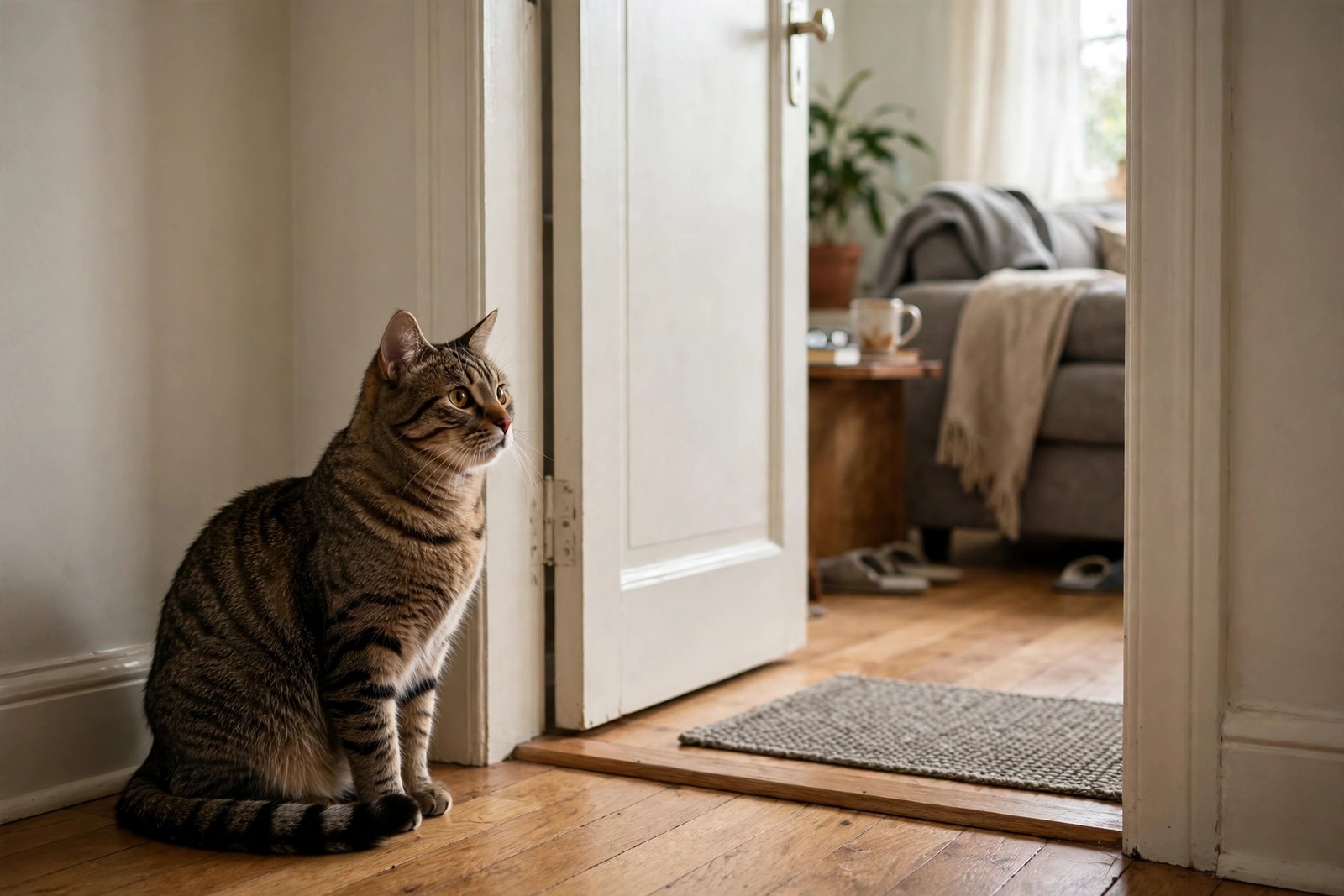
A cat that cries the moment you leave is usually not being dramatic. She is using the one tool that has a long reach: her voice. Cats meow far more at people than at other adult cats, so a cry aimed at a closing door is communication meant for you, and the reason behind it is worth sorting out before you try to stop it.
A Bond, a Closed Door, and a Missing Person
Some cats shadow one favourite person and settle only while that person is in sight. When you step into another room, your smell fades, your voice muffles, and the routine she was enjoying ends without warning. Kittens do this while they are still building confidence away from their mother and littermates, and a newly adopted cat may do it for the first weeks in an unfamiliar home. Adult cats that have recently lost a companion animal, moved house, or had a household member leave for work or school can start calling too, because the social pattern they relied on has changed.
The Call That Has Worked Before
Learned behaviour is often the biggest piece. If crying has previously brought you back into the room, earned a reply through the door, or ended with a cuddle or a treat, your cat has run a simple experiment and liked the result. The louder call tends to survive because it is the one that gets answered, while quiet waiting goes unnoticed. This is not spite and it is not manipulation in any human sense; it is a behaviour that pays, being repeated.
Boredom feeds the same habit. A cat with no play outlet, no window view, and nothing scheduled between meals has little to do except monitor you. An unmet need can hide inside the protest as well, so check the basics before you label it attention-seeking: fresh water, enough food, a clean litter tray, and a warm place to sleep that is not in the room you just left.
When Age or Health Is Behind It
Treat a change in pattern as information. A senior cat that cries at night, wanders, or seems disoriented should see a veterinarian, because cognitive decline, reduced hearing, raised blood pressure, thyroid problems, and pain can all show up as louder or more frequent calling. The same applies at any age if crying arrives with appetite change, weight loss, hiding, litter tray changes, or sensitivity when touched. Describe when it happens and how long it lasts rather than trying to name a cause yourself, and let the clinic examine her.
Building Quieter Departures
Start with very short absences. Step out, close the door, and return calmly before the crying starts, even if that means ten seconds at first. Stretch the gap gradually over days, and keep arrivals and departures dull: no long goodbyes, no excited hellos. Give her something absorbing just before you leave, such as a puzzle feeder or a favourite solo toy, and take in a solid play session earlier in the day so she is ready to rest rather than patrol. Make sure everyone in the house follows the same rule about not answering cries through the door, because one person rewarding the call will keep it alive for everybody. KinsLe's Care Teams lets your household assign those short departure practices, play sessions, and tray checks to named people with each completed duty timestamped, which keeps the plan steady even on days when you are not the one at home.