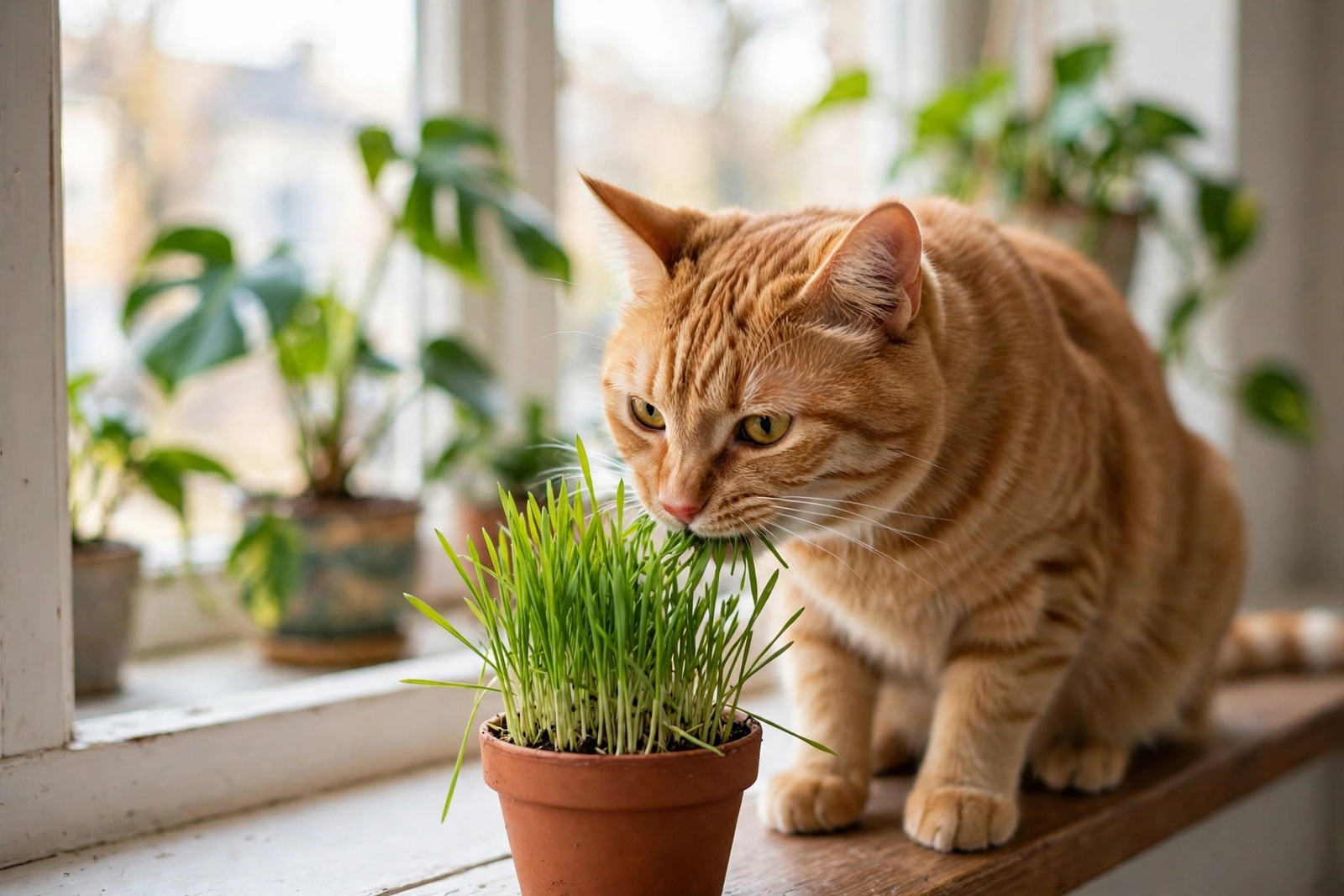
Grass eating looks odd only if you expect a strict meat-eater to ignore plants entirely. Wild cats swallow small amounts of vegetation along with prey, and domestic cats kept the habit. Most cats that graze are not ill and are not trying to tell you their food is deficient; they are following a normal feline behaviour that has a few practical payoffs and a few real risks worth managing.
Fibre, Folate, and Getting Things Moving
Grass is largely indigestible fibre for a cat, and that is part of the point. Material that cannot be broken down adds bulk as it passes through the gut and can help carry swallowed hair along with it instead of letting it gather into a hairball. Grass juice also contains folate, a B vitamin involved in producing red blood cells, and one long-standing explanation is that cats benefit from that trace nutrient even though a complete cat food already supplies it. Treat that as a plausible contributor, not a proven single cause.
Why Some Cats Vomit Afterwards
Blades of grass irritate the stomach lining slightly, and a cat that has swallowed hair, feathers, or other matter she cannot digest may vomit after grazing and clear it out. Owners often assume the cat ate grass because she already felt sick, and sometimes that sequence is right, but many cats graze first, vomit once, and then carry on eating and playing as normal. A single episode in a bright, hungry cat is a different picture from repeated retching, drooling, or vomiting several times in a day, which needs a veterinary call the same day.
Taste and occupation matter too. Grass is springy, slightly sweet, and different from anything in the food bowl, and an indoor cat with few plants to investigate may graze out of curiosity or boredom. Kittens in particular test the world with their mouths, so expect some experimental nibbling that fades as they mature.
Which Grass Is Safe and Which Is Not
The grass itself is rarely the problem; what is on it and what grows beside it can be. Keep your cat away from lawns recently treated with weedkillers, pesticides, or fertiliser until the product guidance for that treatment says the area is safe again, and be cautious with grass you cannot account for at all. Awned seed heads from wild grasses can lodge in a nose, eye, or throat, so grazing on rough verge grass is a poorer choice than a tended lawn. The bigger danger is company plants: lilies are highly toxic to cats, and a cat browsing a mixed flower bed can chew something genuinely harmful while aiming for grass. If you think she has eaten a toxic plant, contact a veterinarian promptly rather than waiting for symptoms.
A Safer Outlet Indoors
For an indoor cat, grow a pot of untreated cat grass from wheat, oat, rye, or barley seed in plain compost, and replace it as it yellows so there is always a fresh patch. Place it away from houseplants you do not want chewed, and praise her for using it, which quietly redirects the habit. Keep up regular grooming as well, because hair you remove with a brush is hair she cannot swallow.
Watch the pattern rather than the single event. Note how often she grazes, whether vomiting follows, and whether her appetite, weight, stools, or energy change alongside it, because a rising frequency is the detail a clinic will ask about first. KinsLe's Pet Passport pulls her weight history, recorded conditions, and vet timeline into one packet you can share with the clinic, turning those scattered observations into a clear history at the appointment.