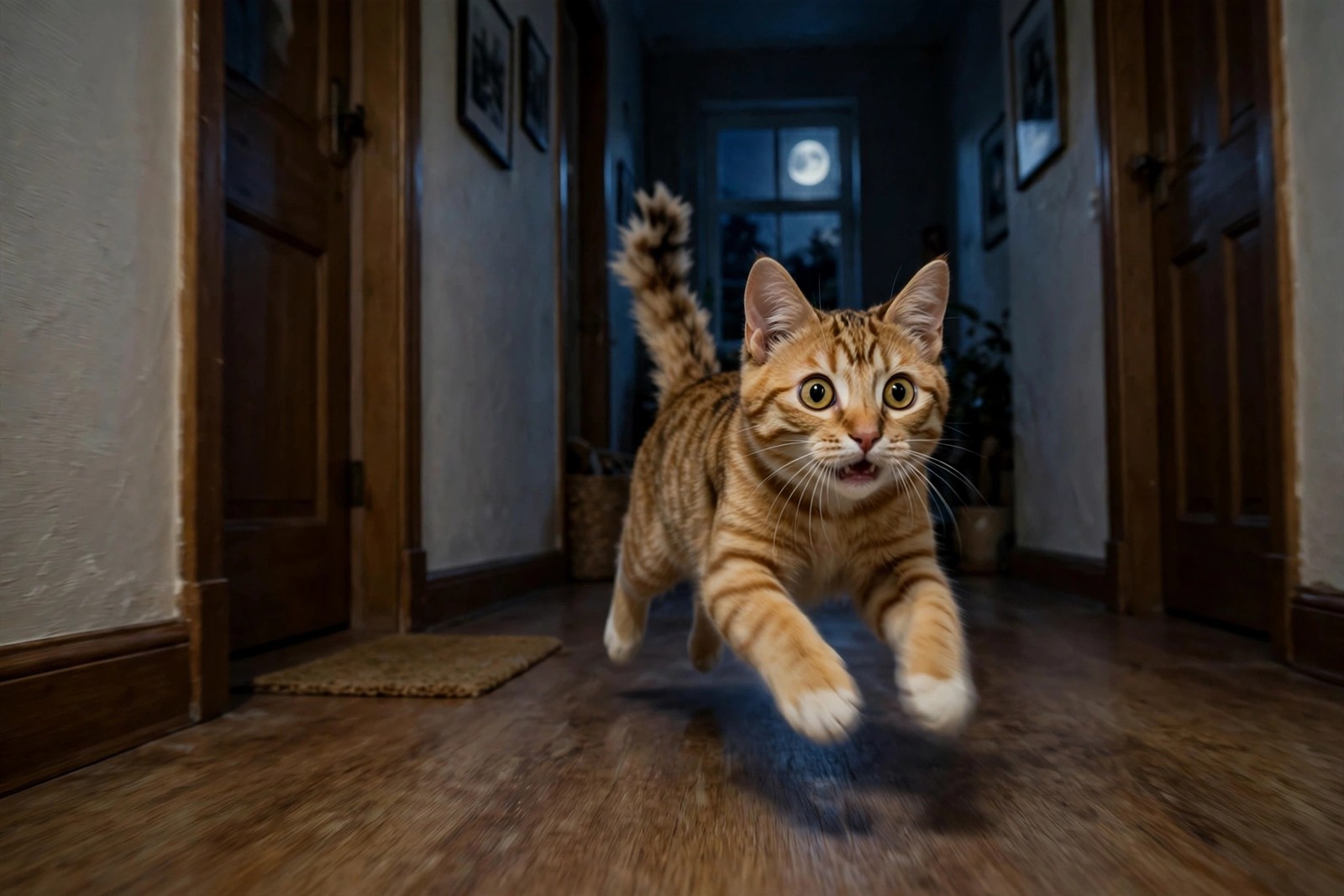
Those 2 a.m. sprints — the thundering hallway laps, the ricochet off the couch, the wide-eyed stare into the void — are your cat's wild ancestry running on schedule. Cats are crepuscular hunters, tuned to twilight, and an indoor cat who has slept through your workday has a full battery and thousands of years of instinct telling her the night shift is hers.
Why the Middle of the Night, Specifically
In the wild, small prey is active at twilight, and a cat's eyes, ears, and energy all peak accordingly. Your living room doesn't change that programming; it just removes the outlet. A young cat, especially one under two, can store an astonishing amount of energy, and zoomies — sudden frantic bursts of activity — are simply the release valve. Being alone all day while the household works makes the rebound bigger, because she's slept in long, solid stretches and socialized barely at all.
The scientific nickname is FRAPs — frenetic random activity periods — and dogs get them too. In a healthy cat they're normal, brief, and usually end as suddenly as they began, often with a dramatic flop or an intense grooming session.
The Hunt, Eat, Groom, Sleep Reset
The most reliable fix isn't tiring her out randomly — it's rescheduling her biology. Mimic the natural hunting cycle in the evening:
- Hunt: a vigorous 10–15 minute play session with a wand toy roughly an hour before your bedtime — let her stalk, chase, and "catch" it
- Eat: follow play with her last small meal or a portion of her dinner
- Groom and sleep: a full cat who has just hunted tends to wash up and crash, right on cue with the household
Consistency matters more than intensity. Run the routine at the same time nightly and your cat may shift her big energy burst to early evening within a week or two.
Daytime Changes That Pay Off at Night
Feed some meals from puzzle feeders so daytime includes small "hunts." Rotate toys every few days to keep them novel, open a window perch for bird-watching entertainment, and add short midday play if anyone's home. If the zoomies include yowling at your bedroom door, the golden rule is not to reward the performance — getting up to feed or play at 3 a.m. trains her that the concert works. Earplugs and patience outlast it.
Zoomies or Something More?
Occasional nightly sprints in a young, healthy cat are just cat life. Pay closer attention if a senior cat suddenly becomes restless and vocal at night, if zoomies come with litter box changes, weight loss, or increased thirst, or if the "wild" episodes involve staring, fly-biting at nothing, or sensitivity along the back — restlessness in older cats can accompany real medical issues, and your veterinarian is the right first call when the pattern changes with age.
When the Wind-Down Needs Adjusting
The routine only works if it actually happens every evening, and that's a remembering problem, not a knowledge problem. When the routine happens nightly and the sprints still follow, the adjustment questions are worth exploring one at a time: longer play, splitting dinner rather than enlarging the meal, or shifting the session past an early-evening nap. Bring your cat's age into those questions, since a kitten and a senior need very different pacing. Put a follow-up question to KinsLe's Kinny; he answers using the KinsLe Answers library.