
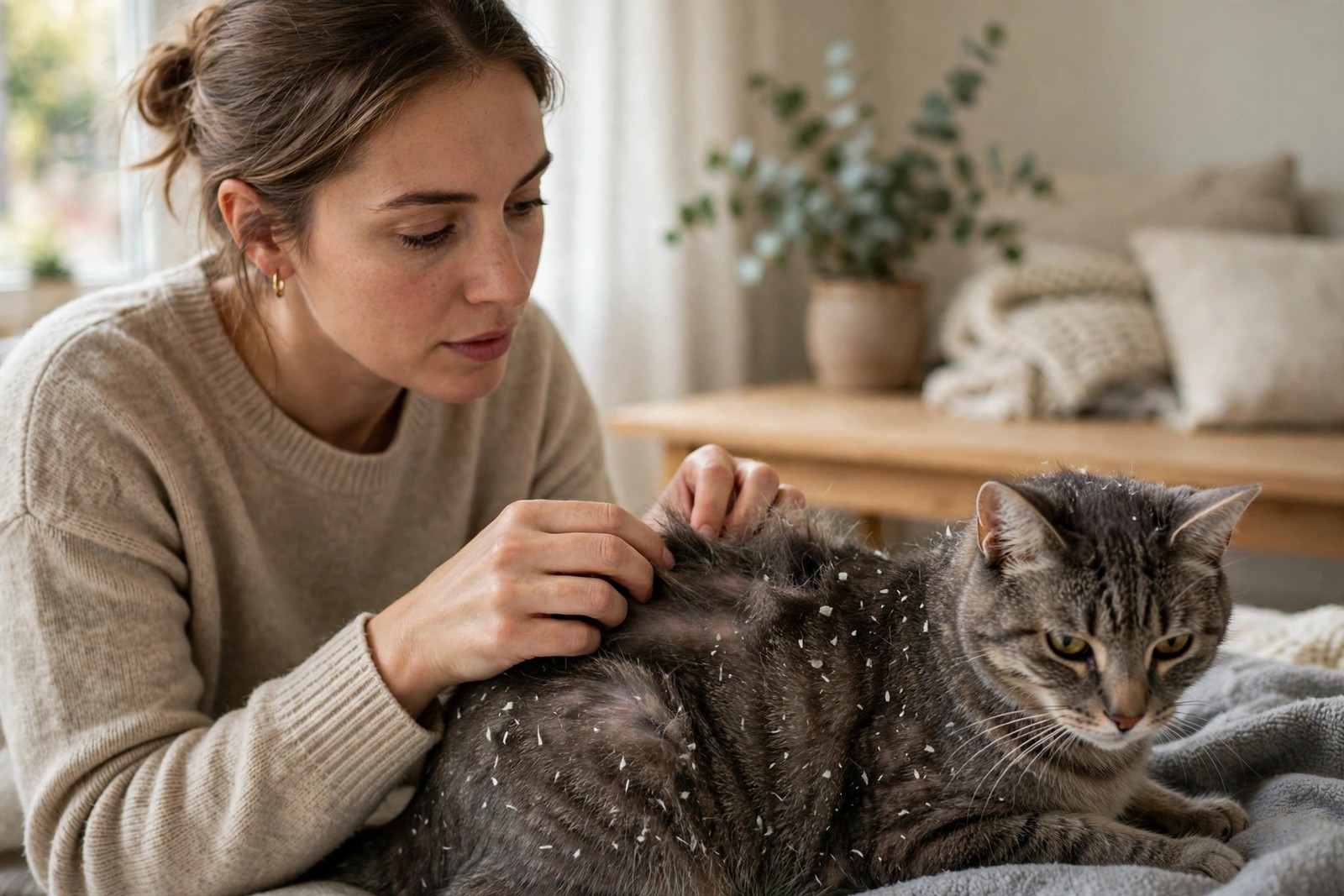
A cat's dandruff and dry coat usually trace back to something ordinary — dry heated indoor air, grooming less than she used to, carrying extra weight that makes her back hard to reach, or a diet that is not suiting her — but heavy, spreading flakes with itching, hair loss, or odor can signal a skin or health issue underneath. The coat is a bulletin board for the whole cat, so the right response is to read it carefully rather than just reach for a remedy.
The Everyday Causes
Start with the environment. Winter heating and air conditioning both dry the air, and dry air dries skin — many indoor cats grow visibly flakier every January and improve in spring. Grooming habits matter too: a cat who grooms less, whether from age, stiffness, or simply being a relaxed longhair who cannot keep up with her own undercoat, leaves dead skin cells sitting in the fur instead of clearing them. Weight plays a sneaky role — an overweight cat physically cannot reach the middle of her back, and classic cat dandruff often appears as a flaky stripe exactly along that unreachable zone. Diet changes, a new food that does not agree with her, or known allergies can all show up as dullness and flakes as well.
Signs It Is More Than Dry Air
Have your veterinarian take a look rather than layering on home fixes when you notice:
- Flakes that are heavy, greasy, or spreading despite regular brushing
- Itching, scratching, over-grooming, or bald patches
- Redness, scabs, bumps, or an unusual odor from the skin
- Dandruff walking company with appetite, weight, thirst, or energy changes
- Flakes concentrated on a cat who has recently gained weight or stopped jumping
Only your veterinarian can determine whether something medical is behind the coat change — a general article can point you toward the appointment, but it cannot examine your cat, and skin problems share symptoms across very different causes.
What Helps While You Observe
Gentle, regular brushing is the safest first step: it clears loose flakes and shed fur, distributes the skin's natural oils along the coat, and lets you monitor whether things improve over a couple of weeks. Make sure fresh water is always available, and note any recent changes — new food, new litter, a move, a new pet — to report at the vet visit. Resist baths as a fix; extra washing usually dries the coat further. Also resist supplements, oils, and medicated products unless your veterinarian suggests them for your cat specifically.
Bringing Good Information to the Vet
Skin conversations go better with records. KinsLe's Pet Passport is your cat's records packet — vaccines, medications, allergies, and documents kept together — and it is the natural home for her diet and allergy notes too, so you can share exactly what she eats and what she has reacted to when the veterinarian asks at that skin check. Walking in with dates and details beats trying to reconstruct three months of flakes from memory. In KinsLe, date each flare inside your Pet Passport — the food in the bowl, any reaction you saw — and the veterinarian gets a timeline to read at the skin visit instead of a guess.