
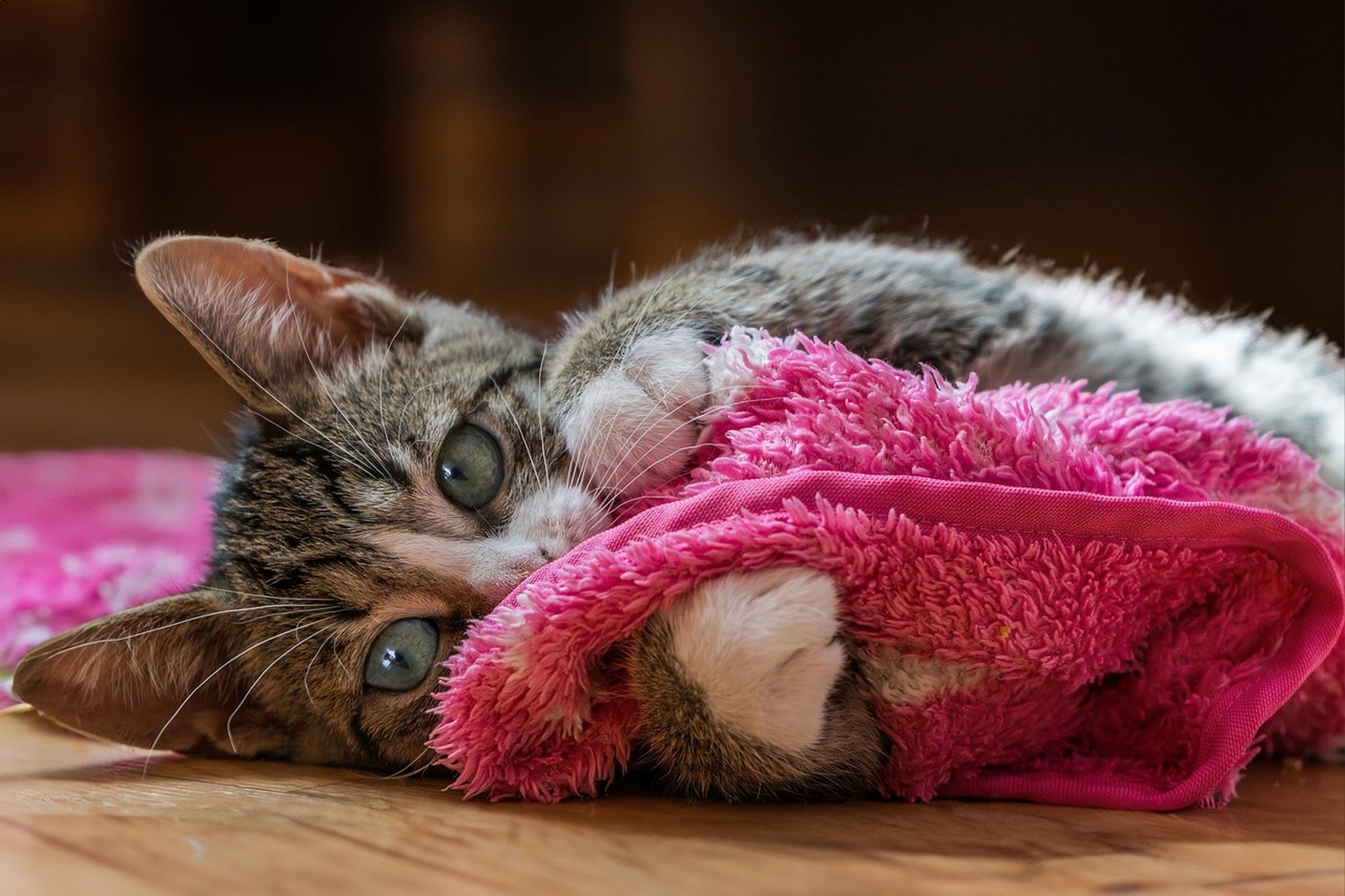
Kneading — that rhythmic push-push of the paws, sometimes called "making biscuits" — is a leftover from kittenhood that most cats carry happily into adult life. When your cat kneads a blanket, she's recreating one of the earliest comforts she ever knew, and she's usually doing it because she feels safe, warm, and entirely at ease.
Where the Habit Comes From
Newborn kittens knead against their mother while nursing; the pressing motion stimulates milk flow, and the pairing of kneading with warmth, fullness, and safety gets wired in early. Adult cats keep the association. When your cat climbs onto a soft blanket and starts working her paws, she's often winding herself down the same way — many cats knead right before a nap, almost like arranging a nest to their exact satisfaction before curling up in it.
Some cats add extras: purring, drooling slightly, or even suckling on the fabric. Wool and fleece blankets seem especially prone to becoming the chosen kneading spot, possibly because their texture and warmth come closest to the original experience.
It's Also a Scent Signature
A cat's paws carry scent glands between the toes, so kneading presses her personal signature into whatever she's kneading. That blanket isn't just soft — after a kneading session, it smells like her, which makes it an even more comforting place to return to. The same behavior on your lap carries the same double meaning: comfort, plus a quiet claim.
Why Some Cats Knead More Than Others
Kittens weaned very early sometimes knead more intensely and are more likely to suckle fabric, though plenty of normally weaned cats are enthusiastic kneaders too. Personality plays a role — some cats are lap-kneaders, some keep it to their bedding, and some rarely knead at all once grown. All of it sits in the normal range. Breed anecdotes abound, but individual temperament matters far more than lineage.
Making Kneading Comfortable for Everyone
If the blanket is washable, it's already doing its job — let her have it. A few small comforts help:
- Keep a designated soft blanket on her favorite chair so the ritual has a home
- Trim nails regularly so kneading doesn't snag threads or your lap
- If she kneads and gets overstimulated, calm petting on the head usually settles the session
There's rarely a reason to discourage kneading. It's self-soothing, harmless, and one of the clearest signals a cat can give that, in this moment, her world is exactly right.
Share the Sweet Moments With the Circle of Love
Kneading stories are the kind of small, perfect cat behavior that fellow cat people instantly understand. KinsLe's Circle of Love is the community every member joins — pet lovers and owners swapping the quirks, photos, and everyday moments that make living with cats so good, and the same network that rallies when a pet goes missing. Bring your blanket-kneader's best photos; someone there has a matching story. Bring the blanket-kneading photos to the Circle of Love in KinsLe, where owners trade the small rituals that mean a cat feels completely at home.