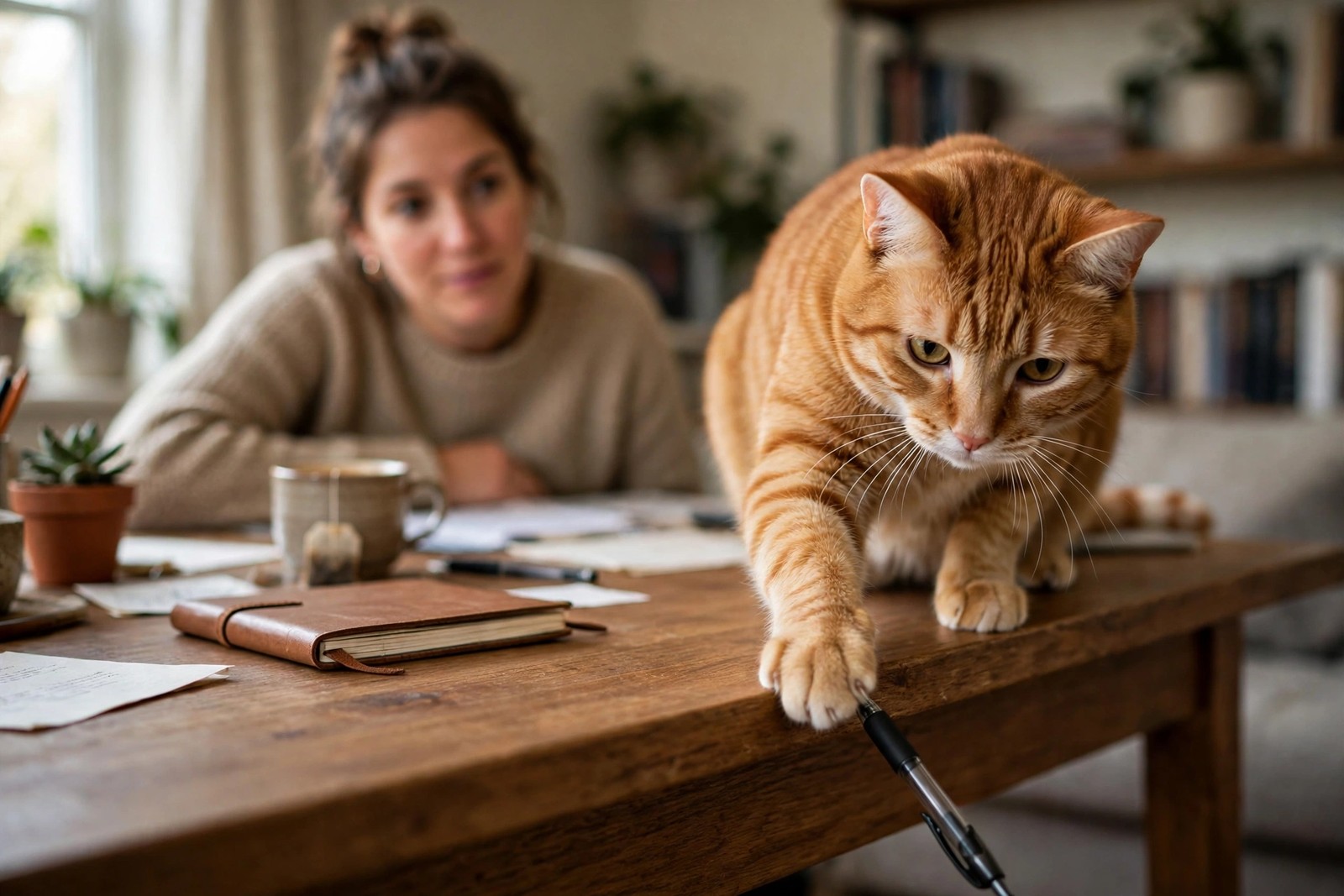
The slow paw, the sideways glance, the object inching toward the edge: it looks calculated because, in a feline sense, it is. Your cat is gathering information and enjoying herself, and the crash at the end is only the final scene of a sequence that starts with a very old instinct. Understanding each part of the sequence tells you which part to interrupt.
A Paw Is a Testing Instrument
Cats explore with their paws, and their paw pads are sensitive enough to register texture, temperature, and movement. In the wild, batting at something still is how a cat finds out whether it is alive, safe, or worth chasing; prey that freezes gets patted until it bolts. A bottle cap, a hair tie, or your reading glasses pass the same test. The object twitches, rolls, changes sound, and then drops with a rewarding clatter, and light items that move easily get chosen again and again because they give the fullest feedback. Heavier, dull, immovable objects are investigated once and abandoned, which is why the casualties are always the small interesting things.
Boredom Loads the Paw
An indoor cat with a full toy basket can still be under-occupied, because toys that never move stop registering as prey within days. Table sweeping peaks in the evening and at night for many cats, when hunting energy rises and the house offers nothing better. Hunger adds a nudge too; a cat whose breakfast is late may sweep the kitchen counter as part of a general campaign to get the household moving. If the behaviour has exploded recently, ask what changed: less play, a companion animal gone, a new work schedule, or a window perch lost to building work can all leave a cat with energy and nowhere sanctioned to spend it.
Your Reaction Is the Jackpot
The first crash usually teaches the strongest lesson. If you leap up, call her name, laugh, film it, or pick her up for a fuss, the experiment produced a large, animated human, which from a cat's perspective is a superb result. Even scolding counts as engagement. She is not plotting against your belongings; she has simply learned which lever makes the room interesting. This is why punishment fails here: it adds excitement and stress without removing either the instinct or the boredom underneath.
Making Tables Boring and Floors Fun
Start with management, because it works instantly. Move breakables and anything she could swallow, such as hair ties and bottle caps, behind cupboard doors, and keep drinks away from the edges she patrols. Then give the paw a paying job. Ten to fifteen minutes of wand play that ends with a small meal copies the hunt-catch-eat sequence her evenings are built around, and a puzzle feeder stretches the eating part into work. Rotate a few toys every couple of days so yesterday's dead mouse is a discovery again, and reward her with praise or a treat when she chooses the scratching post or the cat tree over the desk, so the approved surfaces build their own track record. When something does go over, tidy it in silence and offer a toy once she is on the floor; calm is the one response that teaches nothing worth repeating.
Share the play rota rather than relying on whoever remembers, because this habit fades with consistency, not intensity. KinsLe's Care Teams lets your household assign morning and evening play sessions and the toy rotation to named people, each marked complete with a timestamp, so her hunting energy gets spent on schedule instead of on your shelves.