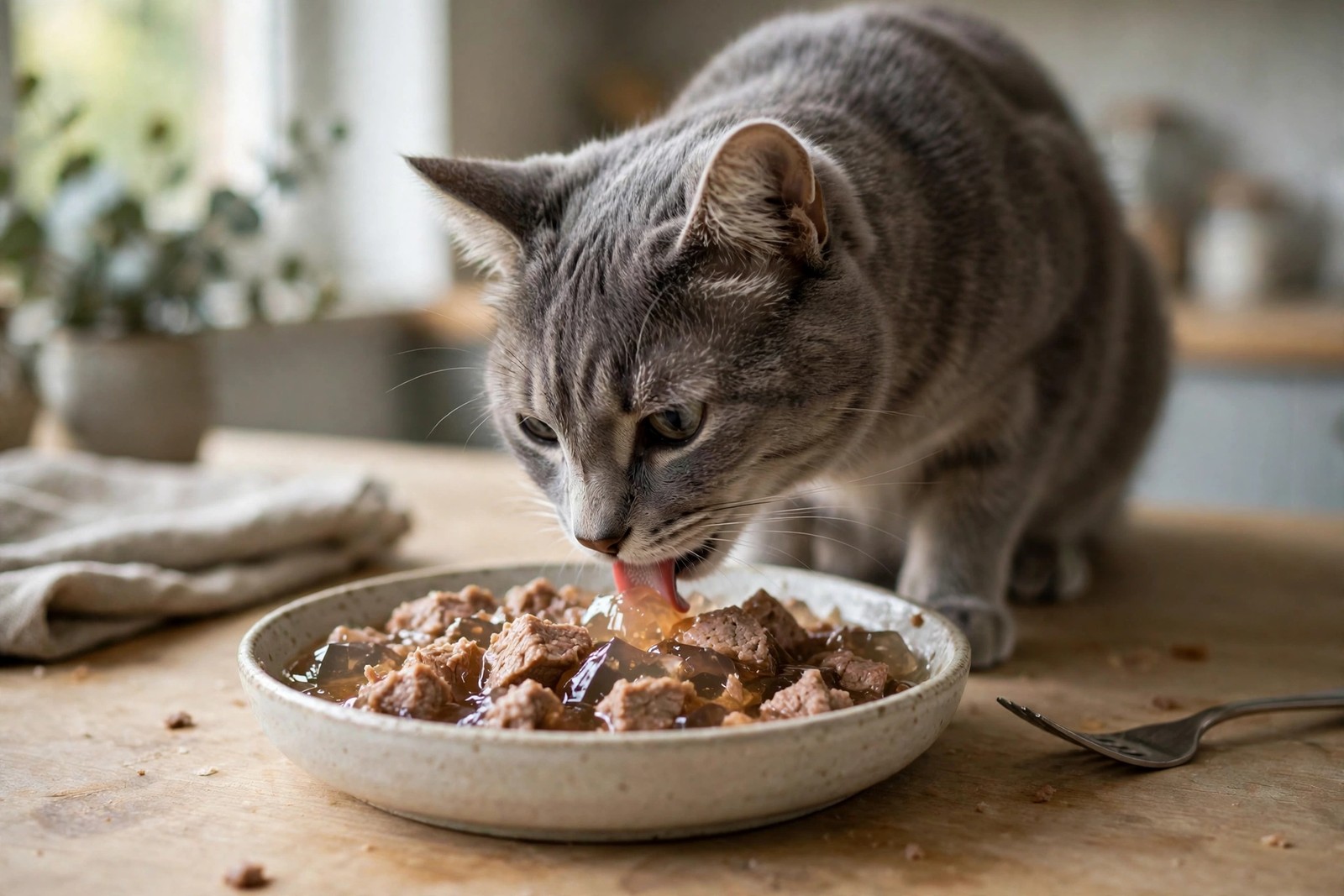
A bowl licked shining clean except for a sad archipelago of chunks is a familiar sight to anyone who feeds food in jelly or gravy. Your cat is not being wasteful on purpose. She has eaten the part of the meal that, to a feline nose and tongue, is most of the point, and left the part that asks the most work for the least flavour. The fix is usually texture, not appetite.
The Jelly Carries the Flavour
In chunk-style wet food, the savoury flavourings and aromas are concentrated in the jelly or gravy coating rather than inside the pieces themselves. The chunks are largely formed protein with a comparatively plain taste once the coating is gone, which is why cats lap and suck the jelly off each piece and then abandon the stripped remainder. You are watching a cat eat the sauce and leave the pasta, and from her side of the bowl the meal is finished.
Built to Lap, Not to Grind
Cats handle food differently from dogs and from us. Their tongues are efficient at lapping liquids, and their teeth are shearing tools designed to slice meat into pieces small enough to swallow, not molars for grinding mouthfuls down. Firm, rubbery chunks in jelly resist that system: they slide around, need repeated biting, and give little flavour back for the effort. Serving temperature sharpens the problem. Food straight from the fridge smells muted, and prey-warm or room-temperature food releases far more aroma, so a cat may drink off the jelly, which still carries some scent, and ignore cold chunks entirely. Older cats and cats with worn or sore teeth have even less reason to persist with the hard part.
Treat a sudden version of this behaviour seriously. A cat that has always finished chunks and now laps liquid, drops pieces, tilts her head to chew on one side, drools, or loses weight may have dental pain or another mouth problem, and that cat needs a veterinary examination rather than a new flavour.
Fixes That Work With the Habit
Mash the chunks into the jelly with a fork before serving, breaking each piece down until no clean lump survives; most jelly-first cats eat the whole bowl once the flavour is distributed through it. If mashing still leaves leavings, change texture rather than brand-hopping flavours: a smooth pate or a finely minced recipe removes the two-tier problem altogether, and many cats that reject chunks eat pate completely. Transition over several days, mixing increasing amounts of the new texture into the old, so her stomach adjusts gradually. Serve wet food at room temperature, taking a refrigerated portion out ahead of feeding or standing the sealed pouch in warm water briefly, and offer smaller amounts more often so the surface stays fresh instead of drying in the bowl.
One nutritional point matters while you experiment. A cat that eats only jelly from a large share of her meals is leaving protein and calories behind, and jelly on its own is not a complete diet, so weigh her monthly during a texture trial and watch that her weight holds steady. Note which textures she finishes completely, because that short list is the answer you will use at every future shop.
Feeding experiments fail when each person in the house serves something different, so write the method down where the food is prepared. KinsLe's Care Teams lets you set the mash-and-serve routine as a feeding duty for each person who feeds her and log what was left at each meal, which turns a muddle of opinions into a week of clean evidence about the texture she truly eats.