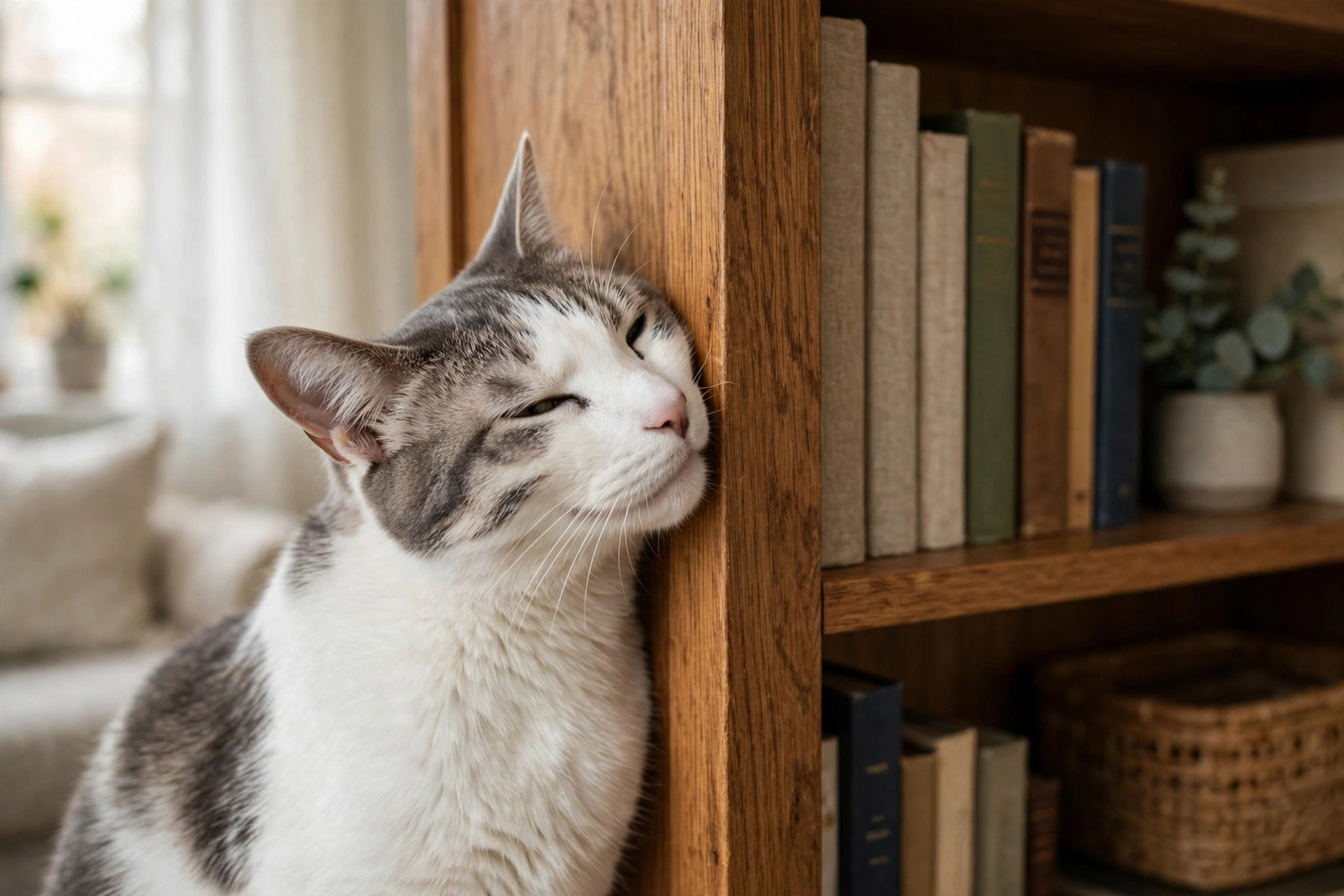
Walk through your home at cat height and you will find her signature everywhere: the corner of the wall by the door, the legs of the kitchen table, the edge of the sofa, the box that arrived an hour ago. Face rubbing is scent marking, but of the friendliest kind. Where scratching and spraying stake claims, the cheeks and chin lay down a message that means something closer to home, familiar, and safe.
The Glands in Her Cheeks and Chin
Cats carry scent glands along the cheeks, on the chin, at the corners of the mouth, and across the forehead. Pressing and gliding those areas against an object deposits facial pheromones, chemical signals she reads with the sensitive scent organs cats use to map their world. Humans cannot smell them at all, which is why the behaviour looks pointless from above. To her, a freshly rubbed room has been re-labelled as known territory, and cats reapply the marks often because pheromones fade within a day or so. A daily rubbing circuit is not excess; it is maintenance.
What She Chooses to Mark
Edges and corners at her head height get marked first, because they are what her face meets as she walks her routes. Objects that smell wrong get priority: new furniture, a visitor's bag, a freshly cleaned floor, and anything that has been somewhere else all need absorbing into the household scent. You are on the list too. Rubbing her face along your hand, ankle, or cheek mixes her scent with yours into a shared group smell, which is why face rubbing often arrives with purring, a raised tail, and her whole body leaning in. It is affection expressed in her native format.
Timing tells you more. Expect a full re-marking round after you move house, rearrange a room, deep clean, or bring a new animal home. The behaviour can also spike when she feels unsettled, because restoring familiar scent is how she restores her own confidence. During a renovation or after a move, give her rubbing posts and cardboard scratchers at cat height in each room so she has sanctioned surfaces to stamp, and resist washing every marked corner back to neutral, because a room stripped of her scent is a room she has to rebuild.
When Rubbing Stops Being Housekeeping
Normal marking is relaxed and intermittent. Rubbing that becomes frantic or constant, or arrives with pawing at the face, drooling, red or broken skin, head shaking, ear scratching, bad breath, or appetite change, points away from pheromones and toward discomfort, such as skin irritation, an ear problem, or dental pain. That cat needs a veterinary examination rather than more scratching posts, and it helps to note when the rubbing peaks and what else changed alongside it, from a new cleaning product to work on the house.
For the ordinary marker, the kindest response is to let her finish the round. A cheek offered a hand to rub against, or a rub post placed by the door she patrols, turns your participation into part of the ritual. If anyone else cares for her, tell them the routine in advance so a post-cleaning marking spree is not misread as distress. KinsLe's Care Pass lets you include exactly that note in the house instructions a sitter receives for her care window, explaining that vigorous face rubbing is her normal way of re-stamping home, and what the genuinely worrying version would look like instead.