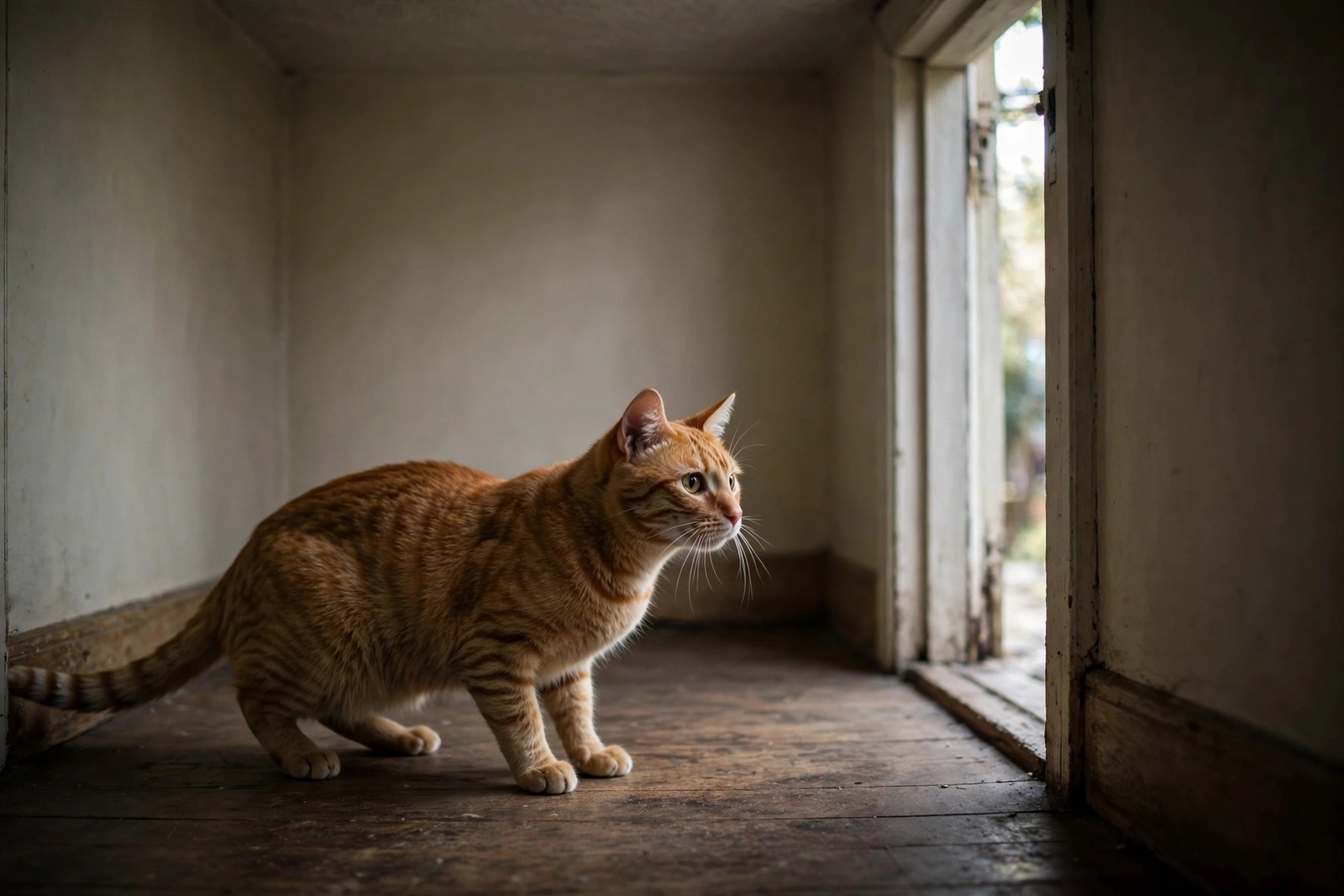
You are watching a blank wall; your cat is watching a whole world you cannot perceive. Cats hear frequencies far above the top of human hearing, including the squeaks and scrabbles of insects, rodents, and small creatures moving inside walls, ceilings, and floor voids. Their eyes are also built to catch the faintest movement in dim light. So the intense, unblinking stare that looks aimed at nothing is usually aimed at something very specific: a moth behind the curtain edge, a spider in the corner, a pipe ticking as it cools, or a sound travelling through the building that your ears never registered.
The Freeze Comes First
That locked-on stillness is hunting behaviour. A cat following prey, or a possible prey sound, goes quiet and motionless so the target does not flee, whiskers pushed forward, ears swivelling to pinpoint direction. Watch the ears during a stare: if they rotate and tilt independently, your cat is triangulating a sound. A low, slow tail sway and dilated pupils in evening light complete the picture of a cat fully occupied, not zoned out. Sometimes the trail goes cold, or the excitement builds with nowhere to go, and the stored arousal discharges in the other direction entirely: the sprint. Owners call these bursts the zoomies, short episodes of frenetic running, often with a puffed tail, sideways skips, and a dramatic leap onto furniture. They are most common in young cats, indoor cats, and any cat who has been asleep or inactive for hours, and they cluster at dawn and dusk, the hours cats are naturally wired to hunt.
Spending the Energy Before It Erupts
You cannot and need not stop the zoomies, but you can make them less explosive by giving the energy a scheduled exit. Two or three short play sessions a day with a wand toy that mimics prey, ending with a small meal or treat, copies the hunt, catch, eat sequence cats are built for. An evening session matters most if the sprints arrive while you are trying to sleep. Rotate toys so they stay novel, and let your cat win often enough to stay interested. Leave the sprint itself alone. Chasing, grabbing, or scolding a mid-zoom cat only adds stress, and most episodes burn out within a minute or two. Keep breakables off favourite racing routes, and if there are stairs or a startled older pet in the path, calm distraction with a tossed toy is kinder than blocking the run.
The Stares That Deserve a Vet Visit
Ordinary staring ends with a sprint, a pounce, or your cat simply losing interest. Take a different kind seriously: a cat who stares blankly and seems unable to respond, presses the head against a wall, walks in circles, wobbles, or has episodes that look like absence rather than attention needs a veterinarian promptly. In older cats, new night-time restlessness, yowling, and disoriented staring also deserve a vet conversation, because ageing changes in the brain, senses, and blood pressure can sit behind them. One episode filmed on your phone is genuinely useful at that appointment, because cats rarely perform the behaviour in a consulting room. Note the time, what happened just before, and how long recovery took. For questions those notes raise before the appointment, put a follow-up question to KinsLe's Kimmy; she answers using the KinsLe Answers library.