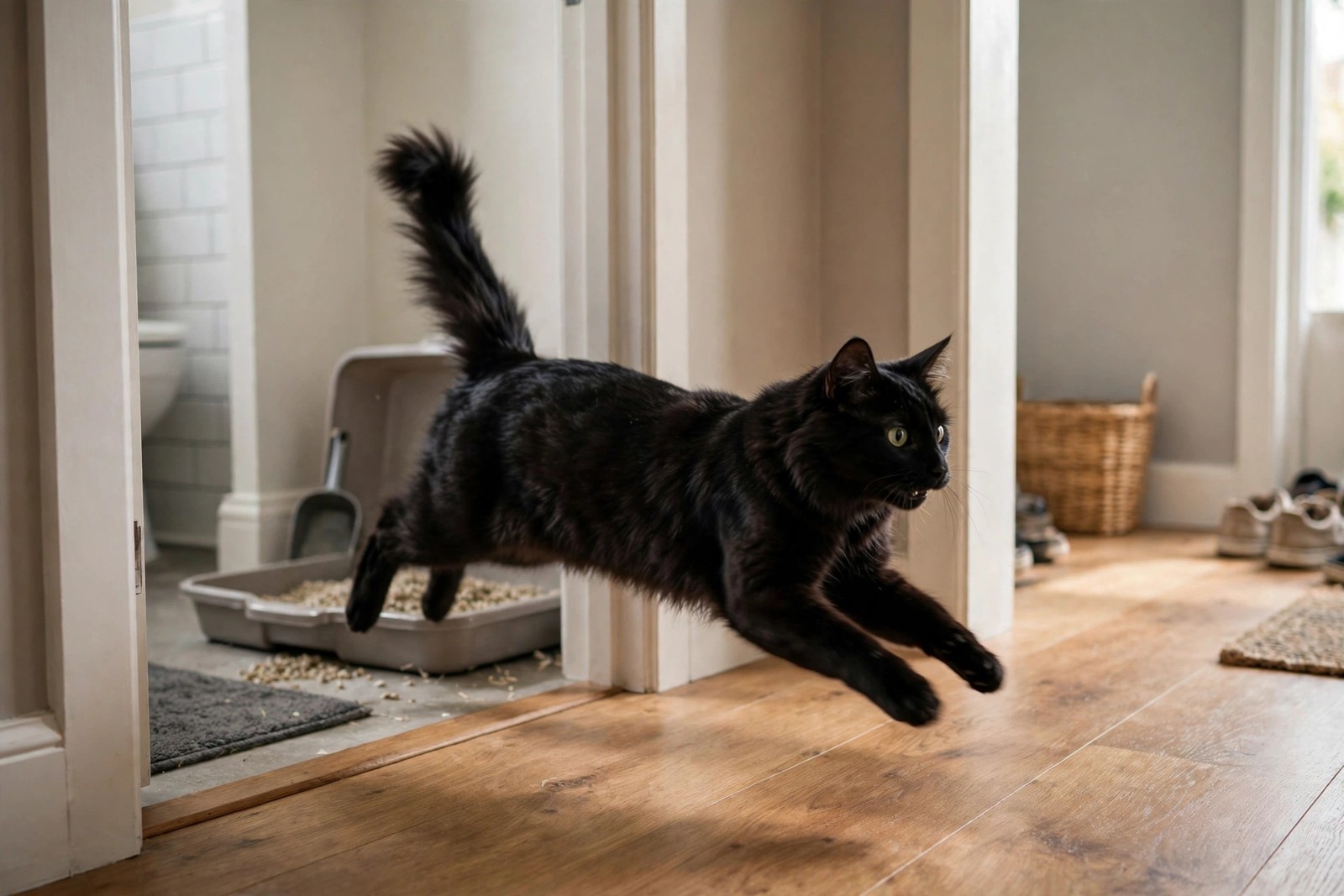
Few sights in a cat home are funnier: your cat steps out of the litter tray, pauses for one theatrical second, then launches down the hallway at full speed, tail up, ears flat, sometimes announcing the whole performance at volume. Behaviour specialists point to two likely drivers working together. The first is simple relief. Emptying the bowel can stimulate nerves involved in digestion, and many cats seem to get a brief, giddy lightness afterwards, the same satisfied energy that sends some cats racing after a big meal or a long nap.
Leaving the Scent Site Behind
The second driver is older and more serious. For a small animal that is both hunter and prey, a toilet site is a scent beacon that advertises exactly where you are and how recently you were there. Wild cats bury waste and move away from the spot, and the brisk exit is part of the routine. Your indoor cat, whose tray sits safely in your utility room, still runs the same inherited programme: finish, cover, leave quickly. Cats who do not bury may race even sooner, while meticulous diggers sometimes finish the covering ritual before the sprint begins.
Timing supports this reading. Post-tray races often cluster in the evening, when cats are entering their active phase anyway, and the tray visit becomes the starting gun for the night's zoomies. Kittens are the most dramatic performers, tearing around as if pursued, but plenty of dignified adults still do a brisk victory lap.
Keeping the Tray Worth Using Calmly
You do not need to stop the dash, but the tray setup influences it. A tray your cat dislikes, too small, too dirty, hooded and smelly, or placed beside a noisy washing machine, can turn a cheerful exit into a genuinely stressed one. Scoop at least once a day, wash the tray regularly with unscented cleaner, and give each cat a tray plus one spare where space allows, in quiet spots that are not next to food bowls.
Watch how your cat leaves, not just that they leave. A relaxed racer looks loose and playful and settles quickly. A cat who bolts and then licks at their rear repeatedly, returns to the tray again and again, or seems uncomfortable sitting down is telling a different story.
The Tray Changes That Need a Vet
Treat the tray visits, rather than the sprint, as the health signal. Straining with little or nothing produced, crying out in the tray, blood in urine or stool, tiny frequent urine spots, or a male cat who cannot pass urine at all need veterinary attention the same day, and a cat who cannot urinate needs it urgently. Appetite loss, vomiting, or a cat who stops using the tray entirely belong in the same prompt conversation.
Because these signs appear in the litter, the person who scoops is the person most likely to spot them, which is why the chore should never rest on one pair of eyes. KinsLe's Care Teams lets your household share scooping, washing, and litter top-up duties for your cat with each completed job timestamped, so whoever cleans the tray can flag a change the whole team sees at once.