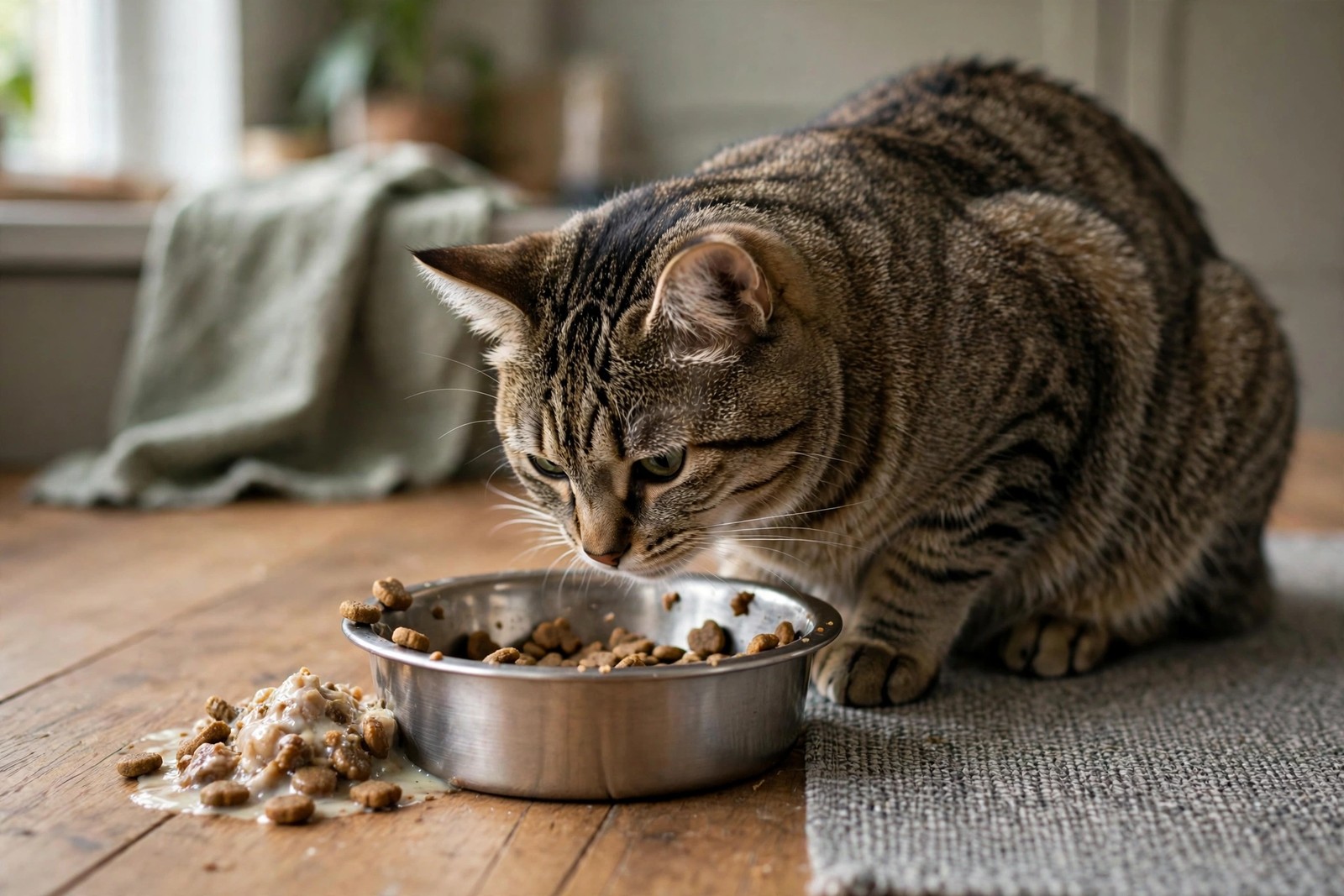
A meal returned barely digested within minutes, still tube-shaped, often points to speed rather than sickness. When a cat gulps, she swallows air along with the food and fills her stomach faster than it can comfortably stretch, so the meal is rejected almost as soon as it lands — and many cats promptly ask for a replacement, or even try to eat what came up, which is unappealing but normal feline behaviour. It is most common in multi-cat homes where competition drives gulping, in cats fed once a day who arrive at the bowl ravenous, and in enthusiastic kittens. Occasional speed-related vomiting in a bright, healthy-weight cat is usually a management problem, not a medical one.
Slowing a Fast Eater Down
Practical fixes work well: split the day's food into smaller, more frequent meals; use a slow-feeder bowl or lick mat so the meal takes minutes instead of seconds; scatter kibble on a tray or use puzzle feeders so eating becomes foraging; and in multi-cat homes, feed cats in separate spots so nobody eats under pressure. Make changes one at a time and note the effect. What should change your assessment: vomiting that happens hours after eating, brings up bile or foam, includes blood, is increasing in frequency, or comes with weight loss, appetite change, or lethargy — those patterns point beyond speed to food intolerance, hairballs, gut or other disease, and need a vet workup.
Working With Your Vet
For a cat whose meals keep reappearing minutes later, the details that matter most are precise ones: how quickly the food returned, whether it kept the tube shape of the oesophagus, how much she ate beforehand, and whether other cats were crowding the bowl. Write those observations down while they are fresh, because a vomiting pattern tied to speed reads very differently from one that drifts later after meals or brings up bile, and your veterinarian will use that timing when deciding whether this stays a feeding-management problem or needs tests.
Keep a simple log — when, how long after eating, what came up, and what else is going on — and bring it to a vet appointment if vomiting happens more than about twice a month. Vomiting with lethargy, no appetite, or signs of dehydration is a same-day call.
A feeding log built around this one habit earns its keep quickly. Record the size of each meal, whether a slow feeder or scattered kibble was used, how many minutes passed before anything returned, and whether she begged for food again straight afterwards. After a fortnight, the entries show plainly whether smaller portions actually helped or whether the episodes are creeping up despite them, which is exactly the evidence that separates a management tweak from a medical workup. Revisit those entries after any household change, from a new cat at the bowl to a different food, because each one can reset how fast she eats.
When that log travels with her vaccination record and earlier visit notes, the appointment starts from her real history rather than a reconstruction. That is the job of KinsLe's Pet Passport: a portable packet where this cat's records sit together, ready for a vet visit and equally ready for travel, boarding or a handover to another carer.