
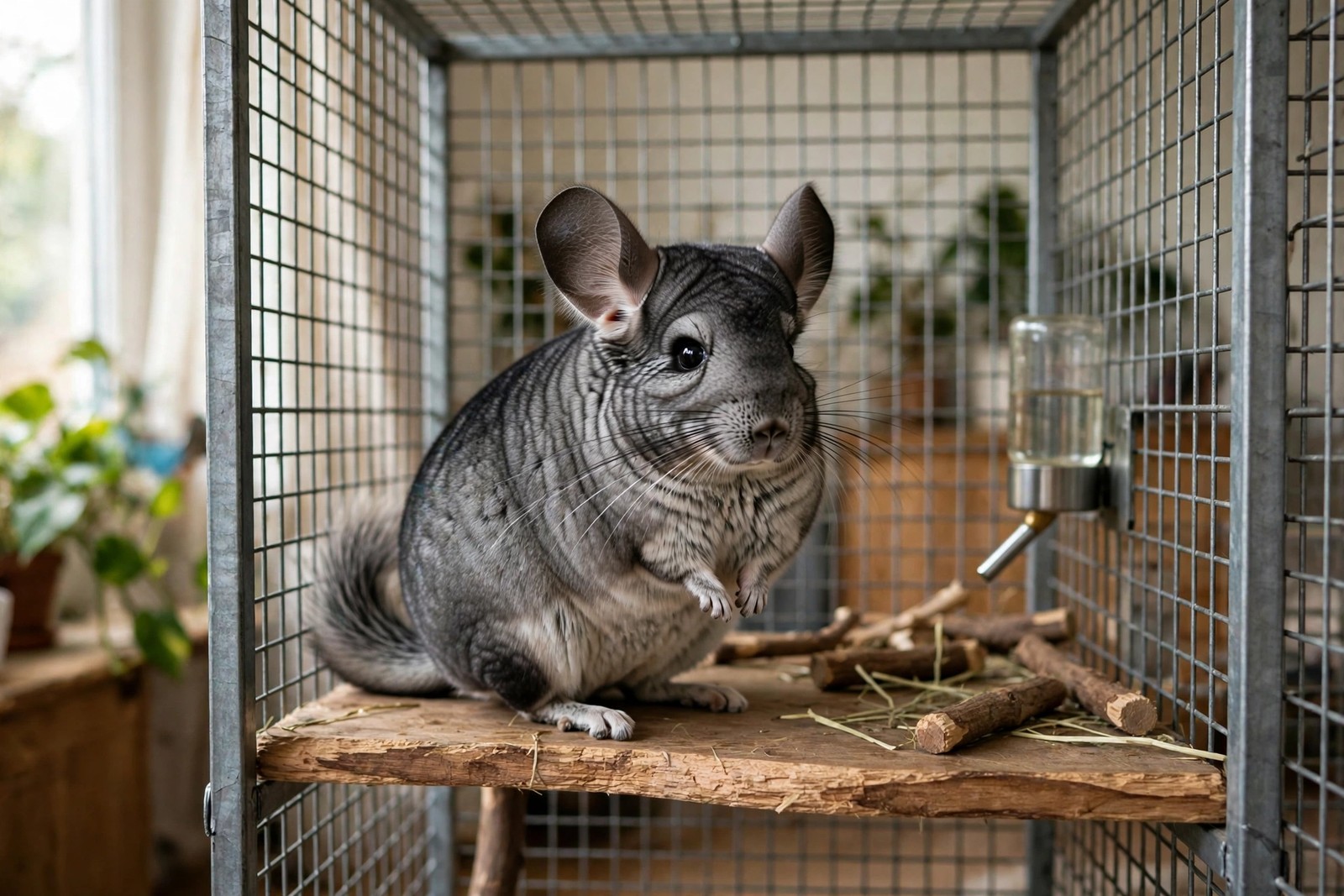
Your chinchilla needs a metal cage because chinchillas chew almost everything within reach, and plastic simply cannot stand up to their teeth. A determined chinchilla can gnaw through a plastic base, plastic shelves, and even plastic cage bars in a single night, escaping the cage and swallowing fragments that can seriously harm their digestive system.
Chewing Is Not a Bad Habit — It Is Biology
Chinchilla teeth grow continuously throughout their lives, and chewing is how they keep those teeth worn down to a safe length. That instinct does not switch off just because the object in front of them is part of their home. Wooden chew toys, pumice, and hay get the same treatment as a plastic ledge, so anything inside the cage has to be safe to gnaw or tough enough to resist gnawing entirely. Metal wins on both counts: powder-coated or galvanized steel bars and metal shelves cannot be chewed into sharp, swallowable pieces.
Plastic fails in a second way, too. Once a chinchilla works a crack into a plastic pan or ramp, the edges become sharp, and the damaged piece keeps shedding bits every time they return to it. Owners often discover the problem only after finding a hole big enough for an escape — and a loose chinchilla in a house full of electrical cords and furniture legs is a stressful, risky situation for everyone.
What a Good Chinchilla Cage Looks Like
Height matters more than floor space alone, because chinchillas are jumpers who love to move between levels. Look for:
- A tall metal cage with narrow bar spacing a chinchilla cannot squeeze through
- Solid metal or kiln-dried, untreated pine shelves for leaping and resting
- A solid floor or covered wire section, since delicate feet can be injured on bare mesh
- Secure metal latches — chinchillas are clever and learn to work at weak clips
- No plastic ramps, ledges, houses, or bowls anywhere within chewing reach
Swap plastic accessories for metal, ceramic, or safe wood versions. A heavy ceramic food dish, a metal hay rack, and wooden ledges give your chinchilla plenty to do without putting anything dangerous in their mouth.
Setting Up the Cage in the Right Spot
Chinchillas come from cool, dry mountain climates, and their dense fur makes them vulnerable to overheating. Place the cage in a cool, dry room away from direct sunlight, radiators, and humid bathrooms. Keep it somewhere reasonably quiet during the day, since chinchillas sleep in the daylight hours and become active and playful in the evening. Good airflow helps, but avoid positioning the cage in a direct draft.
Inside the cage, offer a hide house for daytime sleeping, a constant supply of hay, fresh water, and a rotation of safe chew toys so the chewing instinct lands on appropriate targets instead of the cage fittings.
A Quick Safety Check Routine
Once a week, run your hands over shelves, ledges, and latches. Look for loose screws, bent bars, rust spots, and chew toys worn down to small, breakable pieces. Replace anything damaged promptly, and check that doors still close firmly — a cage that was secure last month may not be after weeks of enthusiastic rattling from an energetic resident.
How KinsLe Helps You Stay on Top of Cage Checks
A cage inspection is easy to intend and easy to forget during a busy week. Kinny, KinsLe's built-in AI assistant, can answer questions about those checks — whether a shelf material is safe to gnaw, how tight a latch should close, or when a chew toy is worn out. That guidance helps small problems get caught before they turn into an escape or an injury. When a shelf material or bar-spacing question comes up between checks, pose it to Kinny within KinsLe and read the follow-up answers it returns, every one taken from KinsLe Answers entries.