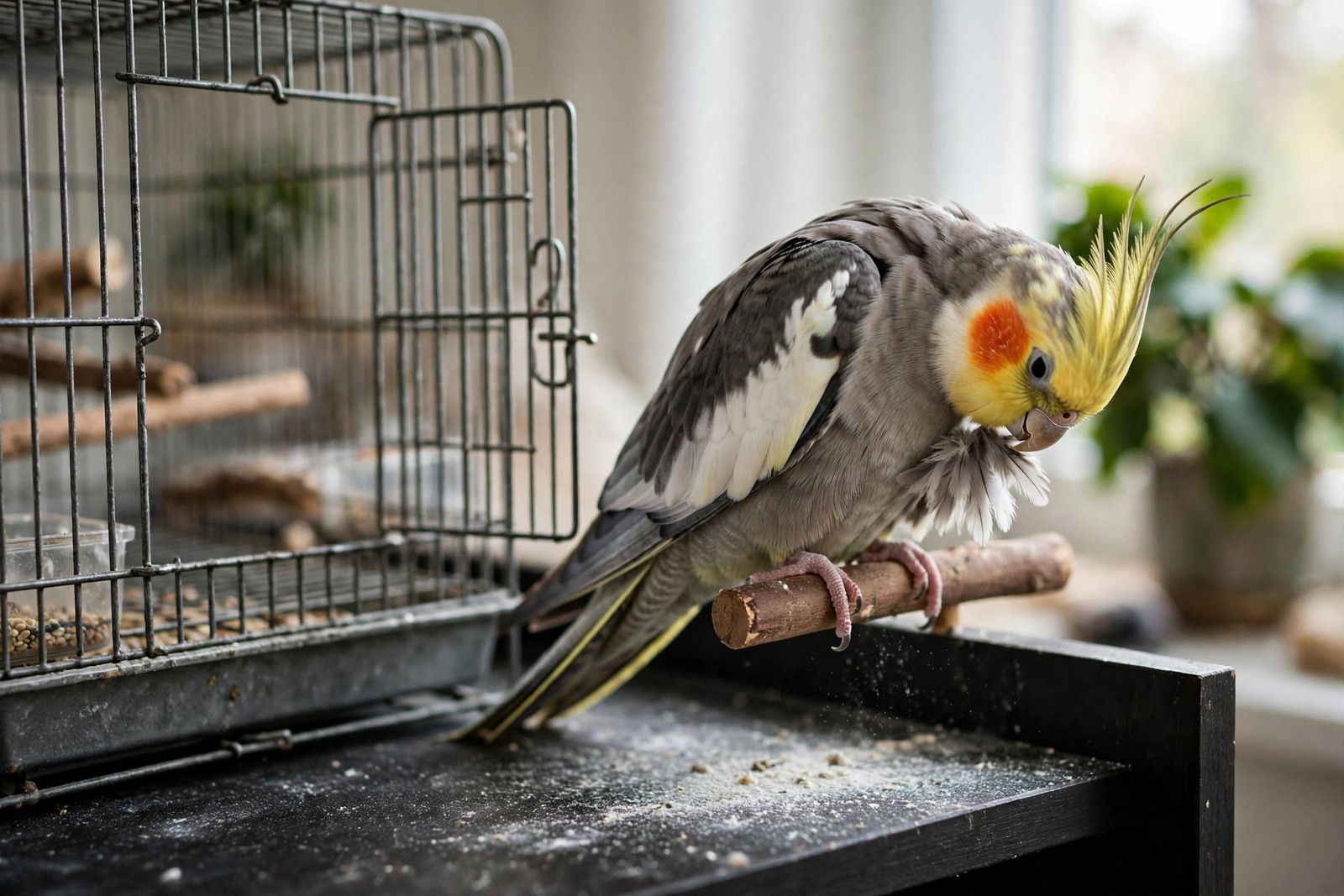
Run a finger across a shelf near a cockatiel's cage and it will come away white. That film is not ordinary household dust and it is not dander from poor care. It is produced deliberately, feather by feather, by a system your cockatiel cannot switch off. Scattered among the ordinary plumage are powder down feathers: small, soft feathers that never finish growing. Instead, their tips continuously disintegrate into an ultrafine powder made of tiny keratin particles, finer than talc.
What the Powder Is For
Every time your cockatiel preens, the beak draws that powder through the feathers. The coating helps keep plumage clean, supple, and water-resistant, and a bird producing plenty of powder is usually a bird with healthy, actively maintained feathers. Cockatiels sit at the dusty end of the parrot family, in the company of cockatoos and African grey parrots, while many other parrots rely more on oil from a preen gland and make noticeably less dust. A cockatiel who has just shaken after a nap can release a visible puff, and moulting periods, when old powder feathers are replaced, are dustier still.
Expect the heaviest film on surfaces near the cage, on dark clothing after a cuddle, and in the air filter of any purifier you run nearby, which is doing its job when it needs cleaning often.
Living With the Dust
You manage powder down; you do not eliminate it, and trying to with sprays is a mistake, because aerosols, scented products, and air fresheners are hazardous around a bird's sensitive respiratory system. What works is steady, mild routine. Offer a shallow bath dish or a gentle misting several times a week, since a bathed bird preens powder into the plumage rather than shaking as much loose, and many cockatiels learn to look forward to it, wings spread under the spray.
Wipe cage-side surfaces with a damp cloth rather than a dry duster, which just launches the powder airborne again. Vacuum with the bird out of the room if yours panics at the noise, change cage papers and wash the tray on schedule, and ventilate the room daily. An air purifier running near the cage genuinely reduces airborne powder and is a sensible comfort for household members who notice sneezing or a tight chest around the bird; anyone with asthma should talk to their own doctor about bird keeping, because long exposure to feather powder affects some people seriously.
When Dust Changes Mean More
A sudden increase accompanied by feather plucking, crusty beak or cere changes, sneezing, tail-bobbing while breathing, or a quieter, fluffed-up bird is not a dust problem; it is a reason to book an avian veterinarian. So is a marked drop in powder alongside scruffy, unkempt plumage, which can mean your cockatiel has stopped preening properly. Either change is easier to spot when the cleaning routine is regular, because you know exactly what a normal week's film looks like.
That rhythm of misting, wiping, and cage cleaning is simple but relentless, and it often falls to whoever walks past first. KinsLe's Care Teams spreads it fairly by assigning the bathing offers, wipe-downs, and cage cleans for your cockatiel to named family members, each ticked off with a timestamp, so the dust never gets a week to build up unnoticed.