
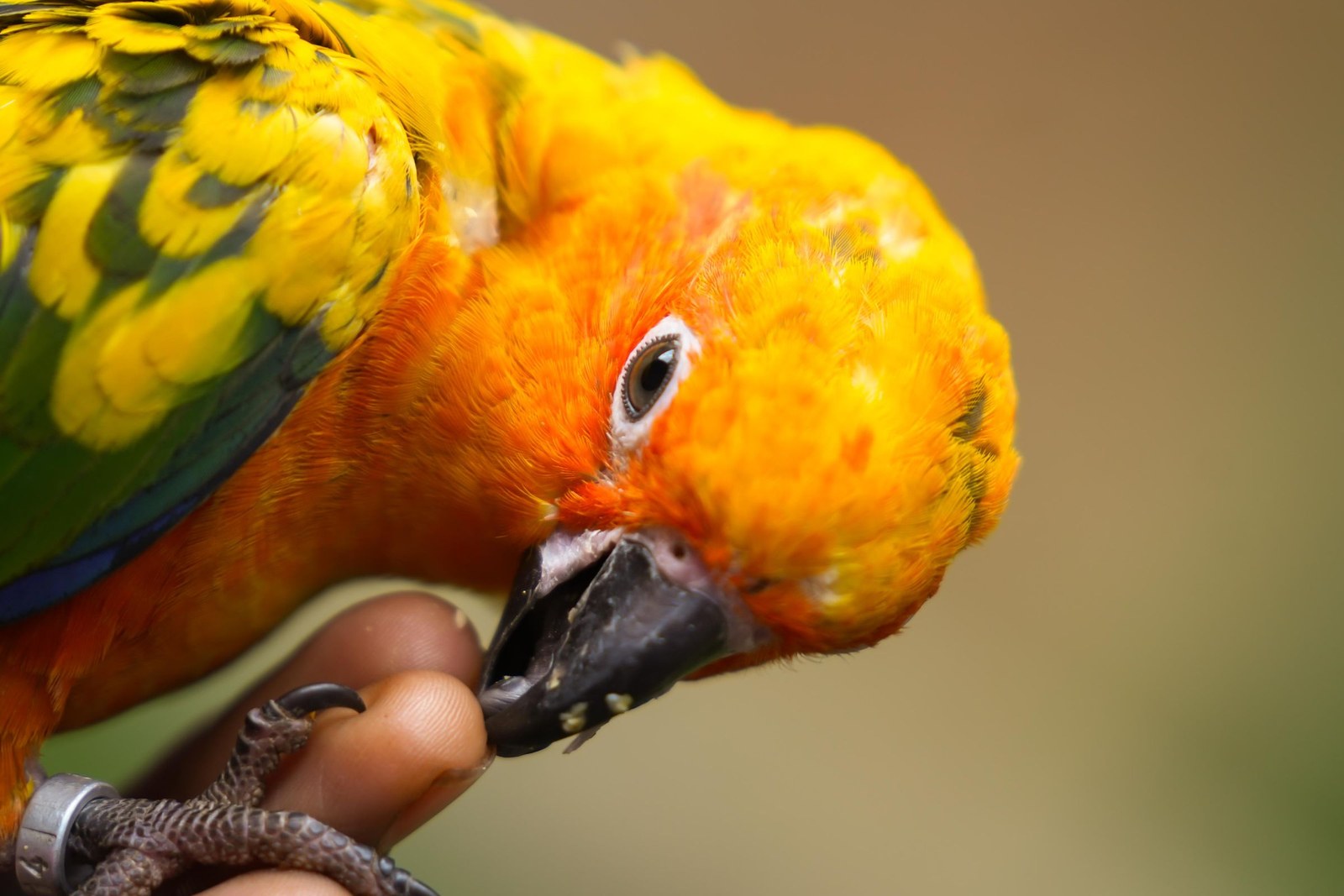
A conure usually bites for a reason it considers perfectly logical: it is scared, overstimulated, tired, guarding its cage or favorite person, or it has learned that a bite reliably makes an unwanted hand go away. Conures are affectionate and bold, but they are also beaky birds that explore the world mouth-first. The goal is not a bird that never bites; it is understanding the message early enough that biting stops being necessary.
Learn the Language Before the Bite
Most bites are announced. Watch for eye pinning — pupils rapidly shrinking and expanding — fluffed head feathers, a stiff leaning posture, lunging, beak clicking, or a bird that suddenly goes very still. A green-cheeked conure may give subtler signals than a sun conure, but both will usually warn a person who is watching. Keep a mental note of what happened just before each bite: Was it during cage cleaning? After long excited play? When a stranger reached in? Patterns in those answers point straight at the cause.
Causes Owners Commonly Miss
Sleep is a big one. Conures need around ten to twelve hours of quiet, dark sleep, and a chronically tired bird is a cranky bird. Overstimulation is another: rough play, loud visitors, and marathon cuddle sessions can tip excitement into a bite, especially if your bird is stroked along the back, which many birds read as mate-like contact and which can fuel hormonal possessiveness. Fear bites happen when hands chase a bird around the cage. Learned bites happen when the only way to end an interaction is to make it hurt.
Reducing Biting, Step by Step
Reward calm step-ups onto a hand or perch with a favorite treat, and make stepping up predict good outcomes. Respect a clear “no” — a bird that moves away gets space, which paradoxically makes it more willing next time. Build a predictable routine for sleep, meals, and out-of-cage time. Teach everyone in the home the same handling rules, redirect chewing energy to balsa, cork, and yucca toys, and end play sessions before excitement peaks. Never punish, shout at, or “earthquake” a bird off your hand; those responses damage trust and usually increase biting.
When to Get Professional Help
Seek help promptly if biting appears suddenly, escalates sharply, or comes with appetite changes, droppings changes, lethargy, or feather damage — pain and illness can lower any bird's tolerance. An avian veterinarian can rule out medical causes, and a qualified behavior consultant can design a training plan for your specific bird. Sudden aggression in a previously gentle conure is information, not defiance, and it deserves a proper workup rather than guesswork at home.
How KinsLe Helps
Finding bird-savvy help locally is often the hardest part, and KinsLe's Pet Services Directory is built for exactly that search, helping you find local groomers, veterinarians, sitters, and trainers — including the avian vets and trainers who actually work with conures. Pair that guidance with your own notes on when bites happen and you will walk in prepared. The Pet Services Directory search in KinsLe can point you to avian veterinarians and behavior consultants near you, who can then work from the bite notes you bring to the first appointment.