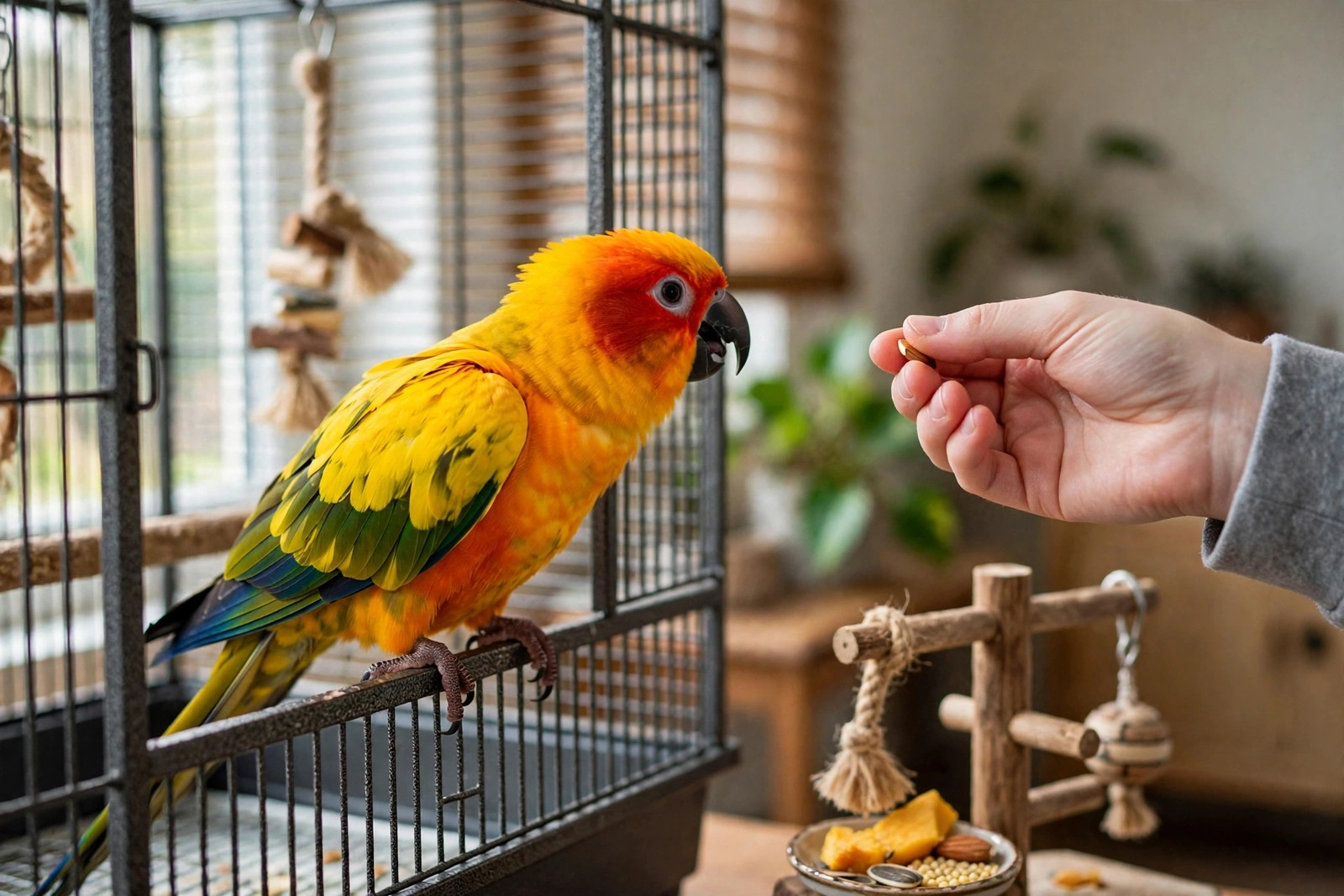
A conure does not usually turn spiteful. When a bird who stepped up happily for months starts lunging or biting hard, the change almost always has a cause, and conures, who are intense, physical birds with strong beaks, simply announce causes more forcefully than most pets. Work through the likely causes in order, starting with the bird's body, because treating a pain bite as a training problem wastes weeks and costs trust.
Hormones and growing up
The most common turning point is maturity. A young conure is famously cuddly, and as it reaches adulthood over its first couple of years, hormonal seasons can bring possessiveness, cage territoriality, and sharp mood changes: a bird who adored everyone may bond fiercely to one person and bite visitors, or bite its favourite person for approaching the cage, a mirror, or a dark, nest-like corner. Longer daylight, stroking down the back rather than just the head, and access to enclosed spaces can all feed hormonal behaviour. Shortening the perceived day with a consistent sleep routine, keeping handling to the head and neck, and removing nest-like hideaways often take the edge off within a few weeks, though seasonal surges may still come and go.
Pain, illness, and fear
A sudden change in a mature bird deserves a health check early, not last. Birds hide illness, and a conure who hurts when it steps up, whose grip weakens, or who is simply feeling unwell may bite the hand that asks something of it. Watch for the company the biting keeps: eating less, weight loss, changed droppings, fluffing up, sleeping more, or going quiet are all reasons to see a veterinarian promptly rather than starting a training plan. Fear is the other fast cause: a fall, a grab to stop the bird flying somewhere dangerous, a new pet, or a frightening household event can break trust in hands, and the bird then bites on approach before contact even happens.
Routine changes and learned biting
Conures are routine specialists, and a moved cage, a new work schedule that cuts out-of-cage time, a house move, or a new family member can all show up as biting at step-up time, which is the bird refusing a deal that changed without warning. Biting also learns fast: if a hard bite makes you drop the bird back on its favourite perch, or ends a trip toward the cage, the bird has discovered a working button and will press it. Rebuild with short, treat-paid step-ups ending before the bird objects, let the conure choose to come out rather than being reached for, and keep sessions successful and brief. Writing down when the biting began, what changed at home, and which situations trigger it, in KinsLe's Care Teams log, gives you and your veterinarian the timeline that usually reveals the cause.