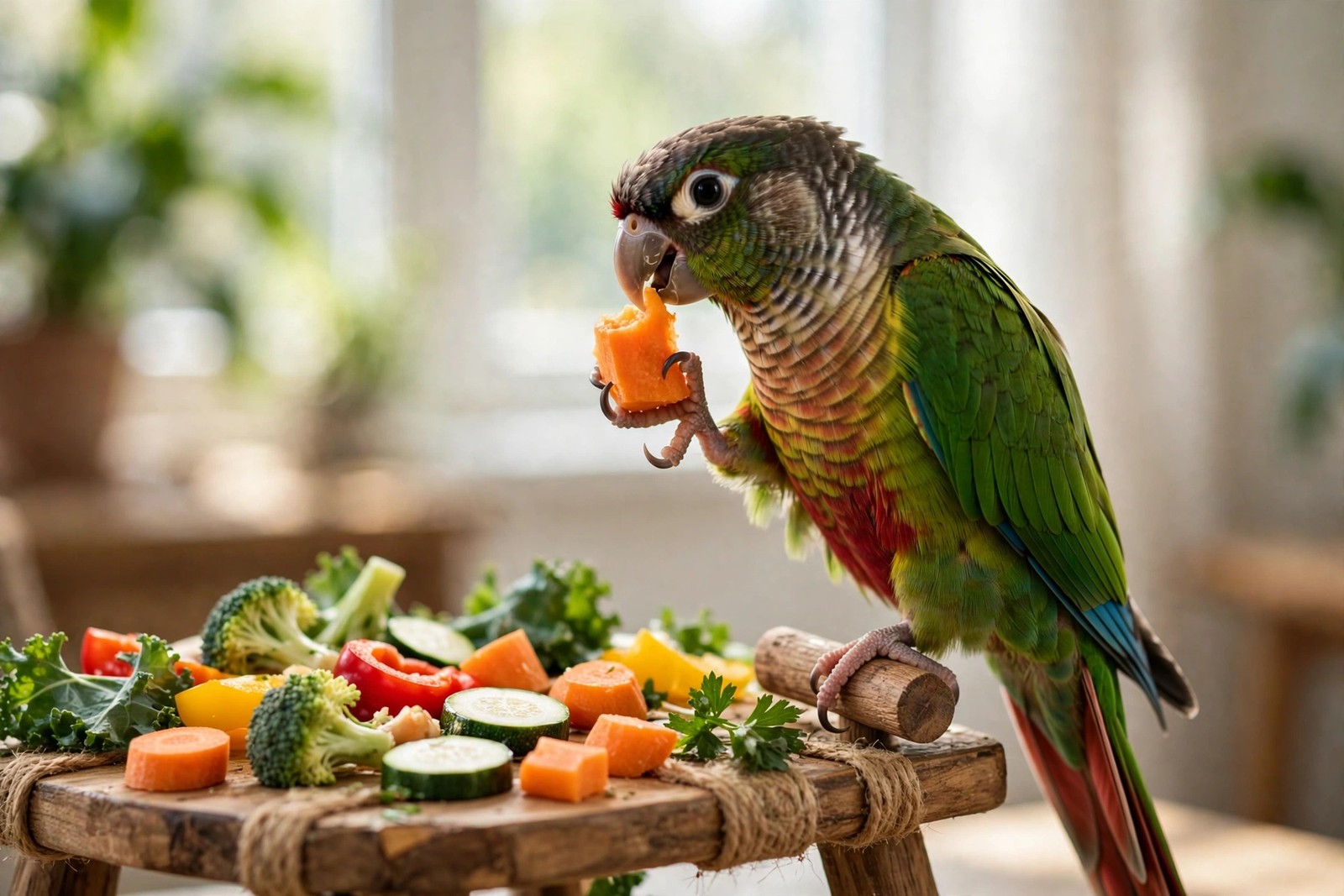
Holding food in one foot is a conure using a built-in hand. Conures are zygodactyl, meaning each foot has two toes pointing forward and two pointing back, an arrangement that wraps around branches and objects with a strong, flexible grip. With that grip a conure can pick up a chunk of food, hold it steady against a perch or in the air, rotate it, take bites from the best side, and drop the inedible part, all while standing securely on the other foot. Owners are watching the same skill wild parrots use to work through fruit, nuts, and seed pods in the canopy.
What foot-holding tells you
A conure who lifts food to its beak is relaxed, coordinated, and interested. Birds tend to bring preferred foods up to work on, so the pieces your conure holds are a fair guide to its genuine favourites, while less exciting items get eaten from the dish or dropped. Many individuals are consistently one-footed about it, favouring the left or right foot the way people favour a hand. Young conures improve with practice: a juvenile may fumble, drop pieces, and hold food clumsily against the perch before graduating to lifting it cleanly, and that learning curve is part of normal development rather than clumsiness to correct.
Serving food a conure can hold
You can feed the skill instead of chopping it away. Offer some pieces sized for gripping, such as a chunk of carrot, a section of corn cob, a piece of pepper, or a whole green bean, alongside the usual chopped mix, and secure some pieces at the cage bars or on a skewer-style holder so the bird has to work at them. Foot toys, small wooden or woven toys the bird can hold in the same grip, extend the same dexterity into play between meals. Expect mess: a conure working through a held piece drops hulls, skins, and the occasional rejected bite, so a washable mat under the favourite perch saves effort. Wet foods held in the foot should be removed after a couple of hours, as with any fresh food left in the cage.
When foot use is worth a closer look
Foot-holding itself needs no attention, but a change in it can be an early clue. A conure who suddenly stops using one foot, drops food it used to hold easily, limps, sits with one foot held up, or has a swollen toe or a sore on the foot should see a veterinarian, because feet carry the bird's whole weight and problems there worsen quickly. Keep perches of varied diameter so both feet exercise fully, and trim nothing yourself if a claw looks overgrown; ask your veterinarian to show you safe handling first. Noting your conure's favourite holdable foods and which foot it favours in KinsLe's Care Teams feeding notes gives a sitter the right shopping list and gives you a baseline if foot use ever changes.