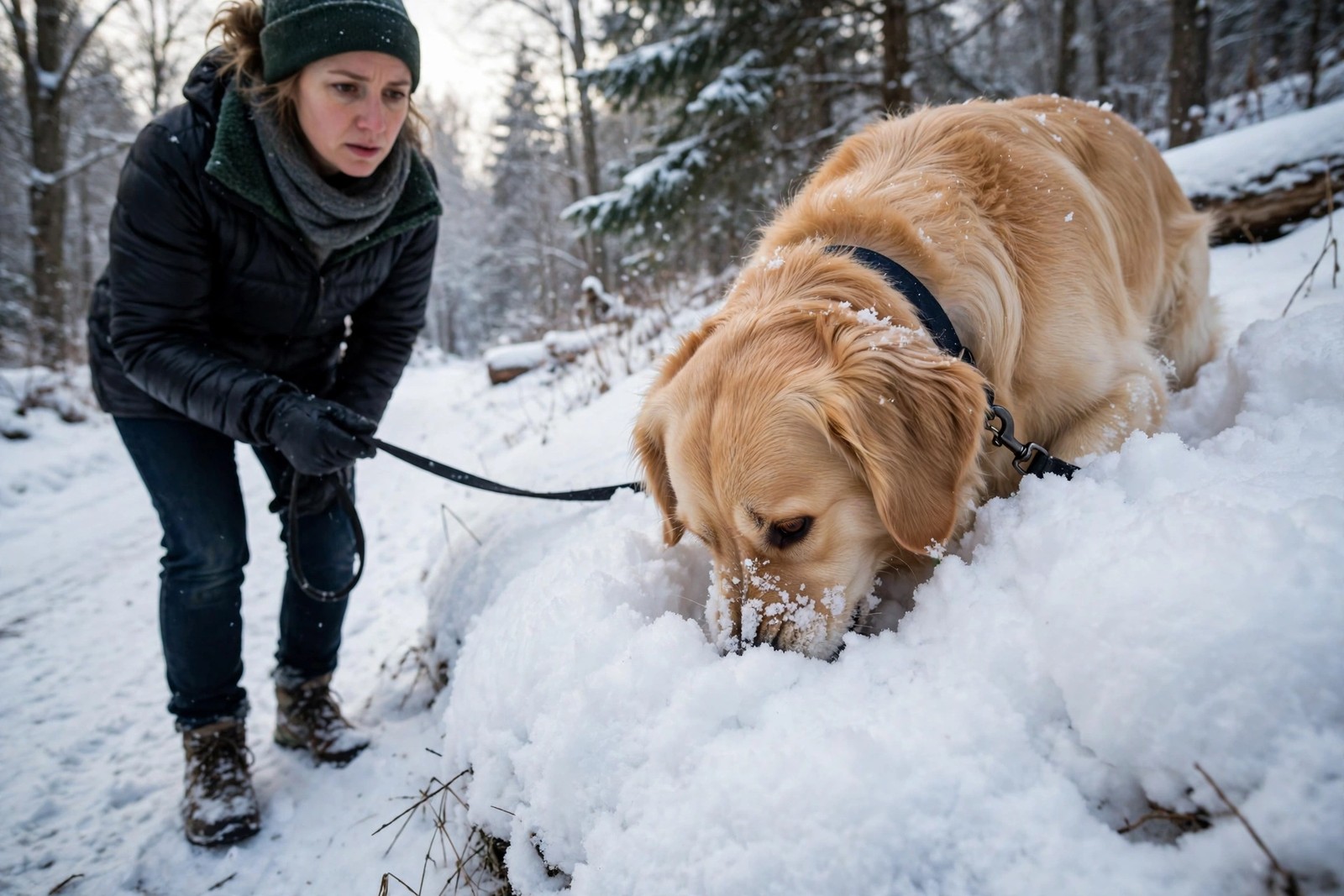
For a dog who loves it, snow is a perfect snack: cold, crunchy, faintly textured, available in unlimited quantity, and delivered in a novel form that turns a familiar walk into a buffet. Snow eaters are usually enthusiasts rather than ill dogs. The sickness that follows is mechanical more than mysterious — a stomach rapidly filled with near-freezing water and unmelted chunks commonly rebels, producing vomiting on the walk or soon after home, and sometimes loose stool later as the cold load moves through. The behaviour is worth managing, though, because the walk environment hides hazards that plain snow does not.
Why Some Dogs Cannot Leave It Alone
Taste and texture start it: snow carries scents trapped from the ground beneath, and crunching is intrinsically rewarding to many dogs. Thirst can drive it too — a dog exercised hard indoors in heated air, or one who drinks little in cold weather because the water bowl is chilly, may treat snow as the drink he actually wants. Then habit compounds both. Every snatched mouthful on every walk rehearses the behaviour, and because snow is everywhere for weeks, the rehearsal is daily and dense — far denser than other scavenging habits get.
What the Snow Is Hiding
Clean, fresh snow in a field is a low-risk snack in small amounts; the snow a dog actually binges on is usually pavement snow, and that is a different substance. Grit and road salt concentrate in ploughed edges and slush, and de-icing chemicals used on drives and paths end up in the same piles. Eating salted slush irritates the mouth and stomach, and licking salty paws afterwards adds a second dose. Snow also conceals what it covers: sharp ice edges that cut mouths and paws, frozen litter, and spills that were invisible under the fall. The binge spots matter as much as the behaviour — a dog grazing in a quiet field and a dog wolfing down the slush line along a treated road are not doing the same thing.
Managing the Walk Itself
- Offer water, and a chance to drink properly, before leaving, so genuine thirst is not outsourced to the snowdrift.
- Keep momentum through known binge spots — a brisk pace and a short lead past the deep, clean-looking drifts where he habitually settles in to graze.
- Train leave-it indoors first with boring items and excellent payoffs, then practise it on walks with single requests and immediate rewards, so the cue is worth obeying against real snow.
- Let him have a controlled taste in a clean spot if he loves it — a few mouthfuls on your terms — rather than making all snow forbidden fruit he must snatch.
- Rinse or wipe paws and muzzle after walks on treated pavements, and check between the toes for balled ice, which dogs chew at and which adds to the intake.
When Snow Eating Is a Symptom Instead
A dog who is frantic about snow and is also drinking far more at home, asking to go out to urinate more often, or showing appetite and weight changes is giving you medical information, because raised thirst has causes a vet should explore. Sudden snow eating in a dog who ignored it for years, vomiting that continues after the walk, blood in vomit or stool, or a dog who becomes lethargic after a binge all move the question out of training and into the vet's room. Bring the pattern with you: how much he eats, where, and what follows, because that detail steers the examination. For the ordinary enthusiast, though, the answer is management, not worry — and management works best when it does not depend on who is holding the lead. Putting his pre-walk drink, his known binge spots, and the post-walk paw rinse into KinsLe's Care Teams, where each winter walk can be assigned and its checks marked complete, means every walker runs the same snow routine instead of one person's careful walk being undone by the next person's amble.