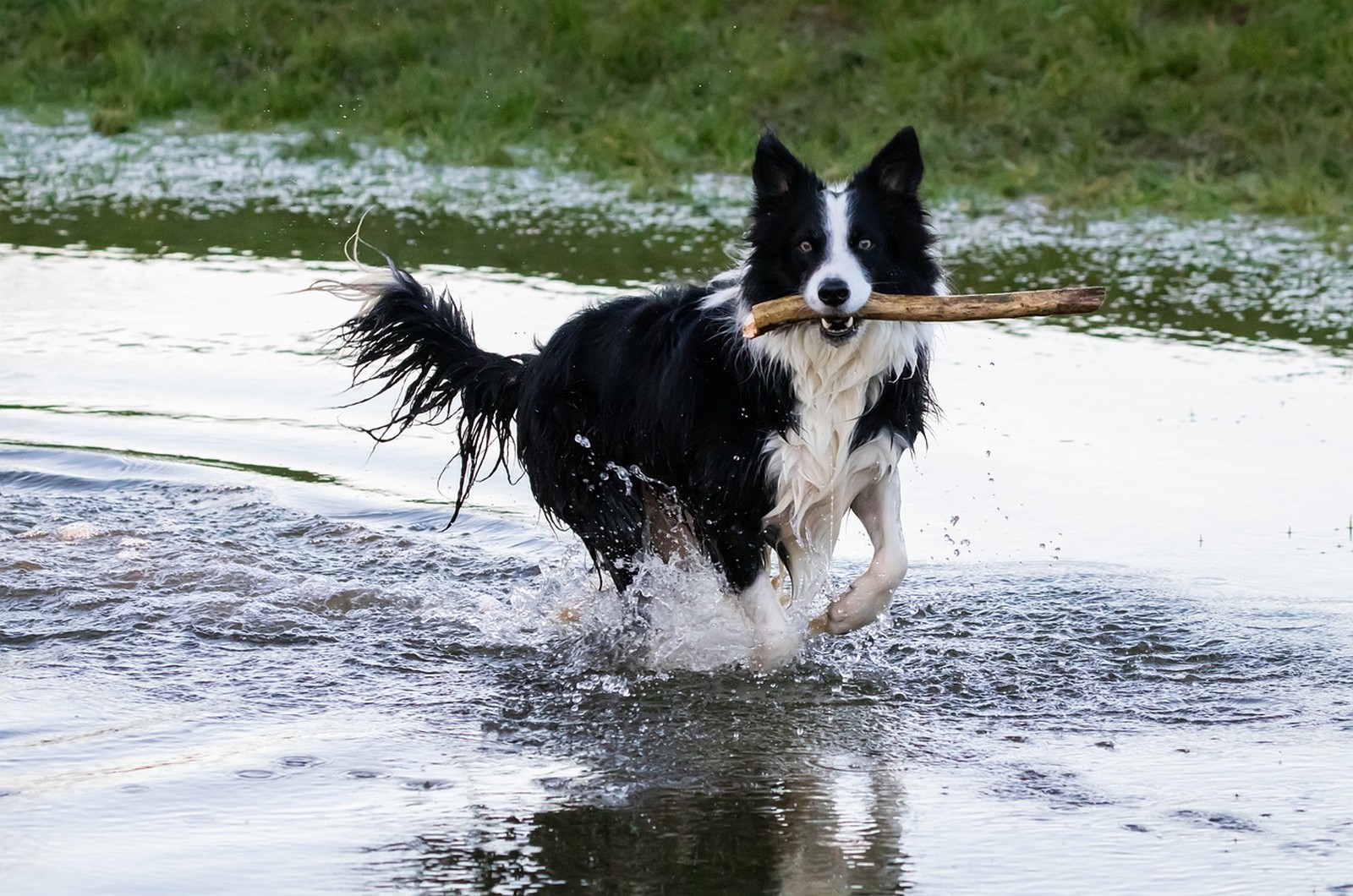
A dog crunching a stone in the garden is doing something understandable and genuinely risky at the same time. The urge to pick up, chew, and sometimes swallow sticks and stones has several ordinary roots, but the objects themselves are unforgiving: a swallowed stone is one of the classic causes of intestinal blockage, and this is a habit to redirect rather than shrug off.
Why Dogs Mouth the Garden
Puppies investigate the world mouth-first, tasting and testing everything portable, and most pass through a phase of collecting stones, bark, and debris before their adult judgment arrives. Teething adds a second motive, because chewing hard objects presses on sore gums and brings relief while new teeth come through, and stones offer exactly the resistance a teething puppy seeks. Adult dogs add their own reasons: sticks carry the smells of the outdoors and other animals, chewing is a natural stress outlet and boredom cure, and a dog that has learned that grabbing a stone starts a thrilling chase or a treat negotiation has been accidentally trained to pick up more of them. Dogs that swallow rather than simply carry are the real concern within this group.
When It May Be Pica
Pica is the persistent eating of non-food items, and it is a pattern rather than a single grabbed pebble: the dog seeks out stones, soil, fabric, or similar material repeatedly and actually consumes it. Pica can run alongside dietary shortfalls, stomach and intestinal disorders, and plain compulsive behaviour, and it raises the stakes of every episode because the dog is guaranteed to keep trying. A dog that eats non-food items most days, that is losing weight, vomiting, or passing odd material in its stool, or whose habit began suddenly in adulthood needs a veterinary workup rather than more supervision alone, so the underlying driver can be looked for rather than guessed at.
The Real Risks, Object by Object
Stones damage a dog at both ends of the journey. Bitten hard, a stone can crack or break a tooth, exposing the painful pulp inside. Swallowed, a stone may pass if it is small and smooth, but a stone too wide for the intestine lodges where it lands, and a blockage is an emergency: repeated vomiting, loss of appetite, a tense or painful belly, lethargy, and straining or failing to pass stool are the warning signs, and a dog showing them needs a vet urgently, because a complete blockage can kill the trapped section of gut. Sticks are kinder only by comparison. Chewed wood splinters, and splinters pierce gums, lodge between teeth, stab the throat, and can perforate the stomach or intestine; a dog that runs with a stick in its mouth can drive the end into its throat or chest in a fall. Treat any gagging, pawing at the mouth, drooling, or bleeding after stick chewing as a same-day vet call.
Clearing the Risk and Teaching the Trade
Start with the environment: rake stones and gravel out of the areas your dog uses most, sweep fallen sticks from under trees, and keep the dog supervised outdoors until the habit fades. Replace the contraband rather than only removing it, with long-lasting chews and food-dispensing toys that satisfy the chewing drive in a safe format. Teach a solid 'leave it' and a treat trade, always paying generously for a dropped stone so surrendering it beats swallowing it, and never chase a dog holding a stone, because pursuit encourages a hurried gulp. For determined stone eaters on walks, a vet or behaviour professional can advise on basket muzzle training as a safety net while the behaviour work proceeds. KinsLe's Pet Passport earns its place after any incident, because recording what was swallowed, roughly when, and what symptoms followed gives a vet the timeline that guides decisions if your dog becomes ill hours later.