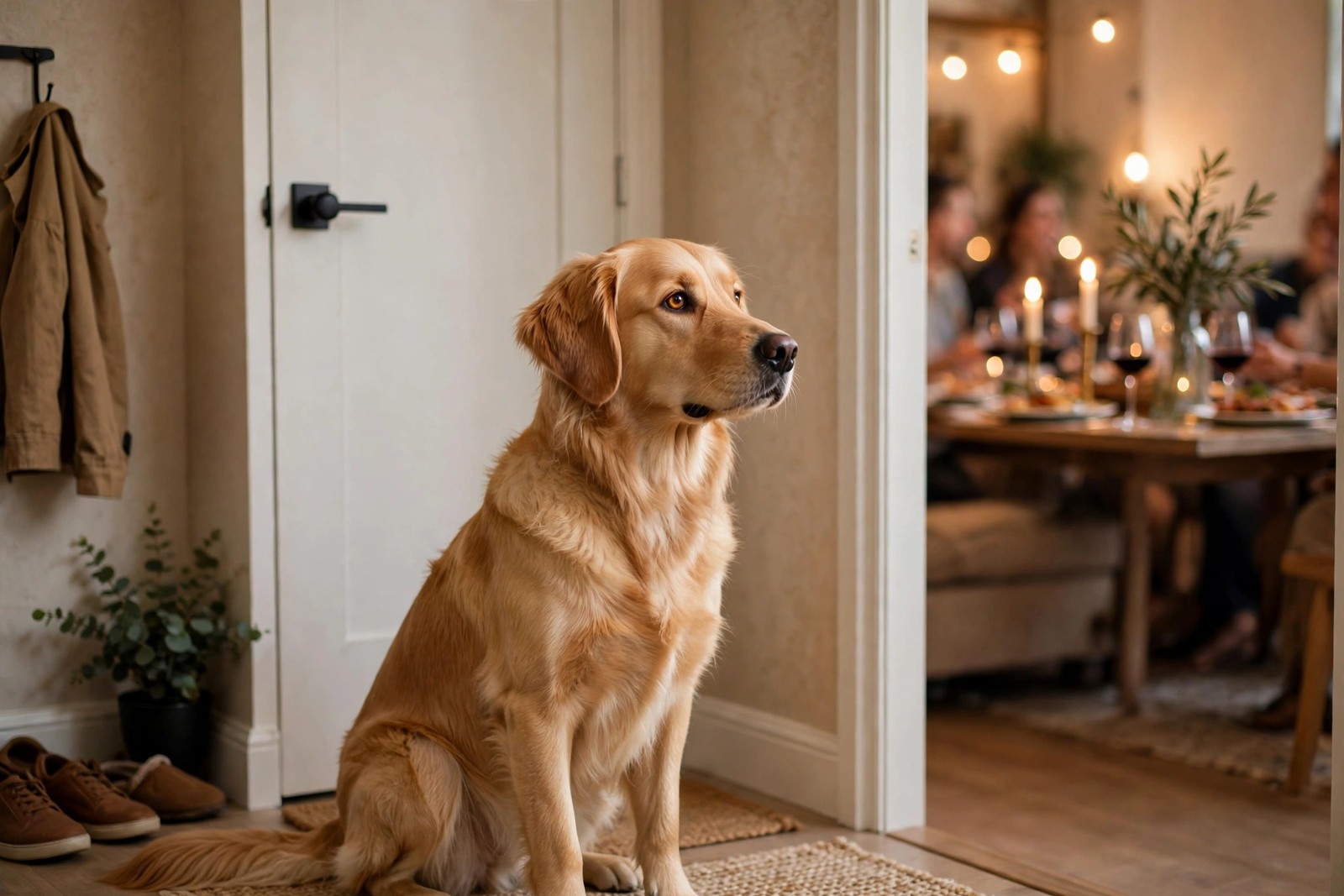
The difference in treatment is the explanation. Your family are, to your dog, completely solved: their routes through the house, the sounds they make behind a bathroom door, and the timing of their return are known quantities that have repeated thousands of times. A guest is an unsolved problem — novel scent, unfamiliar voice, unpredictable movement — and many dogs handle novelty by monitoring it. Escorting the guest down the hall and waiting outside the door is that monitoring in its politest form: accompany the unpredictable element, observe the outcome, and be present when it re-emerges.
What the Escort Is Actually Doing
Watch the dog's body during the detail and you will see information-gathering, not guarding. The following dog usually travels a step or two behind rather than crowding, pauses where it can keep the route in view, and settles at the door in an alert but loose posture — ears up, body soft, ready to greet the reappearance and walk the guest back. Scent does much of the work: the dog is updating its map of who this person is and where they have been in the house. Herding and shepherding types may add a genuine hosting streak, treating a wandering guest the way they would a straying flock member — the guest is their charge until safely returned to the group, at which point the dog can finally relax. Dogs who are simply sociable do a lighter version: new people are the most interesting event of the week, and following them is entertainment.
Why Family Get Privacy Instead
Privacy, from the dog's side, is not respect; it is the absence of uncertainty. Your household's bathroom trips have no information in them — same people, same door, same return. A dog who once followed you as a puppy stopped because the event stopped teaching anything new. This is also why the escorting fades for regular guests: by the third or fourth visit, a friend's routes and sounds are mapped like family's, the escort detail gets stood down, and the dog may not even lift its head. New guests restart the service at full strength, which is a useful diagnostic — the behaviour tracks familiarity, not the bathroom, the hallway, or the time of day.
When the Escort Is Anxiety Wearing a Uniform
The curious escort is loose, waggy, and able to disengage — the dog can be called away, settles if a door closes, and greets the guest's return with ordinary pleasure. The anxious version looks tighter: pacing outside the door rather than settling, whining or scratching at it, panting, and a dog who cannot relax anywhere in the house while strangers are present, shadowing guests from room to room with a hard, fixed stare. That dog is not hosting; it is stressed by unpredictability it cannot switch off, and the kind response is structure — a settled place away from the action with a chew, guests asked not to pursue interactions, and, if the dog struggles at every visit, a behaviourist's help to lower the general alarm level. Pain and ageing can also turn a relaxed dog clingier with novelty, so a sudden change in an older dog earns a vet mention.
Living Gracefully With the Bathroom Butler
No training is required for the harmless version, and guests usually find it charming once they know it is standard issue rather than personal suspicion. A few courtesies help: warn guests the escort will happen so nobody is startled by an audience at the door, teach a simple settle on a hallway mat if the waiting dog blocks the doorway or trips people, and give the dog an alternative job during long visits — a chew in the room where everyone is gathered beats an evening of door duty. Brief notes on each escorted visitor — and on how many visits the duty lasts — usually reveal the curve: regulars graduate to family status within a few visits, and anyone still being escorted after many visits stands out clearly. Put a follow-up question to KinsLe's Kinny; he answers using the KinsLe Answers library.