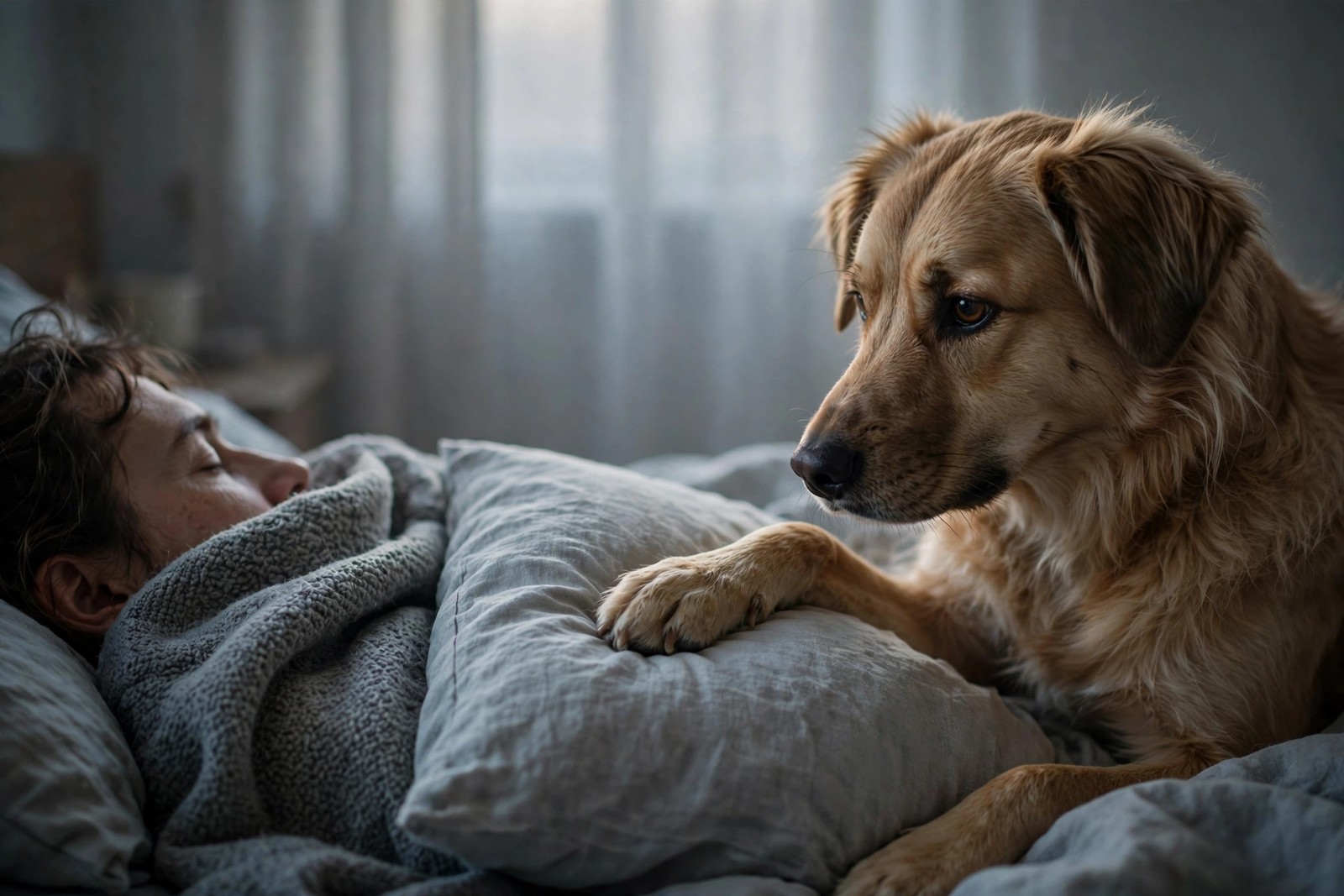
Dogs are superb readers of sequence, and your mornings have a sequence. Well before the alarm sounds, the light changes, the heating or cooling system starts, a partner rolls over, dresses or leaves for an early shift, and your breathing and movement shift as sleep lightens. Your dog has watched hundreds of repetitions of that run-up, and she can place herself within it accurately enough to look like a timekeeper. Weekends feel different to her because the run-up is different: no heating timed for a commute, no partner's early movements, different street sounds, and your sleep runs deeper for longer. She is matching patterns, not days of the week.
Why the Paw, and Why Your Face
A paw is a dog's general-purpose attention tool, and the face is the part of you that produces results. Eyes open, you speak, you lift a hand, and even pushing the paw away is contact and engagement. From her side, the experiment has been run many times and the paw wins: it is faster than waiting, more effective than a whine from the floor, and it is often followed within minutes by the best events of her day, namely you getting up, the toilet trip outside and breakfast. She is not being rude or dominant. She is using the behaviour with the clearest payment history at the moment she believes the day is due to start. Nails make the habit worth changing on safety grounds alone, since a paw near sleeping eyes can scratch even when it is offered gently.
Teaching Her That the Alarm Starts the Day
Choose the signal you do want: the alarm itself. Until it sounds, a paw earns a boring response: no chat, no eye contact drama, no breakfast, and if she needs the toilet, a silent, businesslike trip outside and straight back to bed. When the alarm sounds, the household wakes up properly, she gets greeted warmly, and the good routine begins. Reward her for settling on her own bed beside yours if she has one there, and deliver occasional quiet praise or a small treat for waiting on it before the alarm. Expect an extinction burst: a behaviour that stops working usually gets tried harder and louder for a few mornings before it fades, and giving in once during that burst teaches her that persistence at a higher volume is the real key. Consistency across everyone in the bed and the house decides how fast this goes.
Adjusting Weekends Without Confusing Her
Keep the same rule at weekends with a later alarm time, and she will learn two run-ups rather than one. A dog who gets a lie-in routine that still starts with a signal, followed by the same toilet trip and breakfast sequence, usually settles into sleeping later on those days, especially if the room stays dark and quiet. Blackout curtains help in summer, when early light can restart the weekday pattern. If her waking time suddenly shifts much earlier, or she seems restless through the night rather than only near morning, mention it to your veterinarian, because discomfort, a full bladder in an older dog and other changes can all move a dog's morning earlier. Senior dogs and puppies both genuinely need earlier toilet trips, so set expectations by life stage rather than by the routine you would prefer.
Write the two routines down so a partner, teenager or house guest gives her the same answers you do at six in the morning. KinsLe's Care Teams keeps those weekday and weekend duties assigned to named people, with each completed morning task marked complete with a timestamp.