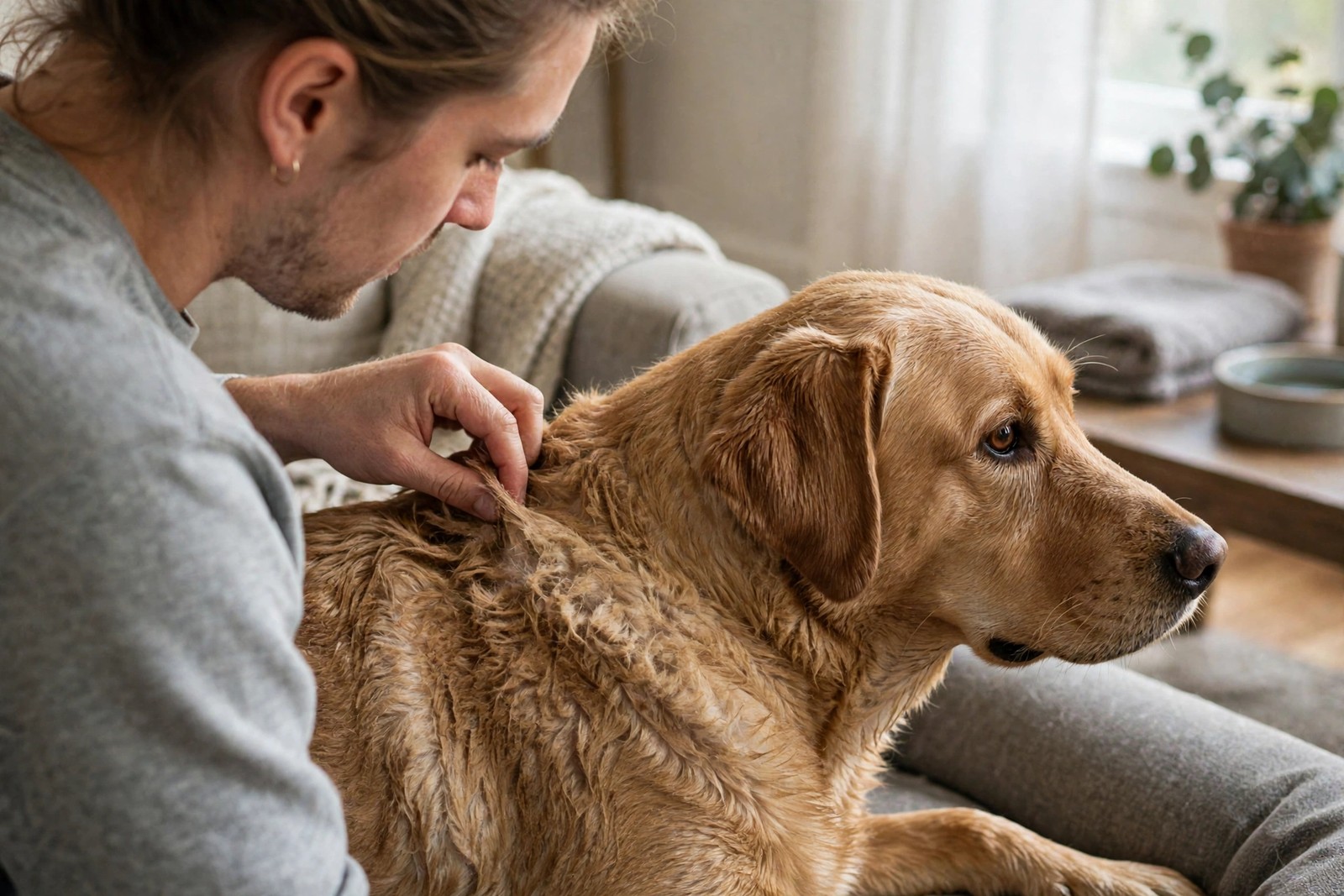
A bath should buy you more than a day. When her coat feels greasy again by the next morning, something is putting oil or residue back onto the hair faster than bathing removes it, and the useful question is which of a handful of causes fits her. None of them is answered by bathing her more often, and one of them gets worse that way, so work through the possibilities in order before reaching for the shampoo again.
Natural Oil Production
Every dog's skin produces sebum, the natural oil that waterproofs the coat and keeps skin supple, and production rates vary widely between dogs. Some breeds and some individuals simply run oilier, with heavier coats that show that oil quickly, especially along the back, the neck, and behind the ears where glands concentrate and collars trap warmth. A young, healthy dog whose coat has always turned within a day or two, whose skin looks calm and pink with no flakes or smell, may just be a fast producer. For her, the answer is management rather than alarm: thorough brushing between baths to draw oil along the hair shafts and lift loose coat, and a bathing rhythm matched to her production rather than to a calendar written for a drier dog. Brush her on a towel you can inspect afterwards, because the amount of oil and loose hair the brush lifts each day is a rough gauge of whether her production is steady, rising, or settling as seasons and age change her coat.
Residue From Incomplete Rinsing
Residue is the cause owners can test at home. Shampoo and conditioner that are not fully rinsed out stay in the coat, turn tacky as they dry, and attract dust and loose hair, producing a greasy feel that was not there before the bath at all. Thick and double coats hide residue well, particularly at the chest, armpits, and belly. At her next bath, rinse longer than feels necessary, parting the coat and running water until it comes away completely clear and the hair squeaks slightly between your fingers, then rinse once more. If the next-day greasiness fades after a properly rinsed bath, residue was the likely story and no further detective work is needed.
Bathing Too Often
Frequent bathing can create the very problem it chases. Washing strips sebum from the coat, and skin that is stripped repeatedly may respond by producing oil faster to replace what keeps being taken away, so the interval between baths shrinks while the greasiness grows. If her bathing has crept from monthly to fortnightly to weekly while the coat feels worse, run the experiment in reverse: stretch the interval, brush more between baths, and judge the coat after several weeks rather than several days.
When the Vet Joins the Investigation
Skin conditions belong on the list whenever the greasy feel persists despite clean rinsing and a sensible bathing interval, or arrives with company: flakes, redness, itching, hair thinning, a sour or yeasty smell, or greasiness showing most in folds, ears, and paws. Those patterns are possibilities for her vet to investigate at an examination, not a diagnosis you can settle from the bathroom, and they matter because greasy skin that stems from the skin itself will not respond to any bathing routine, however careful. Take notes on when the greasiness began, where it shows most, and what you changed before it started. Tracking bath dates through Care Teams on KinsLe gives that history a shape, since every entry carries its date and the pattern stands out before the appointment.