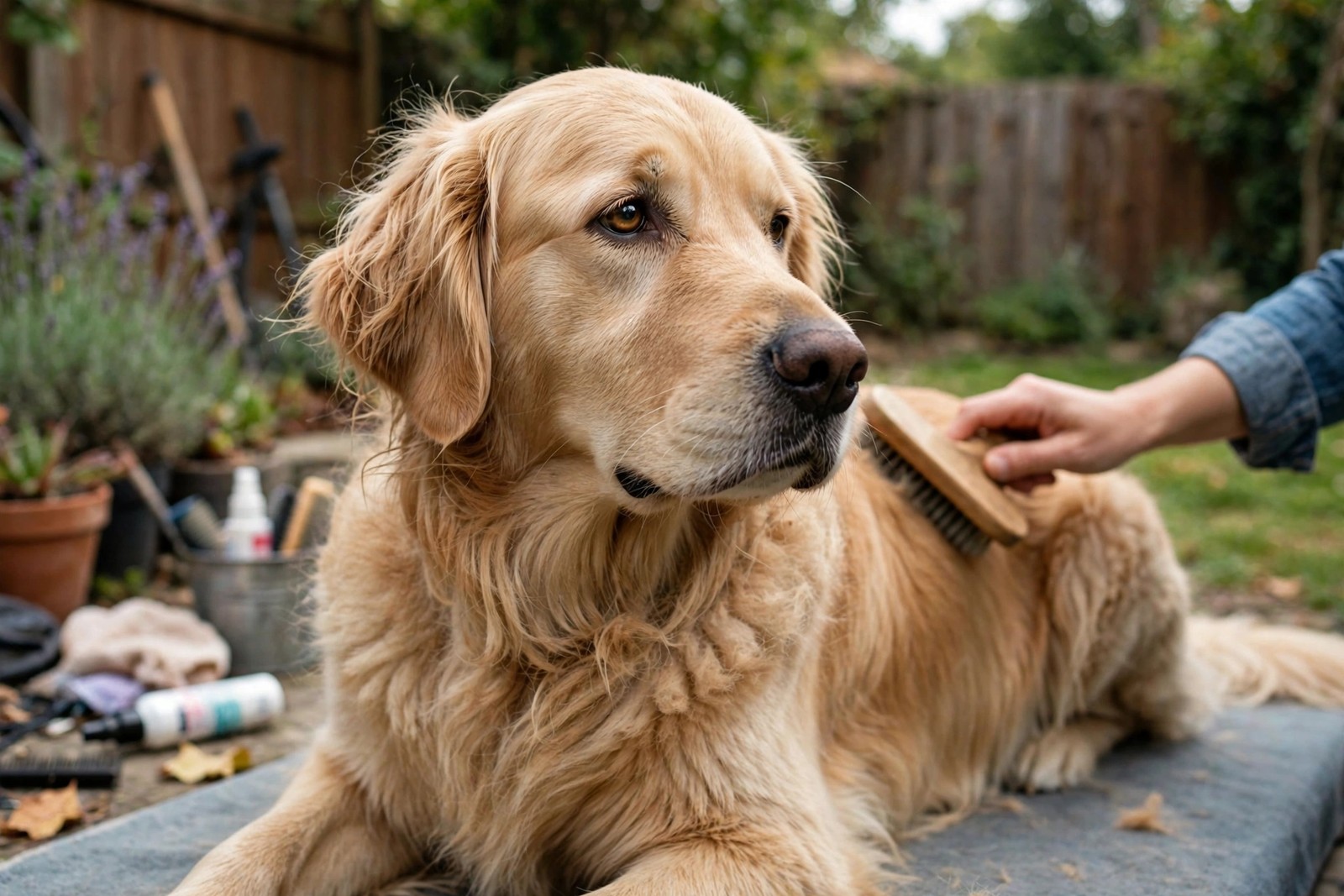
A dull coat is your dog's way of showing, on the outside, that something on the inside or in the routine needs attention — nutrition, grooming, parasites, allergies, or a developing health issue can all take the shine away. Regular brushing and a complete diet often restore it, but dullness paired with weight change, low energy, or heavy shedding is worth mentioning promptly at your next vet visit.
What a healthy coat should look like
A healthy coat lies smoothly for the breed, has a natural sheen rather than a greasy or chalky look, and sheds in a predictable pattern. Skin underneath should be supple and calm, not red, flaky, or smelly. Compare like with like: a wiry terrier coat will never gleam like a Cavalier's silk, and a double-coated Husky in full seasonal shed looks scruffy for honest reasons.
Change from your dog's own normal is the signal. A coat that was glossy in spring and looks flat and brittle by autumn, with more hair in the brush than usual, is telling you something changed — food, health, environment, or care.
The everyday causes to check first
Grooming gaps are common. Without brushing, loose hair mats over new growth, oils never spread, and the coat looks dead even on a healthy dog. Brush little and often with the right tool for the coat type, and bathe only as needed with dog-specific shampoo, rinsed thoroughly.
Nutrition is the other foundation. A complete diet matched to life stage — puppy, adult, senior — supplies the protein and fats coat growth depends on. Sudden food switches, long stretches on an incomplete or poorly stored diet, or a food that simply does not suit your dog can show up first in the coat. Store food sealed and cool, note the date you opened the bag, and transition foods gradually.
Parasites and irritation matter too. Fleas, scratching from allergies, and repeated wetting without proper drying all break hair and dull the surface.
When dullness points deeper
Mention coat change to your veterinarian sooner if it arrives with any of these: weight gain or loss, drinking or urinating more, low energy or behavior change, bald patches, thickened or dark skin, a pot-bellied shape, or shedding far beyond the seasonal norm. Only an examination, and tests where needed, can identify an underlying cause — do not diagnose at home or start supplements, medicated shampoos in quantity, or diet overhauls as a substitute for that visit.
Your veterinarian may ask how long the change has been building, what you feed including treats, and what grooming products you use. Written answers beat guesses.
A simple shine-restoring routine
For a dog your veterinarian is not worried about, keep it boring and consistent: brush several times a week, keep parasite prevention current as your veterinarian advises, feed one complete diet consistently, provide fresh water, and give it four to six weeks. Photograph the coat monthly in daylight by a window — phone photos in the same spot reveal improvement your eyes adapt to and miss.
Avoid over-bathing in pursuit of shine, avoid human hair products, and be skeptical of any product promising instant transformation.
Tracking the change with KinsLe's Pet Passport
Coat stories are slow stories, and slow stories need records. KinsLe's Pet Passport is your dog's records packet — vaccines, medications, allergies, documents, and vet notes together — where diet notes and visit summaries can sit side by side over time. Sharing that packet with your veterinarian makes "his coat went dull around March, after we changed food" a dated fact, not a hunch. Pet Passport in KinsLe lets his groomer read the dated diet and bath entries at the next appointment, judging the coat against earlier visits instead of today's impression alone.