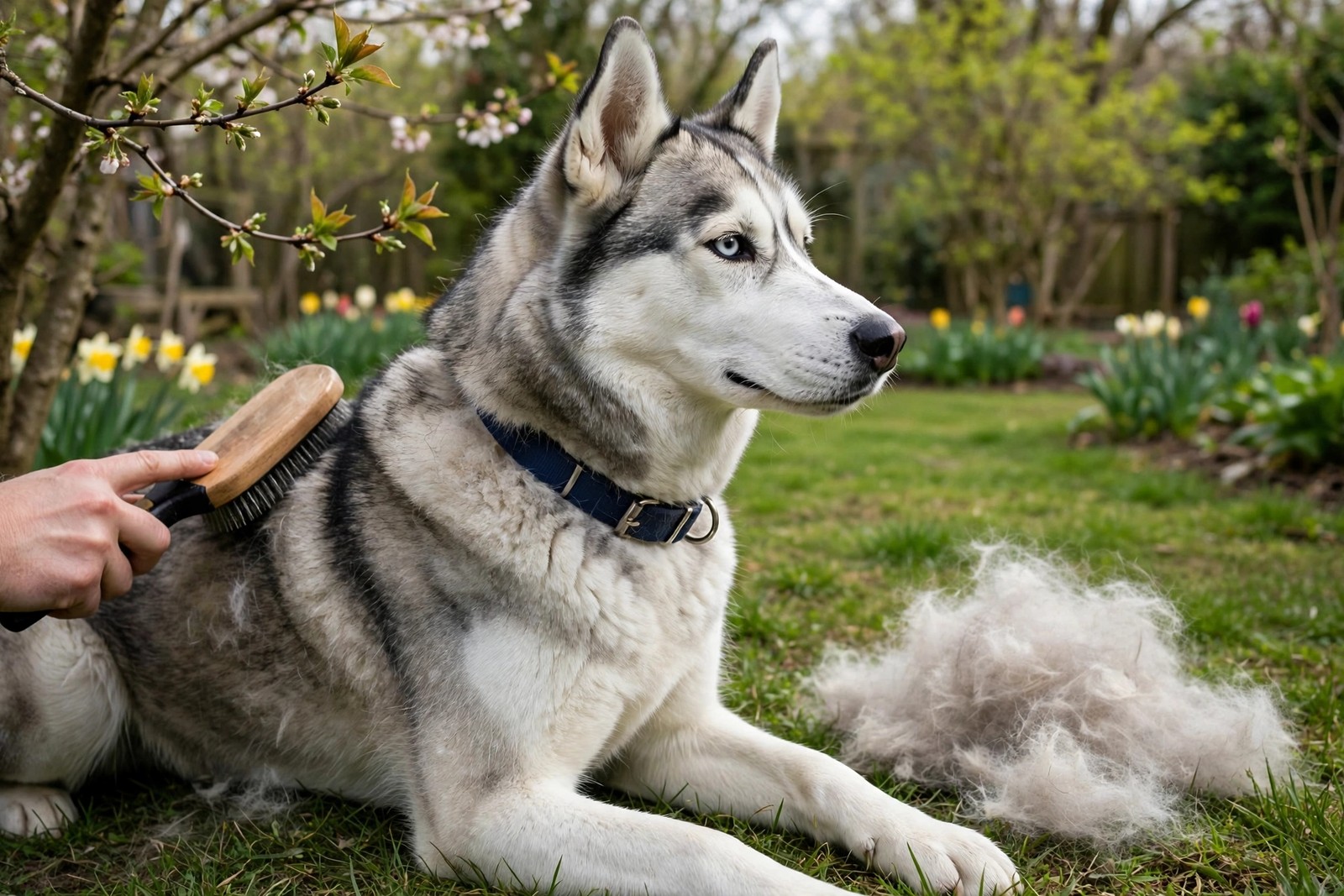
The calendar your dog's coat follows is written in light. Changing day length, detected through the eyes and translated into hormonal signals, tells hair follicles when to release the old coat and grow the new one. In spring, lengthening days trigger the big clear-out: the thick, soft undercoat that insulated your dog all winter is shed so a lighter summer coat can take over temperature control. In fall, shortening days run the programme in reverse, the summer coat comes out and a denser undercoat grows in before the cold arrives. Temperature plays only a supporting role, which is why the shedding starts before the weather truly turns.
Why Some Dogs Flood the House
Breed decides the scale. Double-coated dogs, the spitz types, shepherds, retrievers, collies, and their mixes, carry two distinct layers and replace a huge volume of undercoat twice a year, a process owners call blowing coat. For two to four weeks the undercoat releases in tufts and drifts, and a single brushing can fill a bag. Single-coated dogs shed the same way physiologically but with far less material, so the change barely registers, and continuously growing coats shed least visibly of all.
Indoor living muddies the rhythm. Central heating, artificial lighting into the evening, and a stable indoor temperature soften the daylight signal, so many house dogs shed moderately all year with spring and fall peaks rather than two clean events. Age and health layer on top: puppies lose their soft first coat as the adult coat arrives, and nursing mothers often shed heavily after whelping.
Working With the Blow-Out Weeks
You cannot shorten the coat change, but you can decide where the hair ends up. Brush outdoors or in one easy-clean spot, little and often: ten minutes daily beats an hour-long battle once a week, and it pulls loose undercoat out in the brush instead of onto the sofa. Work with tools matched to the coat, a slicker brush and an undercoat rake for double coats, always brushing gently down to the skin without scraping it. A bath partway through a blow-out can loosen a surprising amount of undercoat, as long as you brush again once the coat is fully dry; brushing a damp, packed undercoat mostly makes mats.
Resist the idea of shaving a double coat down for summer. The undercoat is insulation in both directions, and a clipped double coat can regrow unevenly and leave the skin exposed to sun; unless a veterinarian or experienced groomer advises it for a specific reason, brushing is the better tool. Vacuum high-traffic routes more often during peak weeks, and wash bedding weekly, since that is where loose coat concentrates.
Shedding That Is Not Seasonal
Seasonal shedding is symmetrical, the skin underneath looks calm and healthy, and the new coat comes in evenly. Bald patches, intense itching, redness, flaky or greasy skin, a sour smell, or shedding that leaves thin areas with no regrowth are a different matter and deserve a veterinarian's examination, because skin, hormone, and nutrition problems often announce themselves through the coat. A dog who suddenly sheds far beyond their usual spring or fall pattern belongs in the same conversation.
Through the heavy weeks, grooming is a small daily job that lands better when it is shared rather than owned by one person. KinsLe's Family Sharing puts your dog's brushing rota, coat notes, and bath schedule on a profile the whole household can see, so whoever has ten spare minutes knows exactly what today's coat session involves.