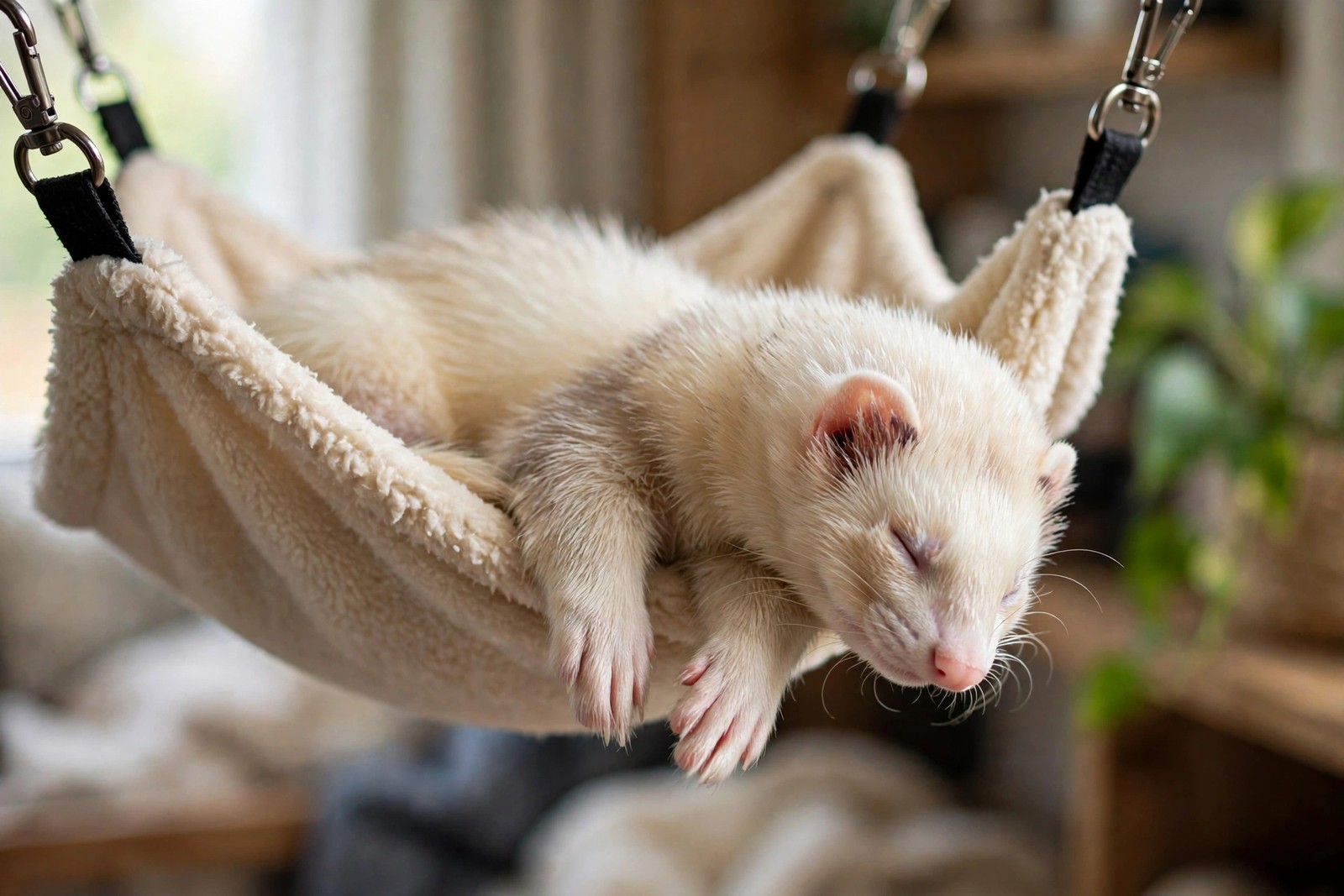
Every ferret owner has one story about the first dead sleep: the ferret flat and limp in the hammock, head hanging, body pouring through your hands like a soft toy, utterly unresponsive while your heart pounds, and then a yawn, a stretch, and a bright animal looking at you as if nothing happened. This is a recognised ferret pattern, sometimes called dead sleep, and understanding why it happens, and exactly where its edges are, turns a recurring fright into a useful piece of health knowledge about your own animal.
Why Ferrets Sleep So Hard
Ferrets live at two speeds. Awake, they burn energy at a remarkable rate: wrestling, tunnelling, stashing, and the frantic sideways bouncing of the war dance. Asleep, they repay that expenditure in long, deep blocks, and ferrets naturally sleep for a large share of the day, youngsters and hard-played adults most of all. In the deepest part of that sleep the muscles let go completely, body temperature dips slightly, breathing slows, and the usual startle responses switch off, which is why a sleeping ferret can be lifted, moved, and spoken to without surfacing. Waking from it is gradual: a twitch, a sigh, a slow blink, and a minute or two of visible grogginess before the engine restarts.
Checking a Dead-Sleeping Ferret Calmly
When you find him like this, run the same quiet checks each time rather than shaking him awake in a panic. Watch the chest: breathing should be slow but regular and easy. Feel for warmth: a deeply asleep ferret may feel a little cool but should not feel cold, and he should warm and stir gradually when held against you. Look at gum colour if he yawns or his mouth is visible: pale or grey gums are not part of the normal picture. Then give waking time to happen. A healthy dead-sleeping ferret comes up through the gears within a short while of gentle handling and warmth, and once awake he should be recognisably himself: interested, mobile, and ready to eat within a reasonable time. Filming one normal episode on your phone, once you know it is normal, gives you a comparison for any future episode that feels different.
Where Dead Sleep Ends and Trouble Begins
The pattern earns respect at its boundaries. A ferret who cannot be roused at all after sustained gentle warming and handling, whose breathing is laboured, irregular, or barely visible, who feels cold and limp together, or who trembles, cries out, or goes stiff is not in an ordinary dead sleep and needs an emergency vet, not more observation time. Episodes that happen while awake are a different matter entirely: wobbliness, hind-leg weakness, staring blankly, drooling, pawing at the mouth, or sudden collapse in an active ferret, particularly a middle-aged or older one, should always be reported to a vet promptly, because low blood sugar problems in ferrets present through episodes like these and cannot be assessed from home. Frequency matters too: dead sleep after hard play is expected; a ferret sleeping noticeably more overall, eating less, and losing condition is showing a change of pattern, and changes of pattern belong in a vet conversation.
Living With a Champion Sleeper
Arrange his world around the knowledge: let sleeping ferrets finish their cycle undisturbed where you can, brief everyone in the house, especially children and visitors, that a limp ferret is usually a sleeping ferret and should be checked gently rather than grabbed, and make sure sitters know the difference between his normal episode and the red-flag version before they need it at midnight. Writing that description down, with his typical play-then-crash rhythm and how he usually wakes, is what turns your experience into protection for him when you are not there. That written baseline belongs with his health history, which is where KinsLe's Pet Passport comes in: it keeps his vet records and your notes on his normal dead-sleep pattern in one packet, ready to hand to a sitter or a vet who has never watched him sleep.